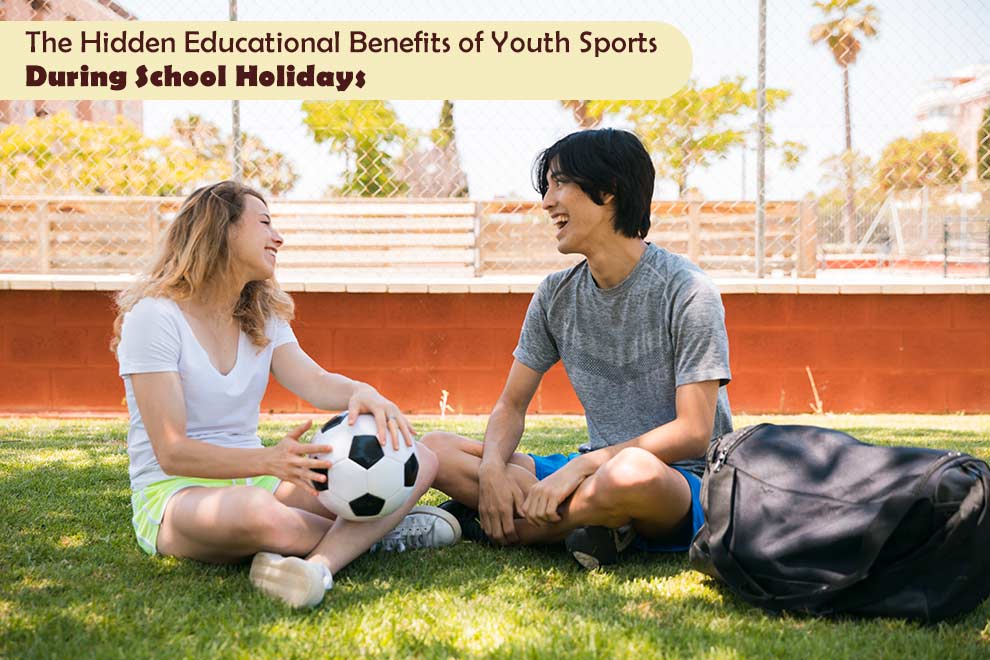
When the school bell rings to signal the start of the holidays, parents and educators often worry about the inevitable learning loss that can occur over the break. However, taking a step back from the traditional classroom does not mean a child’s education has to pause. Modern pedagogical approaches emphasise that learning happens everywhere. In fact, finding a balance in a student’s routine is highly beneficial. By helping young learners choose the right extracurricular activities, parents can actively support their physical, mental, emotional, and social development outside of school hours. During extended breaks, structured sports offer a dynamic environment where vital cognitive and life skills continue to grow.
Combating the Holiday Brain Drain
The concept of learning loss during school holidays is a well-documented challenge in education. Without regular mental stimulation, students can easily lose some of the academic progress they made during the term. Engaging children in structured physical activities provides a powerful antidote to this slump. Sports demand focus, quick decision-making, and spatial awareness. This keeps the brain actively engaged even when textbooks are packed away.
Parents looking to keep their children sharp often turn to organised clinics and camps. For instance, enrolling children in basketball holiday programs offers a perfect blend of physical exertion and strategic thinking. Players must constantly read the game, anticipate their opponents’ moves, and adapt their strategies on the fly. This continuous cycle of observation and reaction exercises the brain just as much as it exercises the body. Furthermore, structured physical play releases endorphins and reduces stress. A relaxed, active brain is far more receptive to learning new concepts once the new term begins.
The Cognitive Power of Open-Skill Sports
Not all physical activities provide the same cognitive benefits. Educational researchers categorise sports into two main types based on their predictability. Closed-skill sports, like swimming or gymnastics, happen in a stable and predictable environment. Open-skill sports, such as soccer, tennis, or basketball, take place in dynamic and constantly changing environments where athletes must react to unpredictable variables. These open-skill activities force the brain to process multiple streams of sensory information simultaneously.
Recent scientific research confirms the immense mental value of these dynamic environments. According to a comprehensive adolescent brain and cognitive development study published by the National Institutes of Health, children in open-skill sports significantly outperformed non-sport groups on executive function tasks, including working memory tasks. This proves that navigating a busy, unpredictable court directly translates to a sharper and more focused mind when students eventually return to their school desks. The ability to filter out distractions and focus on the immediate task is a critical academic skill honed beautifully on the sports field.
Building Essential Social and Emotional Skills
Beyond cognitive development, sports camps provide a fertile ground for social and emotional learning. The traditional classroom setting does not always allow for the loud, high-energy collaboration that a team environment requires. When children participate in sports during their holidays, they are placed in a micro-society where they must learn to navigate complex interpersonal dynamics. Working toward a shared physical goal demands a level of peer-to-peer connection that individual academic study rarely matches.
Here are some of the key social and emotional skills nurtured through holiday sports:
- Communication: Players must quickly and effectively convey information to their teammates under pressure.
- Resilience: Experiencing a loss or missing a crucial shot teaches children how to process failure, recover quickly, and try again.
- Leadership and Teamwork: Children learn when to take charge and when to support a peer. This fosters a deep understanding of collective effort.
- Discipline: Following the rules of the game and respecting coaches instils a sense of structure that directly benefits classroom behaviour.
Translating Court Skills to Classroom Success
The ultimate value of keeping children engaged in sports during their time off is how these skills transfer back to their academic lives. The working memory improved by remembering play structures helps a student tackle complex maths problems. The resilience learned from losing a tough match helps them push through a difficult writing assignment. The communication skills honed while passing the ball make them better collaborators in group projects.
Educators increasingly recognise that the holistic development of a student relies on a diverse range of experiences. Instead of viewing the school holidays as a period of academic stagnation, we should see them as a prime time for cognitive and social growth. Structured sports offer a vibrant, engaging classroom of their own. Through careful selection of holiday activities, parents and educators can ensure our youth return to school not only physically refreshed but mentally sharper and emotionally stronger.