Modern logistics networks are evolving faster than ever. Rising delivery volumes, same-day fulfillment expectations, labor shortages, and urban congestion have dramatically increased the complexity of delivery operations.
For logistics leaders, routing is no longer a simple operational task. It has become a strategic decision layer that determines cost efficiency, delivery reliability, and customer satisfaction across the entire logistics network.
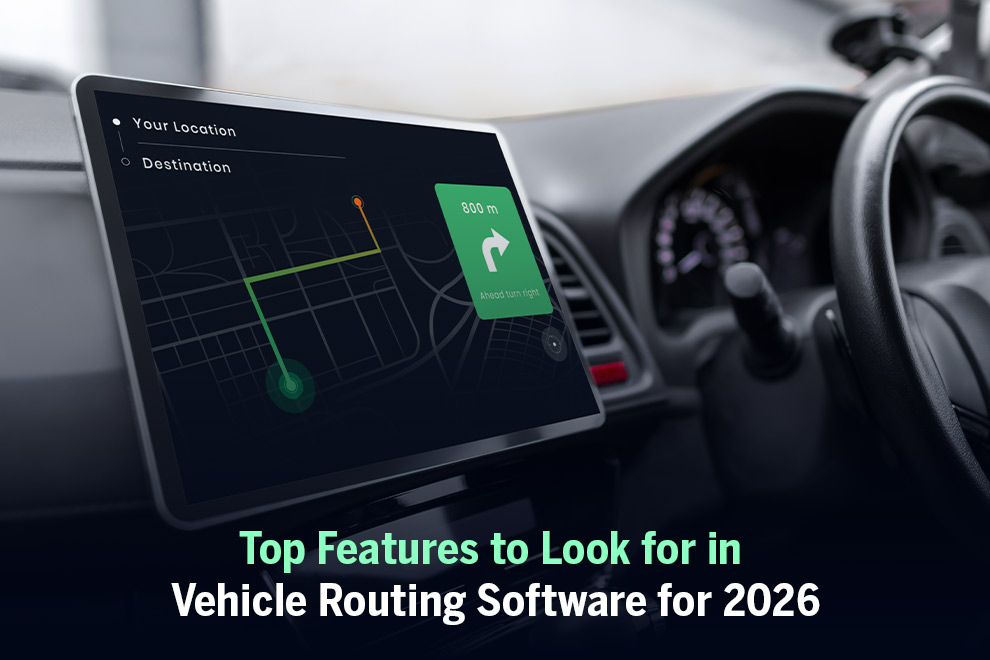
This shift has accelerated the adoption of vehicle routing software, which uses advanced optimization algorithms, real-time traffic data, and operational constraints to determine the most efficient delivery routes for fleets.
The challenge these systems solve is widely known as the Vehicle Routing Problem (VRP), the complex mathematical challenge of assigning delivery routes to vehicles while minimizing distance, cost, and delivery time. With last-mile delivery now accounting for around 53% of total logistics costs, routing decisions have become one of the most critical drivers of operational efficiency.
As logistics networks become more dynamic, businesses must evaluate routing platforms more carefully than ever before. Let’s explore the features, metrics, and strategic capabilities that define best-in-class vehicle routing software for 2026.
Why Vehicle Routing Software Has Become Mission-critical
The complexity of last-mile logistics has increased dramatically due to:
- Growth in e-commerce orders
- Tighter delivery windows
- Same-day and next-day fulfillment expectations
- Urban traffic congestion
- Rising transportation costs
Without intelligent routing systems, these factors lead to inefficient delivery operations, such as:
- Wasted fuel
- Empty miles
- Missed delivery windows
- driver overtime
Route optimization software helps businesses generate efficient delivery plans, reduce transportation costs, and increase delivery capacity without expanding their fleets. Optimized routing can also reduce fuel consumption lowering vehicle wear and operating costs, directly impacting profitability. For logistics organizations operating at scale, vehicle routing software has become the operational backbone of delivery management.
Where Traditional Routing Tools Fall Short
Many organizations still rely on basic route planning software or manual dispatch methods. These approaches struggle to support modern delivery networks.
1. Static Routing Cannot Adapt to Real-time Conditions
Traditional route planning assumes that delivery conditions remain constant throughout the day. In reality, traffic congestion, order changes, and driver delays constantly disrupt delivery schedules.
2. Manual Dispatch Planning Slows Decision Making
Dispatch teams often spend hours sequencing stops and assigning orders manually. This reduces operational agility and limits scalability.
3. ETA Accuracy Remains Weak
Without real-time routing intelligence, estimated delivery times become unreliable.
4. Fleet Capacity Remains Underutilized
Inefficient routing leads to partially loaded vehicles, wasted miles, and unnecessary trips.
These inefficiencies highlight why modern logistics networks require AI-driven vehicle routing software.
The Vehicle Routing Maturity Model
One of the most useful ways to understand routing technology evolution is through a Vehicle Routing Maturity Model. This model shows how logistics organizations progress from basic routing to intelligent logistics orchestration.
| Maturity Stage | Routing Capability | Operational Characteristics |
| Level 1: Manual Planning | Spreadsheet or map-based routing | Dispatchers manually sequence routes |
| Level 2: Static Route Planning | Basic route planning software | Routes generated once per day |
| Level 3: Optimized Routing | VRP-based route optimization | System considers capacity and delivery windows |
| Level 4: Dynamic Routing | Real-time route adjustments | Traffic, delays, and order changes incorporated |
| Level 5: Intelligent Logistics | AI-driven decision engine | Continuous optimization across planning and execution |
Organizations moving toward Level 5 intelligent routing achieve significantly higher operational efficiency because routing decisions adapt continuously to changing delivery conditions.
12 Features That Define Best-in-Class Vehicle Routing Software in 2026
To handle the growing complexity of last-mile logistics, best-in-class vehicle routing software must combine:
1. AI-powered Route Optimization Engine
At the core of modern routing platforms is an advanced optimization engine capable of solving complex routing problems involving hundreds or thousands of stops. These engines evaluate variables such as:
- Delivery windows
- Vehicle capacity
- Traffic conditions
- Service times
- Driver shifts
AI algorithms identify route combinations that minimize delivery time and transportation cost.
2. Dynamic Real-time Routing
Static routes are no longer sufficient. Dynamic routing allows systems to automatically adjust routes during execution when disruptions occur.
Examples include:
- Traffic congestion
- Delivery cancellations
- Urgent orders
- Driver delays
Real-time optimization ensures fleets remain efficient even when delivery conditions change.
3. Constraint-based Routing
Real-world delivery networks operate under complex constraints. Routing software must account for:
- Vehicle load limits
- Service times
- Delivery windows
- Driver hours
- Restricted delivery zones
Constraint-based routing ensures routes remain feasible and efficient.
4. Multi-stop Route Optimization
Modern delivery routes often include dozens or hundreds of stops. Advanced routing systems support:
- Stop clustering
- Intelligent sequencing
- Route density optimization
This increases the number of deliveries completed per route.
5. Automated Dispatch and Smart Order Allocation
Modern routing platforms automatically assign deliveries to drivers based on proximity, vehicle capacity, and priority.
This dramatically reduces manual dispatch workload.
6. Real-time Fleet Visibility
Operational visibility is critical for managing delivery networks. Fleet managers can track:
- Vehicle locations
- Route progress
- Delivery status
- Delays and disruptions
This allows dispatch teams to respond quickly to operational issues.
7. Predictive ETAs and Delivery Communication
Predictive ETA algorithms combine historical data with real-time traffic insights to provide accurate delivery windows. This improves:
- Customer satisfaction
- Delivery reliability
- Customer communication
8. Mixed Fleet Optimization
Modern logistics networks often operate mixed fleets, including:
- Vans
- Trucks
- Gig drivers
- Electric vehicles
Advanced routing platforms optimize delivery assignments across multiple vehicle types.
9. Driver Mobile Applications
Driver apps support route execution through:
- Navigation
- Proof of delivery
- Delivery notes
- Exception reporting
These tools streamline field operations and reduce paperwork.
10. Advanced Routing Analytics
Data analytics helps logistics teams measure routing performance. Key metrics include:
- Cost per delivery
- Route adherence
- Stops per hour
- Delivery success rate
Analytics dashboards allow continuous operational improvement.
11. Logistics Platform Integration
Routing platforms must integrate with existing logistics systems, such as:
- Transportation management systems (TMS)
- Warehouse management systems (WMS)
- Order management systems
- Telematics platforms
This ensures routing decisions are based on real operational data.
12. Sustainability and EV Routing Optimization
Sustainability has become an important priority in logistics. Routing platforms now support:
- EV range optimization
- Charging station routing
- Carbon emission tracking
Efficient routing can significantly reduce fuel consumption and environmental impact.
Top Routing KPIs Logistics Leaders Track
High-performing logistics organizations measure routing performance using key operational metrics.
1. Cost Per Delivery
Measures the total transportation cost divided by deliveries completed.
2. On-time Delivery Rate
Percentage of deliveries completed within promised delivery windows.
3. Route Adherence
Measures how closely drivers follow planned routes.
4. Vehicle Utilization
Percentage of available vehicle capacity used during delivery routes.
5. Stops Per Hour
Measures driver productivity and route efficiency.
Monitoring these KPIs helps logistics teams continuously improve routing performance and operational efficiency.
Why Vehicle Routing Software Will Define the Next Phase of Logistics Efficiency
Routing decisions directly influence nearly every aspect of delivery operations. Efficient vehicle routing software improves:
- Delivery speed
- Fuel efficiency
- Fleet productivity
- Customer satisfaction
As delivery networks continue to grow in complexity, routing technology will evolve into a central logistics intelligence layer connecting planning, dispatch, and execution. Organizations that adopt advanced vehicle routing platforms will gain a competitive advantage through faster, more reliable delivery operations.
Building Smarter Delivery Networks with the Right Vehicle Routing Software
Modern delivery operations require far more than static route planning. They require continuous orchestration of fleet capacity, delivery constraints, customer expectations, and operational performance.
Advanced vehicle routing software enables logistics organizations to achieve this level of intelligence through AI-driven route optimization, real-time fleet visibility, and predictive analytics.
Platforms like FarEye built around these capabilities are helping enterprises transform routing into a strategic advantage within complex delivery networks.
For logistics leaders evaluating the future of delivery operations, the priority is clear. Choose vehicle routing software designed for dynamic networks, real-time decision making, and scalable last-mile performance.
Also Read: Stuck With a Defective Vehicle? The Checklist That Determines Your Rights