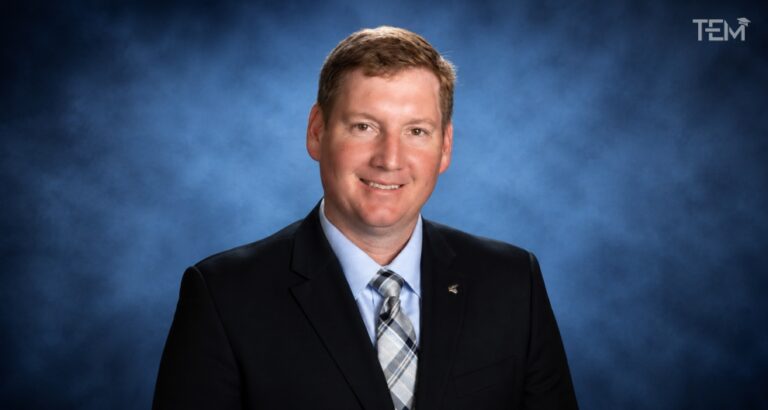
In many rural communities across America, schools often serve as the center of daily life. Relationships and community ties help shape the student experience, while hard work is valued long before students step into a classroom. Those early lessons shaped Jeremy Mangrum long before he became the Superintendent of the Elkins School District.
He grew up on a small family farm in Greene County, Arkansas, where responsibility came early, and a strong work ethic was consistently emphasized. His parents stressed discipline and consistency, values that still guide his leadership style today. Education also felt personal from an early age. His grandmother taught elementary school, and through her, he saw what the profession demanded behind the scenes. “Great teachers show up early, stay late, and truly care about what is best for their students,” he says.
That understanding stayed with him when he entered education in 2006. He began as a teacher and varsity basketball coach before moving into school administration. Over the years, he served as an assistant principal, principal, and deputy superintendent. In 2018, he stepped into the role of superintendent, bringing with him nearly two decades of experience shaped by classrooms, gymnasiums, and years working alongside educators.
Leading Through Responsibility and Trust
Years spent in classrooms, gyms, and administrative offices helped shape Jeremy’s practical and process-driven leadership approach. Today, he oversees the daily operations of a district serving roughly 1,400 students and 180 employees, overseeing responsibilities that range from student and staff safety to staffing, budget allocation, and capital improvement projects. “Every decision eventually comes back to what is best for students,” he says.
His influence extends beyond his district. Jeremy serves on the Board of Directors for the Arkansas Activities Association and previously led two regional educational cooperative boards. In 2023, the Arkansas Rural Education Association named him Superintendent of the Year.
Raising Expectations Inside the Classroom
When Jeremy stepped into the superintendent role, improving classroom instruction became a clear priority. Rather than chasing short-term fixes, he focused on building systems that helped teachers track student growth more effectively. Under his leadership, the district strengthened its Professional Learning Community process, introduced common assessments across schools, and created schedules with dedicated time for both remediation and accelerated learning.
He also pushed to update classroom resources in core subjects after decades in which some core instructional areas lacked updated resources. The results soon became visible. In 2025, the Arkansas Department of Education awarded the district an “A” rating, placing it among Arkansas’s highest-performing districts. The district’s individual school letter grade GPA ranked third statewide in 2025. “My role is to elevate confidence and performance by giving people the tools they need to be successful,” he says.
Setting the Bar Higher
After years spent strengthening academics and modernizing district operations, Jeremy has set an even more ambitious target for the years ahead. His focus now is clearly defined: moving the district into the number one position in Arkansas for overall district letter grade rankings. With the Arkansas Department of Education expected to release updated grades in 2026, the results will offer a clear benchmark for progress.
At the same time, he continues to look beyond test scores alone. While several major capital projects have already been completed, facility improvements remain part of the district’s long-term strategy to create stronger learning environments for students and staff alike.
Expanding Access for Every Student
Jeremy believes opportunity should never depend on a student’s background or circumstances. That belief shapes many of the decisions made across the district, from academic support systems to the way resources are allocated. Alongside his leadership team, he works to identify barriers that may prevent students from fully participating in school programs or reaching academic goals.
The district’s approach focuses on expanding access to opportunities and reducing barriers for students. Resources are directed toward creating broader access to learning opportunities and stronger support for students who may need additional help. Equity, in Jeremy’s view, is not treated as a separate initiative. Instead, it remains part of the district’s everyday decision-making process and long-term planning efforts.
Tracking Growth Beyond Test Scores
Inside Jeremy’s leadership approach, data is not treated as paperwork sitting in a spreadsheet. It serves as a day-to-day tool that helps teachers adjust instruction more quickly based on student performance data. Across the district, common assessments align with pacing guides in every subject area, giving educators a clearer picture of how students progress through each unit.
Teachers review those results regularly, while district leaders monitor broader trends to identify where support may be needed. The system allows schools to respond quickly rather than waiting until the end of the academic year to address learning gaps. He also looks at statewide assessment tools provided by the Arkansas Department of Education to measure how students perform compared with peers across Arkansas and to evaluate the district’s overall academic direction.
When Leadership Became Personal
The hardest stretch of Jeremy’s career arrived during the COVID-19 pandemic, when school leadership required constant operational and community decision-making. Quarantine policies disrupted classrooms, staffing became unpredictable, and families looked to school leaders for answers that often changed by the week. Beyond logistics, schools also found themselves navigating differing public perspectives surrounding health mandates and student safety.
Those months forced him to make difficult decisions while trying to keep the district steady for students, staff, and parents alike. The experience also sharpened his perspective on leadership. He learned that urgent issues can easily consume an entire day, but losing sight of long-term priorities creates even larger problems later. That balance between immediate response and lasting purpose remains one of the defining lessons of his tenure.
Rethinking What Schools Could Become
Ask Jeremy what he would change with unlimited resources, and his focus centers more on staffing and personalized student support than on facilities or technology. He believes the strongest schools are built around relationships, attention, and the ability to meet students where they are academically and personally.
With larger staffing teams, he says, schools could create a far more personalized learning experience for every student. Smaller instructional groups, additional intervention support, and more individualized guidance would allow educators to respond to student needs with greater precision. Many of those ideas already shape the district’s current approach, but like most public school systems, budget constraints often limit how far those efforts can go. For him, the challenge is not a lack of vision. It is finding the resources to match it.
Life Beyond the Office
Outside of school responsibilities, Jeremy centers much of his time around family. He credits his wife, Jamie, and their children for providing the support that allows him to handle the demands of leadership. Most weekends revolve around school activities and youth sports events, while summers often include quiet trips to the lake, offering time to slow down and reconnect away from packed schedules.
Rooted in the Community
While many education leaders view each role as a step toward something bigger, he sees his future differently. Elkins is not simply the place where he works. It is home. “My only plan is to keep working as hard as I can each day to make our school district great,” he says.
He has no desire to work anywhere else and remains focused on continuing to strengthen the district and community he now calls home.
A Leadership Philosophy Built on Growth
Two decades into his education career, Jeremy Mangrum still finds purpose in watching students succeed and push past obstacles that once seemed impossible. That mindset also shapes his leadership philosophy. He believes strong organizations cannot grow by relying on outdated habits or resisting change. Lasting progress, in his view, comes from regularly evaluating systems, improving processes, and holding firmly to a consistent standard of excellence.
Quote
Also Read: The 10 Inspiring Education Leaders