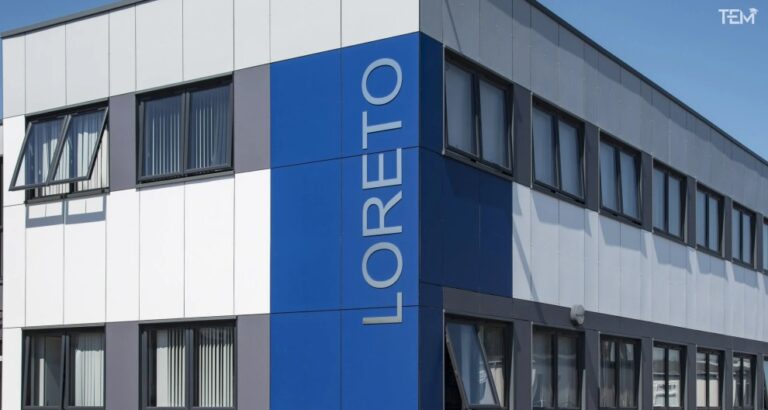
On a crisp October day in 2025, Loreto Grammar School students, staff, alumnae, and friends gathered for a Mass of Thanksgiving. The occasion marked 170 years since a small but determined journey began in 1855. On that day, Sr Felicitas Murray CJ, left Rathfarnham, Dublin, with five Loreto Sisters and travelled by stagecoach to Omagh. Their purpose was simple but ambitious: to open a Loreto school for girls.
The first classrooms stood on George’s Street. In time, the school moved to the Loreto grounds on James Street, where the sisters established both a convent and the foundation of what would become the present school site. Today, the Convent House and chapel still stand as reminders of the sisters’ enduring influence on education in Omagh, across County Tyrone, and beyond.
The vision that guided those early years continues to shape the school today. Inspired by the educational ideals of Mary Ward and the work of Mother Frances, Teresa Ball, the school carries forward a tradition rooted in faith, scholarship, and service. The mission remains clear: “Striving for Excellence, the Loreto Way,” guided by the belief that students should “seek truth, love what is good, and strive for excellence.”
At its heart, Loreto Grammar School serves girls between the ages of eleven and eighteen within a Catholic voluntary grammar school setting. Its guiding vision, “Making Young Dreams Possible,” reflects a long-held belief that each student has a voice, a purpose, and the ability to achieve her personal best. More than a century and a half after its founding, the school continues to nurture young women who are encouraged to use their talents not only for their own success but in service to others.
A Global Ethos with Expanding Opportunities
The traditions at Loreto Grammar School extend far beyond Omagh. As part of the worldwide Loreto network, the school shares a common ethos rooted in the vision of Mary Ward. Schools across this network follow the same guiding philosophy, shaped by what educators often describe as the Mary Ward compass. The principles encourage curiosity, compassion, and a willingness to respond thoughtfully to the needs of society.
Admissions have also evolved in recent years. While grammar education traditionally relied on academic selection alone, Loreto Grammar School, Omagh, now operates a 50–50 admissions model based on both academic and non-academic criteria. The approach broadens access while remaining aligned with the school’s commitment to fairness and opportunity.
Students benefit from a wide curriculum across every stage of their education. Subjects at Key Stage 3 build strong foundations, followed by GCSE choices at Key Stage 4 and specialised study in the final years. Collaboration with the Omagh Area Learning Community also allows students to access additional subjects. This will grow as the school prepares to join the new Strule Shared Education Campus.
A Culture of Care and High Expectations
Inside the classrooms and corridors of the school, the guiding principle remains simple. Students learn best when they feel supported, valued, and encouraged to aim high. Staff members follow what is often described as the Loreto Way, a child-centred approach that places each student’s wellbeing and development at the heart of school life.
Teachers work closely with parents, community partners, and support services to make sure students receive the help they need to succeed. A strong emphasis is placed on enablement and empowerment, supported by targeted intervention strategies when additional guidance is required. The philosophy reflects the wider priorities set out in the Department of Education Northern Ireland Corporate Plan, which highlights a simple goal: every child should feel happy, continue learning, and achieve success.
Today, the school serves around 890 pupils with a teaching staff of sixty, supported by a wider team of non-teaching professionals who help sustain the daily life of the school community.
A Vision Grounded in Care and Possibility
Guiding the direction of the school is Principal Susan Cullinan, whose message to students and families reflects the values long associated with Loreto education. Her approach begins with a simple belief that every student deserves the chance to discover their strengths and grow with confidence.
“In striving for excellence, which is one’s personal best, we support, scaffold, and nurture each child to do their best and be their best self,” Cullinan says. Central to this philosophy is the understanding that wellbeing and learning go hand in hand. When students feel supported and valued, they are more willing to engage, explore, and challenge themselves.
Cullinan often reminds students of the words of Mary Ward: “Do not bury your talents which God has lent you to be used in His service.” For the school community, the message carries a clear meaning. Each student brings gifts that can contribute to the wider good.
With the planned move to the Strule Shared Education Campus on the horizon, the school looks forward to new opportunities while continuing to nurture the dreams and ambitions of every student.
A School Day Shaped by Community and Values
Each morning at Loreto Grammar School begins with a short registration and pastoral meeting led by the Form Teacher. It is a quiet but important moment in the school day. Students share achievements, raise concerns if needed, and settle into the rhythm of the day before formal lessons begin. Announcements are shared, encouragement is offered, and the tone is set for learning.
Lessons that follow emphasise active participation, supported by a wide range of extracurricular and enrichment opportunities that bring energy to school life. Success is celebrated regularly, creating what many describe as a sense of joy in the journey.
That sense of purpose draws from the core values of the Loreto tradition: Joy, Truth, Justice, Freedom, and Sincerity. Weekly year-group assemblies reinforce these ideals through collective worship, team building, and recognition of effort and achievement. Over time, these practices help foster a culture of respect between students and staff.
Leadership and Support Across the School
Behind the daily life of the school stands a structure designed to support both learning and wellbeing. Academic subjects are organised into departments, each led by a Head of Department who guides curriculum development, classroom practice, and student progress.
Pastoral care runs alongside academic oversight. Each class has a Form Teacher, supported by a Head of Year who leads the wider pastoral and personal development of the group. Several additional staff members hold specialist roles that strengthen different aspects of school life.
The Senior Management Team, led by the Principal, includes two Vice Principals responsible for curriculum and pastoral care. Four Senior Teachers focus on key areas such as pupil progress, data and reporting, community links, and child-centred provision.
Additional support comes through the Special Educational Needs team, which includes classroom assistants, a learning mentor, and a pupil welfare officer. Together, they identify needs early, maintain careful records, and work closely with families and external services to support every student.
Student Leadership and Personal Development
Opportunities beyond the classroom continue to grow at Loreto, often shaped by the interests and ideas of the students themselves. A wide student leadership structure allows pupils to take on meaningful roles across school life. Senior pupils serve as prefects in areas such as environment, literacy and numeracy, music, sport, and JPIC, which stands for Justice, Peace, and Integrity of Creation.
Alongside this group, a recently formed junior leadership team focuses on three themes that reflect the school’s values: faith, relationships, and teamwork. Working with the student council, these groups help ensure that the voice of the pupil remains central to school life.
Personal development programmes evolve each year to reflect changing needs and interests. Facilities such as the sensory room, learning support space, and the recently created remembrance garden offer places for reflection and wellbeing. Community outreach opportunities at the Post-16 level also allow students to mentor younger pupils and contribute to local schools and organisations.
Supporting Every Student’s Personal Best
The idea of excellence at Loreto Grammar School is not defined by competition alone. Instead, it is understood as helping each student reach her own personal best while developing confidence, character, and a sense of purpose.
This perspective shapes how programmes and opportunities are planned across the school. Strategic planning focuses on ensuring that students with different abilities, interests, and learning needs find support and encouragement in equal measure. Academic progress remains important, but comparable attention is given to personal growth, well-being, and the wider development of skills that prepare students for life beyond school.
Teachers and staff work carefully to design provisions that respond to these varied needs. Through thoughtful planning, targeted support, and a strong pastoral structure, the school aims to create an environment where every pupil feels capable of progressing and contributing. In this way, the pursuit of excellence becomes a shared journey rather than a narrow definition of achievement.
Talent in the Arts, Sport, and Culture
Life beyond the classroom remains lively at Loreto, where students are encouraged to explore interests across the arts, sport, and wider cultural activities. Participation is woven into school life through classes, assemblies, and a wide range of extracurricular opportunities. Achievements are shared and celebrated, reinforcing the belief that success comes in many forms.
Music continues to be a source of pride. The school choir has travelled widely and recently earned a gold award at the International Young Bohemia Music Festival in Prague, performing alongside choirs from across Europe.
Sporting life is equally active. Students compete in Gaelic football, netball, athletics, swimming, and show jumping, with several teams and individuals reaching national and international levels. Some past pupils have gone on to compete in European championships or pursue further training at international sports academies.
Creativity finds expression in other ways as well. Recently, the school supported a Year 11 student who published her first novel, celebrating a young writer whose work has already begun to reach a wider audience.
Preparing Students for the Wider World
Planning for life beyond school begins early at the Loreto. Through the Learning for Life and Work programme at Key Stage 3, students explore themes such as employability and begin to consider how their interests may shape future career choices. At later stages, dedicated careers classes provide further guidance as students prepare for GCSE and post-16 pathways.
A dedicated Careers Department coordinates this work, supported by visiting speakers, career fairs, and specialist events such as recent programmes focused on STEM and construction. Each subject area also maintains a careers corner where pupils can learn about related professions and hear from past students who have pursued those paths.
Practical experience forms an important part of this preparation. Post-16 pupils undertake work placements, while mentoring opportunities arise through leadership roles, peer learning initiatives, and classroom support programmes. International visits, service projects, and charitable initiatives further broaden perspectives, reflecting the school’s commitment to the Loreto values of justice, service, and global responsibility.
Priorities for the Future
Planning for the future remains an ongoing process within the community at Loreto Grammar School. The school’s development plan outlines several priorities designed to strengthen both learning and student wellbeing in the years ahead.
One focus centres on ethos. In preparation for migration to the Strule Shared Education Campus, staff aim to deepen the culture of inclusion and shared learning so that students from varied backgrounds feel equally valued within the school community and wider campus. Alongside this, new efforts will continue to strengthen health and wellbeing programmes, building on initiatives such as “Take 5 for Wellbeing” and “Being Well, Doing Well.”
Curriculum development also remains a priority. As time and the changing context of Loreto Grammar School evolve, the aim is to broaden subject options, increase accessibility, and ensure that teaching approaches continue to be supportive for a diverse intake, meeting student, societal, and employability needs.
Leadership development forms another important strand. By encouraging what the school describes as a “learning leaders” approach, both staff and students are given opportunities to build confidence, responsibility, and leadership skills while strengthening connections with the wider community at local, national, and international levels.
Quotes