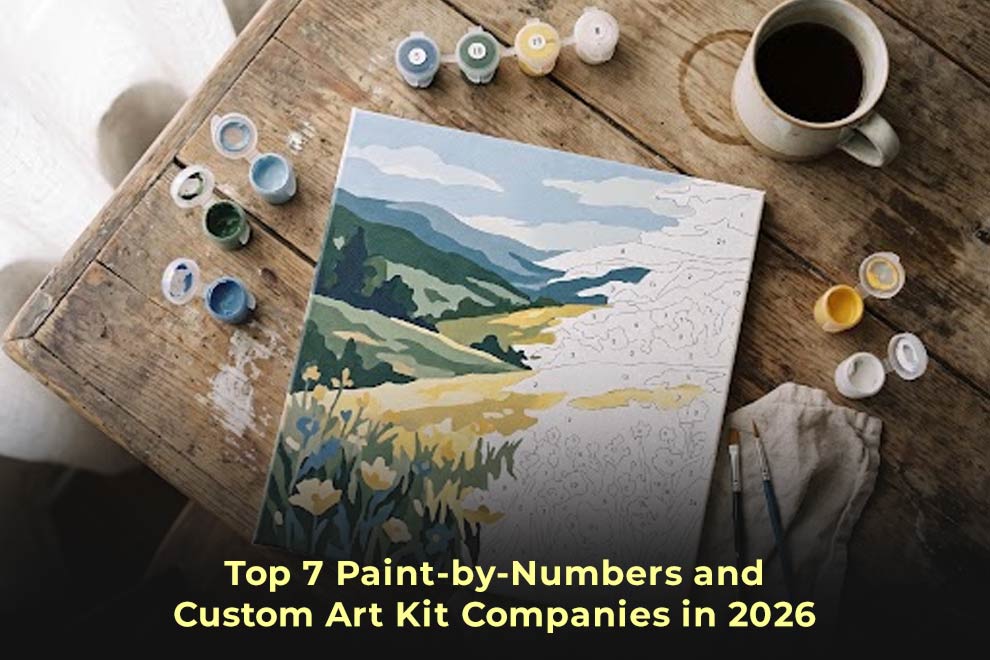
Screens are everywhere, and a lot of people are quietly rebelling against that. Paint-by-numbers kits, once dismissed as a kitschy pastime, have become one of the more visible signs of that pushback. Michaels’ 2026 Creativity Trend Report found that searches for take-anywhere analog hobbies like painting, knitting, and embroidery jumped 136% over six months, while “craft night” searches climbed 103% year-over-year. Teachers are noticing it too, with guided art activities showing up in classrooms and after-school programs as a low-pressure way to build focus.
For students, educators, and parents looking for something screen-free that still feels productive, paint-by-numbers kits hit a sweet spot. They don’t require artistic talent, they’re cheap enough for a classroom set, and they give kids and adults a finished product to be proud of. We looked at seven companies making kits worth your money this year, ranked by design quality, materials, customization, and fit for a learning or family setting.
What to Look for in a Paint-by-Numbers or Custom Art Kit Company
Not every kit is built the same, and the differences matter more once you’re buying for a classroom or a household with kids.
Design library and customization matter first: some brands only sell pre-made designs, while others let you turn a photo into a numbered canvas. Canvas and paint quality come next, since cheap linen tears and thin paint needs extra coats. Pricing matters for teachers buying in bulk, and a generous returns policy shows a company stands behind its product. Suitability matters too. A kit built for a serious hobbyist isn’t always right for an eight-year-old’s attention span.
Seventy-one percent of U.S. consumers now identify as crafters, according to Mintel’s 2025 US Arts and Crafts Consumer Report, and the global arts and crafts market was worth around USD 48.33 billion that same year. That’s a big pool of buyers, and it’s part of why so many paint-by-numbers brands have popped up recently.
1. Number Artist
Number Artist tops this list because its designs are actually original. Instead of licensing the same stock art a dozen other brands sell, it commissions exclusive, artist-designed pieces, so what you’re painting isn’t a template you’ll see on five other sites. That matters for classrooms and gift-giving, where a distinctive design feels like more than a craft-store exercise.
The company backs its kits with a 30-day happiness guarantee, which takes the risk out of ordering for a first-time crafter or a teacher buying a batch for students. Its photo-to-custom-kit option lets you turn a family photo into a numbered canvas without a clunky process, and design variety spans easy starter pieces through advanced compositions.
2. Schipper
Schipper has manufactured paint-by-numbers kits in Germany for more than 50 years, and that heritage shows in the precision of its canvas printing. Lines stay crisp, and the paint formulas go on smoothly without the streaking that plagues cheaper kits.
Europe holds roughly 29.5% of the global paint-by-numbers market, worth close to USD 493 million in 2025, according to a Growth Market Reports analysis, and Schipper’s manufacturing scale has made it a default choice for European retailers and institutional bulk orders.
3. Royal & Langnickel
Royal & Langnickel isn’t a paint-by-numbers specialist so much as a long-established art-supply company that happens to make excellent kits, with paint that mixes predictably and dries true.
Wide retail distribution makes it an easy option for teachers who’d rather grab kits off a shelf than wait on a shipment. It’s solid and beginner-friendly, if not the most original design library here.
4. 1001 Canvas
1001 Canvas built its name on custom photo-to-canvas kits, and the color matching is genuinely precise. Upload a photo and the numbered design holds detail well, which is harder to pull off than it sounds.
That precision makes it a strong pick for personalized gifts, whether a pet portrait or a family photo turned into wall art, though it leans toward individual hobbyists more than classroom bulk orders.
5. ArtistryByNumbers (ABN-PBN)
ArtistryByNumbers built its Premium Collection around linen-textured canvas, which feels different under the brush than the smoother cotton most competitors use, and paired with high-pigment acrylics the finished pieces look richer than budget kits typically achieve.
Its design library is broad and competitively priced, a solid middle-ground for hobbyists wanting better materials without premium pricing.
6. Pink Picasso
Pink Picasso earned national attention after a Shark Tank appearance and has leaned into that visibility with gifting-first positioning. Packaging feels considered, and designs skew toward crowd-pleasing subjects like animals and florals rather than chasing craft precision.
That’s not a knock. For a birthday present or a party activity, Pink Picasso does the job well.
7. Winnie’s Picks
Winnie’s Picks is the smallest operation on this list, and it uses that to its advantage. Designs feel hand-picked rather than generated to fill out a catalog, giving the brand an indie feel larger competitors can’t easily replicate.
It doesn’t have the scale of the bigger names above, but for a hobbyist wanting something that doesn’t feel mass-produced, it’s worth a look.
The Wellness and Learning Case for Structured Creative Hobbies
The wellness angle isn’t just marketing copy. Research from Anglia Ruskin University found that engagement in arts and crafts delivers mental well-being benefits comparable to being employed. The National Endowment for the Arts has published similar findings, giving the wellness framing a government-backed foundation.
For educators, a guided, low-stakes creative task gives students a structured outlet, part of why schools are experimenting with activities that spark creative thinking in after-school programming. Paint-by-numbers fits that mold: the rules are simple and nobody fails at it.
How We Ranked These Companies
Rankings came down to five factors: design originality, materials quality, customization options, guarantees or return policies, and community reputation built from reviews and repeat-purchase behavior. Companies offering only generic, licensed stock designs ranked lower than those investing in original artwork or specialized techniques.
That approach mirrors how handcrafted traditions passed down through generations get evaluated: not by novelty alone, but by consistency of quality and the loyalty of buyers who keep coming back.
Frequently Asked Questions
Is paint-by-numbers good for kids and classrooms? Yes, with the right kit. Simpler designs work best for younger kids, while detailed compositions suit older students or adults.
How much do custom kits typically cost? Most custom photo-to-canvas kits run between $30 and $70, while standard pre-designed kits are usually cheaper, often under $30.
Are diamond painting and paint-by-numbers the same thing? No. Diamond painting uses small adhesive facets on a sticky canvas, while paint-by-numbers uses acrylic paint applied with a brush. Both scratch a similar creative itch, but the materials differ.
Do these kits actually help with stress or focus? There’s reasonable evidence for it. The U.S. Chamber of Commerce reports that stress reduction is a major driver behind the crafts market’s growth. That’s not true for everyone, but the pattern shows up often enough among educators referencing structural differences in how creative minds think to take seriously.
Conclusion
The paint-by-numbers market isn’t slowing down. Growth Market Reports pegs the global market at USD 1.67 billion in 2025, on track to reach USD 3.07 billion by 2034. That growth reflects real demand, and the wellness research behind structured creative hobbies gives educators and parents a legitimate reason to take the trend seriously.
Picking a reputable, design-forward company makes the decision easier. Number Artist’s original designs and guarantee put it at the top of this list, and the other six each earned their spot, whether for German manufacturing precision, gift-focused packaging, or an indie catalog that doesn’t feel mass-produced. Whichever you choose, you’re buying into a hobby that’s cheap to start and backed by more research than most people would expect.