Long before public education became a right, schooling in Cumberland County, Virginia, depended largely on who could afford it. In 1810, the Virginia General Assembly created the Literacy Fund to help establish common schools, primarily for children from families with limited means. By 1844, Cumberland had eleven such schools, scattered across the county. Education remained deeply divided by race, and schools for African American children faced severe restrictions until the Civil War period changed the landscape.
The county’s public school system began to take a more formal shape on April 13, 1872, when Cumberland’s first county school board organized and proposed a local tax to support education. What followed was a long, uneven process of building schools, expanding access, and eventually confronting segregation. Small one-room schools gave way to high schools, consolidated campuses, and, in 1969-70, full integration.
That history still matters to Cumberland County Public Schools. The district now sees itself not simply as a place where students attend classes, but as an educational and resource center for the wider community. Its mission is to prepare students with the confidence, courage, and competence to pursue their goals, contribute to their communities, and keep learning throughout their lives.
Today, the district is focused on what comes next: expanding career and technical education, strengthening school safety, deepening family engagement, and bringing critical thinking, communication, collaboration, creativity, and citizenship into the curriculum. The aim is straightforward: prepare Cumberland’s students not only for their next classroom, but for the lives they will build beyond it.
Learning Beyond the Classroom
At the elementary school, academic learning does not stop when a student leaves the core classroom. The district has built its programs around opportunities for students to explore their interests and strengths. That exploration includes a large makerspace used for STEM lessons and a long-standing partnership with Longwood University. College students regularly work alongside teachers through practicum and student-teaching experiences, giving students additional opportunities to learn alongside them.
Middle school broadens the field. Along with English, mathematics, science, and history, students can choose from Art, Physical Education, GoTec, Media Studies, Band, Spanish, and Agriculture. Each offers a different way to create, communicate, build, or discover.
Those possibilities become more focused. Through a partnership with Southside Virginia Community College, seniors can pursue an associate degree and/or career studies certifications through Welding, HVAC, and Electrical. Career and technical programs also cover Culinary Arts, Health Occupations, Cosmetology, Agriculture, Computer Science, and Cyber Security. A regional masonry program and JROTC add further options.
The district’s goal is not to steer every student toward the same destination. It is to give each one a meaningful path to choose from.
A Small District With a Wide Reach
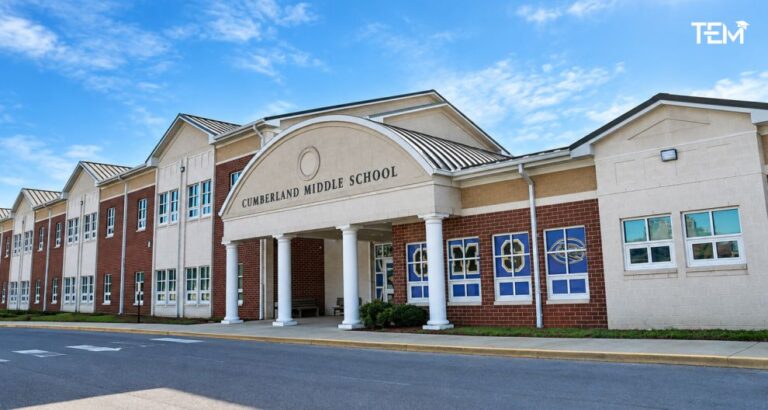
Three schools serve as the backbone of the district, but the opportunities available to students extend well beyond the county’s traditional classrooms. Cumberland Elementary School serves students from prekindergarten through fourth grade, followed by Cumberland Middle School for grades four through eight and Cumberland High School for grades nine through twelve.
The structure may be compact, but the high school experience reaches into the wider region. Through Southside Virginia Community College, students can participate in Governor’s School and pursue hands-on training in HVAC and electrical work, welding, and the Teacher Academy. This year, the district is adding another option through the Regional High School Masonry Program, giving students interested in the trade a chance to learn outside the conventional school setting.
Dual enrollment adds another layer. Qualified high school students can take college-level courses while completing their secondary education, with the opportunity to earn an associate degree before graduation.
For Cumberland Schools, serving a small rural community does not mean offering a narrow education. The district continues to build connections that give students access to academic and career pathways that reach beyond its three campuses.
A School Culture Built on Care and Expectations
A student’s experience at school often comes down to something less visible than a curriculum or a test score: whether that student feels known, supported, and expected to do well.
That balance shapes the leadership at the district. At the elementary school, principals Wendy Tillett and Pamela Stepko want families to know that their children are in caring hands. Their focus is both practical and personal: helping students develop the basic skills they need while making sure their first years of school are positive ones.
At Cumberland Middle School, Jason Mawyer and Michael Hill carry that work forward with a similar emphasis on a positive environment and high expectations, while setting clear expectations for students. Their goal is to strengthen the foundation built in elementary school and prepare students for the demands of high school.
The message to families is straightforward. Every student is welcomed and cared for at Cumberland. The school leaders want students to feel welcomed and cared for, while also understanding that care comes with expectations. For the district, those two ideas are not competing priorities. They are part of the same promise: create an environment where students can feel secure enough to grow and challenged enough to succeed.
Measuring Progress One Student at a Time
A test score can show where a student stands, but Cumberland County looks more closely at where that student is headed. The district defines educational excellence through growth, measured at three levels: across the division, within individual schools, and for each student.
That focus shapes the everyday priorities. Staff works to ensure students meet state and federal standards, while keeping their sights on something broader: the skills needed to function confidently beyond school. Literacy and mathematics remain central because the district sees both as foundations for future learning and work. Teachers also reinforce creativity and critical thinking, giving students opportunities to apply what they know rather than simply recall it.
Meeting students where they are matters just as much. Students who are ready for greater challenges can take advanced mathematics and English courses, while instruction is adjusted to meet students’ different needs.
The district is also continuing to grow its career and technical offerings, broadening the pathways available to students after graduation. Progress, for the district, has no single definition. It begins with helping each student move forward from wherever they start.
The Advantage of Knowing the Community
In a relatively small school division, the line between school and community can become remarkably thin. At Cumberland County, many educators are graduates of the division or professionals who live in the community, and some spend their entire professional lives teaching in the same community.
That continuity gives teachers a perspective rooted in the community. It creates a genuine investment in the community and from the community, strengthening the relationship between educators and the students they serve.
Still, familiarity alone is not enough. Educators regularly examine student data, collaborate with colleagues, and pursue professional training to adjust instruction and respond to different learning needs. The goal is to make sure students are not expected to learn in just one way.
Ultimately, the district wants students to see their education as a starting point rather than a finish line. By giving them the skills, support, and confidence to take the next step, Cumberland helps students move closer to whatever future they imagine for themselves.
Building a School Around the Community
A school cannot do everything on its own, especially when its goal extends beyond academics. Cumberland County Public Schools has built a network of families, businesses, community members, and community partners that contribute to the work in different ways.
The district holds community events, recognizes partners at school board meetings, and plans an annual gathering to thank those who have supported its initiatives. These relationships also create practical opportunities for students. Through the 21st Century Grant, Cumberland provides additional academic support and enrichment, working alongside co-applicants and community partners to broaden what students can experience.
Community organizations are also invited into school events, where they can connect families with useful resources and help them connect with available support. It is a simple approach, but an important one. The district sees community involvement not as an occasional contribution, but as part of how a strong school system functions.
Finding a Place to Belong
Some of the most meaningful parts of high school happen outside the regular school day. Students have a wide range of ways to find their interests, build friendships, and take on responsibilities.
Club Days introduce students to activities such as band, theater, Scholastic programs, and teacher-led interest groups. Sports include football, basketball, golf, wrestling, track, and volleyball, alongside club and esports opportunities. Students can also take part in academic, cultural, service, leadership, wellness, and volunteer programs.
For seniors, the experience becomes more practical. Through Senior Seminar and Projects, students explore careers that interest them and can intern with community members. The school also holds etiquette dinners and mix-and-mingle days, where seniors practice conversation, networking, and professional manners with community adults.
These experiences give students something a classroom cannot always provide: a chance to discover how they want to show up in the world.
Many Roles, One Connected System
In a small division, leaders may oversee more than one function, helping tasks move across related areas. Leaders may oversee more than one function, which keeps related work connected and allows tasks to move without unnecessary layers between decisions and execution.
Jeff Dingeldein oversees Operations, Safety, and Technology; Andrew Hoyt oversees Finance and Federal Programs, while Berniece Ford leads Special Education and Student Services. Sheri Almond directs Instruction and Testing, and Assistant Superintendent Elizabeth Jamerson oversees Human Resources and Transportation.
That structure is reinforced at the school level. Building administrators, interventionists, and coaches regularly review student data, work with teachers to strengthen instruction, and help identify students who need additional support.
The structure reflects the division’s emphasis on fluidity and shared attention to student needs. Departments do not operate as isolated units, and instructional needs can reach the people responsible for addressing them. The result is a leadership structure built around coordination, responsiveness, and keeping attention on students.
Making Opportunity Accessible
Opportunity means little if a student cannot afford to take part in it. The district works to remove that barrier wherever possible, keeping programs free or at limited cost for students and families.
One example is the college-credit pathway. Because Cumberland can offer the necessary courses on campus, eligible students can work toward an associate degree without facing the costs or logistics that might otherwise stand between them and that opportunity.
The district also has an inclusive practices and assistive technology team made up of teachers and building-level administrators. Together, they work to identify what students need and make sure those needs do not prevent participation or progress.
Career and technical education follows the same principle. All CTE programs are open to all students.
The approach is practical rather than symbolic: remove costs where possible, provide the right support, and keep doors open so students can decide what they are capable of pursuing.
Preparing Students for What Comes Next
The transition after high school can feel uncertain, so Cumberland gives students opportunities to practice it before graduation. Within the counseling office, an administrative assistant helps students with scholarships and applications while also finding internships and work-based learning opportunities. The CTE department chair helps monitor those placements.
Each year, the district hosts a college and career fair, allowing students to explore options during the regular school day. Seniors also learn skills that rarely appear in a textbook. At an etiquette dinner, they practice professional table manners and conversation with community adults. A spring “mix and mingle” gives them another chance to build confidence while meeting senior project judges and local supporters.
The district also works with Southside Virginia Community College and its career coach, while the GEAR UP grant will continue with the current eighth-grade students through graduation.
Strengthening the Work Behind the Classroom
The next phase of Cumberland County Public Schools is as much about improving its own practices as it is about adding new programs. The district is taking a closer look at how it uses data and assesses students, with the goal of creating more consistent assessment practices across its schools.
That work has two purposes. Educators want to understand what students need at the next level while also ensuring instruction remains aligned with Virginia Department of Education standards and prepares students for required exams.
Professional development is another major focus. Rather than relying on broad training that may not fit the classroom, Cumberland is asking educators what support would actually help them do their jobs better. The district plans to build professional learning around those needs.
The district’s people are central to this work. Cumberland wants professional development to be meaningful and relevant to staff, while retaining educators and continuing to help them grow. By investing in its staff, the district is strengthening the people who have the most direct impact on its students.
Quote
Also Read: Empowering Futures: Outstanding U.S. School Districts of 2026