The Education Magazine
October 28, 2026
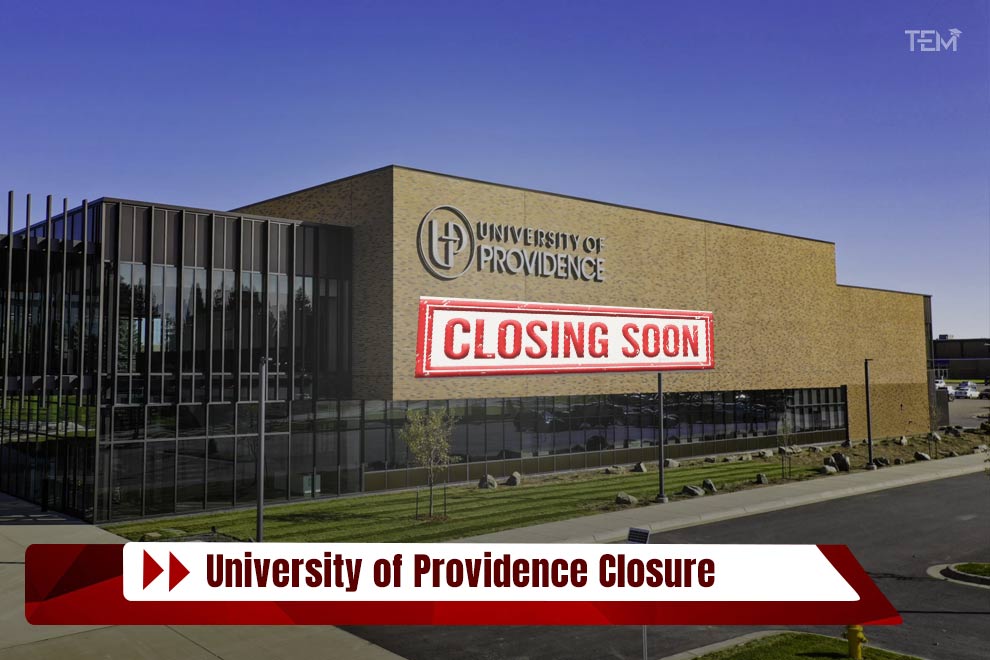
The University of Providence, located in Great Falls, Montana, announced on October 27 that its Board of Trustees had voted to close the institution after efforts to address declining enrollment and growing financial pressures failed to establish a sustainable future. The University of Providence Closure will bring the private Catholic university’s educational operations to an end at the conclusion of the 2026–2027 academic year.
The University of Providence’s final day of instruction will be August 20, 2027. Academic and administrative activities will continue beyond that date to help students receive their final grades, academic records, and other necessary support. The university says its immediate priority is helping students complete their degrees or transfer to other institutions.
Why Is the University of Providence Closing?
The University of Providence is closing because sustained enrollment declines and increasing financial pressures made its operating model difficult to maintain over the long term.
According to the University of Providence’s official announcement, it spent several years trying to secure a sustainable future. Its efforts included restructuring academic programs, reducing operating expenses, pursuing new enrollment and revenue strategies, and exploring partnerships with other institutions.
The University of Providence restructured academic programs, reduced operating expenses, and pursued new enrollment and revenue strategies to address its financial challenges. However, these efforts did not establish a sustainable long-term financial model. University’s Board of Trustees also explored alternatives, including a merger or acquisition, before deciding to end educational operations.
The planned closure of University of Providence would allow it to support students and employees through an organized transition rather than risk an abrupt ending.
What Does the University of Providence Closure Mean for Students?
The University of Providence says it will provide individualized guidance to currently enrolled students so they can identify the most suitable path to completing their education.
Students of the University of Providence will have different options depending on their academic programs, progress toward graduation, and individual circumstances. These options include:
- Completing their degrees at the University of Providence before educational operations end.
- Using approved teach-out arrangements with partner institutions.
- Transferring to another college or university to finish their studies.
The University of Providence has developed teach-out plans in accordance with requirements set by the Northwest Commission on Colleges and Universities (NWCCU). It will work with partner institutions to provide students with clear pathways and minimize disruption to their education.
The University of Providence has also confirmed that classes and registration will continue throughout the 2026–2027 academic year, with course schedules potentially adjusted to prioritize the requirements of students working toward graduation.
Students of the University of Providence are advised to continue attending classes, consult their academic advisers, review their degree requirements, and monitor official university communications for updates about their individual plans.
How Will the University of Providence Closure Affect Faculty and Staff?
The University of Providence has acknowledged that the closure will create uncertainty for faculty and staff as well as students and their families.
The University of Providence announced that individual employee meetings would begin on October 28, 2026. These meetings are intended to provide information about employment timelines, compensation, benefits, responsibilities during the transition, and available support resources.
University of Providence President Dr. Caroline Goulet said the institution recognizes the impact of the decision on its community.
“Our responsibility now is to care for the people who make up this University community, maintain the quality of their educational experience, and provide clear guidance and support as they prepare for what comes next.”
The University of Providence has said it will focus on supporting employees with dignity and respect while maintaining a strong academic experience during its final year.
What Is the History and Mission of the University of Providence?
The University of Providence in Great Falls, Montana, was founded in 1932 through a collaboration between the Sisters of Providence, the Ursuline Sisters, and the Catholic Bishop of Great Falls. Its mission centered on expanding access to Catholic higher education, and the university later developed undergraduate and graduate programs in the liberal arts and health professions.
Over nearly 95 years, the University of Providence became part of the region’s educational community. Its planned closure in 2027 will end its educational operations, bringing its long-standing role in higher education to a close.
University of Providence Board of Trustees Chair Terry Cosgrove highlighted the institution’s legacy in the university’s closure announcement, describing it as,
“an important Catholic ministry.”
The impact of University of Providence will continue through its alumni, faculty, staff, and the communities connected to its mission.
What Happens After the University of Providence Closure in August 2027?
Although August 20, 2027, will be the final day of instruction, some administrative work will continue afterward. The University of Providence plans to ensure students receive their final grades, academic records, and other necessary documentation.
University of Providence is also working with Providence Ministries and other mission partners to preserve its Catholic identity, history, traditions, institutional records, and sacred and historical assets.
Further information about alumni records, transcripts, and opportunities for graduates to remain connected will be shared as details become available.
The University of Providence Closure marks the end of educational operations at an institution founded nearly a century ago. During its remaining academic year, the university says it will focus on helping students complete their education, guiding employees through the transition, and preserving the institution’s legacy.