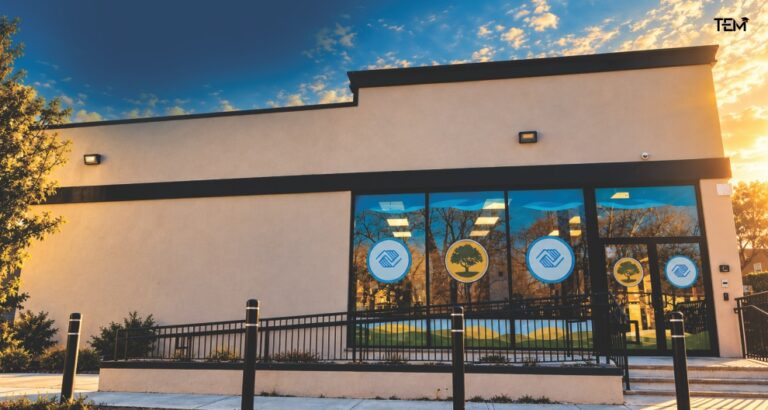
A school does not change simply because its enrollment grows. Its character changes when its ambitions grow with it. New programs have to find their place. Students need more ways to learn and more support when they struggle. Teachers and school leaders have to keep asking whether the education they provide is preparing young people for the world waiting beyond graduation.
That question has shaped the story of the Barack Obama Green Charter Schools (BOGCS). What began as a single high school has grown into a multi-school district serving middle and high school students, with a clear focus on rigorous learning, personal responsibility, and global citizenship.
At the heart of that growth is a straightforward idea: students should leave school ready to think for themselves and take responsibility for what they do with their education. BOGCS aims to develop resilient, productive, independent critical thinkers and lifelong learners who value scholarship and integrity.
The district’s vision extends beyond academic achievement. Its graduates are expected to communicate effectively, solve problems, work with others, think critically, and contribute as responsible citizens. Over time, the schools have expanded their programs, strengthened systems for supporting students who need additional help, and created more opportunities for students to shape their own experience.
The result is a district that has grown in size without losing sight of the question that started it all: What should a student be ready to do when the school doors finally close behind them?
From Strong Foundations to Taking Ownership
BOGCS does not operate an elementary school. Its academic journey begins in sixth grade, when students enter middle school at a stage where strong habits can shape everything that follows. The focus is not only on subject knowledge, but also on helping students become independent learners who can communicate clearly, think critically, and manage their work.
In high school, those foundations meet more rigorous, standards-aligned coursework and a stronger focus on life after graduation. Benchmark assessments help educators identify where students stand, while targeted interventions and individualized support give students help where they need it. Interdisciplinary learning, dual enrollment, and career exploration add further ways to connect classroom learning with future possibilities.
Across both schools, students are expected to do more than finish assignments. They must understand academic standards, demonstrate mastery, apply what they know, and take greater ownership of their learning. The aim is progress that students can carry with them beyond graduation.
Small by Design, Broad in Opportunity
In Plainfield, New Jersey, the charter schools serve students through two campuses: a middle school for grades 6 through 8 and a high school for grades 9 through 12. Together, they welcome students from Plainfield and the surrounding communities, creating a learning environment shaped by a diverse student population.
The district remains intentionally small, allowing educators to know students and families personally. That familiarity supports communication and individual attention while helping families stay connected to the educational experience.
Yet small does not mean limited. Students have access to academic programs, extracurricular activities, and college- and career-focused opportunities. The schools combine the personal attention of a close-knit community with preparation for a broader world. Students learn in an environment where they are known, supported, and encouraged to pursue ambitious goals beyond Plainfield.
Excellence Means More Than a Test Score
At BOGCS, educational excellence is not reduced to a number on a test. The district looks further ahead, asking whether students are becoming academically prepared, resilient, independent, articulate, and responsible enough to navigate college, careers, and life.
That broader definition shapes its priorities. The schools are working to improve academic achievement while reducing chronic absenteeism and strengthening the systems that help students when they fall behind. The district is also expanding rigorous opportunities for multilingual learners and students with disabilities, while placing greater emphasis on standards-based instruction, mental health, student support, and stronger family and community engagement.
Behind these priorities is a philosophy that puts responsibility on both sides of the education relationship: “Your success is your responsibility.” Students are expected to own their effort and growth. Educators, meanwhile, have a responsibility to provide the instruction, resources, support, access, and opportunities that make that success possible.
Leadership Close to the Work
The growth from a single high school into a two-school district has been closely tied to the leadership of Superintendent Mrs. Erin D. Murphy-Richardson, who also serves as High School Principal. Her approach is grounded in staying close to the day-to-day work of education, from understanding what teachers need in the classroom to listening to students and families.
The results are visible in the achievements of its students. The Class of 2026, with just 58 graduates, earned $6.2 million in scholarships, setting a new school record. For Murphy-Richardson, the figure matters because of what it represents: students discovering what can happen when high expectations are matched with opportunity, support, and determination.
Her leadership philosophy is captured in a phrase she says each day: “Excellence is Standard.” She believes that when you give your best every day, you make excellence the standard of your life.
Meeting Students Where They Are
A diverse student body brings different experiences, learning needs, and ways of approaching the classroom. At the schools, that diversity is treated as a strength, but educators also recognize that equal treatment does not always mean giving every student the same support.
Teachers use student data to understand where help is needed and respond through differentiated instruction, small-group support, intervention, accommodations, and individualized learning strategies. The district is also strengthening support for multilingual learners and students with disabilities, with a clear expectation that every student should have meaningful access to rigorous, grade-level instruction.
The work extends beyond academics. BOGCS places value on culturally responsive practices and the relationships teachers build with students. Student voice also has a place in the process. Young people need to know that their experiences, identities, ideas, and aspirations matter within their school community. For the district, helping every student thrive starts with understanding that students do not all begin from the same place, and meaningful support has to reflect that reality.
A School Cannot Operate in Isolation
A student’s education is shaped by more than what happens between the classroom walls. Families, mentors, local organizations, colleges, businesses, and civic leaders can all influence what a young person sees as possible. That makes those relationships an important part of how the schools approach their work.
Family engagement begins with regular communication. Meetings, school events, schoolwide updates, and individual outreach give parents and guardians different ways to stay connected with their children’s education. The goal is to build a relationship rather than limit communication to moments when a problem needs attention.
Beyond families, the district seeks partnerships that can expand students’ access to the wider world. Community organizations, colleges, businesses, and civic leaders contribute through career exposure, enrichment, civic engagement, fundraising, and experiences that may otherwise be out of reach.
The long-term aim is to deepen those relationships and develop the schools as a truly community-centered part of Plainfield.
More Than What Happens in the Classroom
Some of the strongest memories students carry from school have little to do with a textbook. At BOGCS, campus life gives students plenty of opportunities to build those memories through clubs, Spirit Week, school celebrations, trips, college activities, fundraising, civic engagement, leadership programs, and athletics through a partnership with Plainfield Public Schools.
What makes these activities distinctive is the role students play in shaping them. Rather than simply showing up to established events, students are encouraged to create traditions of their own. That sense of ownership has helped build strong school spirit, particularly at the high school.
These experiences also give students room to discover parts of themselves that may not surface during a regular school day. A student can lead an event, compete on a team, take part in a team through the district’s athletics partnership, organize a fundraiser, serve the community, or help create a tradition that strengthens the sense of belonging across the campus.
The goal is lasting connection. The schools want students to remember not only what they learned, but also the people, experiences, celebrations, and sense of belonging that made their school years meaningful.
Leadership Without Silos
A small district leaves little room for departments to work in isolation. At BOGCS, the Superintendent’s Office works alongside school principals and administrators, while Curriculum and Instruction, Special Education and Student Services, Business and Operations, Technology, Security and School Safety, and other student support functions each carry their own responsibilities.
The structure is broad, but collaboration remains essential. An academic concern can quickly involve student services. A technology decision can affect instruction. Safety can shape daily operations, while family engagement depends on communication across several areas. That overlap makes coordination part of how the district functions.
Leaders have to understand how their decisions affect the rest of the school community and stay connected to the work happening beyond their own departments. Academic achievement, student wellness, facilities, safety, operations, and family engagement are not separate concerns when they all influence a student’s experience. In a district of this size, collaboration keeps those pieces moving in the same direction and helps the schools respond to student needs in a coordinated way.
Making Opportunity Reach Every Student
A student’s ZIP code should not decide what opportunities are available to them. Neither should family income, disability, language, or background. That principle shapes the district’s approach to equity, beginning with access to a strong education and the experiences that can expand a student’s future.
The schools use student data to identify gaps and respond with targeted interventions while maintaining high academic expectations. Students are given pathways into advanced coursework, college exposure, dual enrollment, extracurricular activities, and career experiences that can broaden their view of what comes next.
But access is only part of the equation. The district also wants students to develop the confidence to advocate for themselves and make use of the opportunities available to them. That distinction matters. Opening a door does not guarantee that someone will feel prepared to walk through it. The approach is to provide both the opportunity and the preparation, helping students understand their options, speak up for what they need, and take an active role in shaping their future.
Preparing Students for What Comes Next
Senior year is not the starting point for thinking about life after high school. At BOGCS, that conversation begins much earlier, as students start exploring their interests, strengths, and the possibilities available beyond graduation.
College and career counseling sits alongside academic intervention, social-emotional support, mentorship, postsecondary planning, and scholarship assistance. Students also gain exposure to colleges and careers, giving them a chance to see different paths before they have to choose one.
That early exposure matters because planning a future takes more than information. Students need adults who can help them make sense of their options, build networks, recognize their strengths, and understand how those strengths might translate into a college program, career, or other postsecondary path.
The measure of success, therefore, extends beyond receiving a diploma. BOGCS wants students to leave prepared for successful postsecondary placement and equipped to thrive beyond high school. Graduation marks the end of their time in the district. It is not meant to mark the end of the support, confidence, and direction they need for what comes next.
Building What Lasts
Growth is not the only measure of progress. As the district looks ahead, its attention is turning toward strengthening the systems already in place so that excellence becomes more consistent and sustainable.
The schools plan to deepen standards-based instruction, individualized student support, interdisciplinary learning, mental health resources, technology, and college and career pathways. Community partnerships will also remain an important part of that work, giving students access to experiences that connect school with the world beyond it.
The physical environment is part of the equation as well. BOGCS is committed to improving and expanding its facilities so that the spaces where students learn reflect the caliber of education the district expects to provide.
But the most important goal sits underneath all of these initiatives: sustainability. Strong schools should not depend on one leader, one program, or one moment in time.
The district wants to build systems that can carry its work forward, regardless of who occupies a particular leadership position. The ambition is not simply to produce strong outcomes today, but to create a school district capable of producing them for years to come.
Quote