Some of the most meaningful careers in early childhood do not fit neatly into a single box. They are not just about lesson plans, and they are not only about child psychology or parent coaching either. They live in the space where teaching, development and family support meet. That overlap is where many professionals make their biggest impact, especially during the first years of a child’s life, when growth happens quickly and support systems matter just as much as instruction.
If you are drawn to work that helps children learn while also helping families feel informed, supported and included, this career path can be especially rewarding. In many classroom focused roles, preparation may begin with an online early childhood special education degree, especially for those who want to understand child development, inclusive teaching practices and the ways educators can partner with caregivers from the very beginning.
What makes these careers stand out is that success is rarely measured by academics alone. A child may need help with communication, routines, emotional regulation or social interaction. A parent may need reassurance, practical strategies or help understanding developmental milestones. Professionals in this field often support the whole picture, not just one part of it.
Why These Roles Matter So Much
Early childhood is a period of fast and important development. During these years, children build language, motor, social and thinking skills that influence later learning and daily life. The Centers for Disease Control and Prevention emphasizes that developmental milestones help families and professionals track how children play, learn, speak, act and move over time, which makes early observation and support especially valuable. developmental milestones and family tools from the CDC can give useful context for anyone interested in this kind of work.
That matters because families usually do not experience a child’s needs in separate categories. They are not thinking, “This is only an education issue,” or, “This is only a family support issue.” They are trying to figure out how to make mornings easier, how to encourage communication, how to prepare for preschool and how to make sure their child is understood. Careers at this intersection respond to real life, not just job descriptions.
The Classroom Is Often Only Part of the Job
One of the less talked about truths about early childhood work is that even classroom based professionals often serve as translators between systems. They may explain developmental expectations to families, share strategies that can be used at home and help caregivers understand why a certain routine or support works well for a child.
An early childhood special education teacher is a strong example. Yes, this role includes instruction, assessment and planning. But it also often includes collaborating with families, modeling ways to support learning at home and noticing patterns that could affect a child’s progress across settings. In many cases, the educator becomes one of the first trusted professionals to help a family connect what they see at home with what happens in school.
Family service workers, early intervention professionals and home visitors also work in this overlapping space. Their daily responsibilities can look different, but they often share a common goal: helping adults around the child feel capable and connected, while supporting the child’s development in practical ways.
Careers That Blend Education, Development and Family Support
A range of roles can fit this interest area, depending on whether you prefer schools, community settings or more direct work with families.
Early childhood special education teachers support young children with diverse learning and developmental needs in preschool or early elementary environments. They create instruction that is responsive, structured and inclusive, but they also communicate regularly with families about progress, goals and strategies.
Early intervention specialists usually work with infants, toddlers and very young children who may have developmental delays or disabilities. Their work often centers on coaching families and helping them build supportive routines into daily life, such as mealtime, play and transitions.
Home visitors meet families where they are, often literally. These professionals may guide caregivers on child development, attachment, learning activities and healthy routines. This can be a great fit for people who enjoy relationship building and one on one support.
Family resource coordinators or family support specialists help parents navigate services, understand options and feel less overwhelmed. In many cases, they bridge the gap between education systems, developmental services and community resources.
Instructional coaches or child development consultants may support teachers and programs rather than working with one family at a time. Even so, their work still shapes how classrooms engage caregivers and respond to children’s developmental needs.
The Skills Behind the Work
People sometimes assume these careers are powered mostly by patience and kindness. Those qualities do matter, but they are only the beginning. Strong professionals in this space also rely on observation, communication, cultural awareness, flexibility and problem solving.
They need to recognize child development in context. They must be able to notice whether a child is progressing, struggling or simply developing differently. They also need to communicate clearly with families without sounding clinical, cold or overly technical. The best professionals can explain what they see in a way that invites partnership rather than fear.
Family engagement is another major skill area. Head Start describes family engagement as an interactive process that brings early childhood professionals, family members and children together in positive, goal oriented relationships. That idea gets at the heart of these careers. Meaningful progress often happens when families feel respected, heard and included. Resources on family engagement in early care and education show how central that relationship is to effective practice.
Who Thrives in These Careers
These paths often appeal to people who like helping others in ways that are concrete and personal. If you enjoy teaching but also care deeply about development, relationships and long term support, this field can be a strong match.
It is especially well suited to those who can hold two truths at once. A child may need additional support and also have incredible strengths. A family may feel stressed and still be deeply capable. Progress may be slow in one area while growth is happening somewhere else. Professionals who can see the full picture, rather than focusing only on deficits, often do especially well.
This work can also be a good fit for people who want purpose driven careers without feeling confined to a traditional classroom role. There is room to teach, coach, coordinate, advocate and collaborate, sometimes all within the same week.
Preparing for a Career With Lasting Impact
Preparation matters because these roles ask professionals to understand more than one system at a time. Coursework in child development, early learning, special education, assessment and family collaboration can build a strong foundation. Field experience is just as important because it helps future professionals practice observing children, communicating with caregivers and responding to real life situations with confidence.
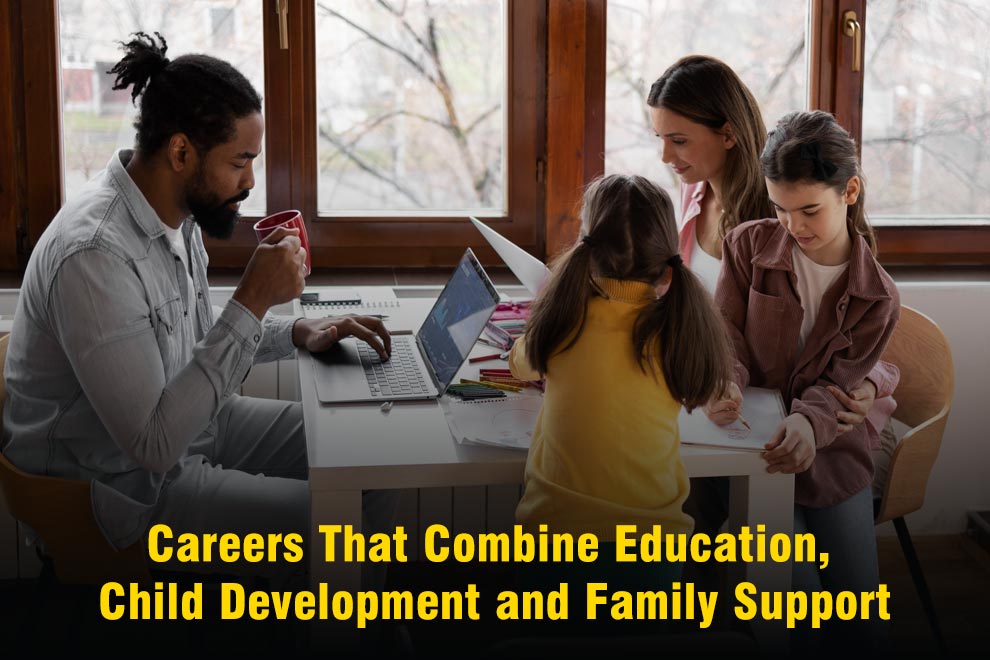
In the end, careers that combine education, child development and family support are really about helping children thrive through the relationships around them. They recognize that learning does not happen in isolation. It happens in classrooms, at kitchen tables, during play, in conversations with caregivers and through everyday routines.
For people who want a career that is both practical and deeply human, this intersection offers something special. You are not only teaching a child. You are helping build understanding, trust and support around that child, which can make a difference long after any single lesson ends.