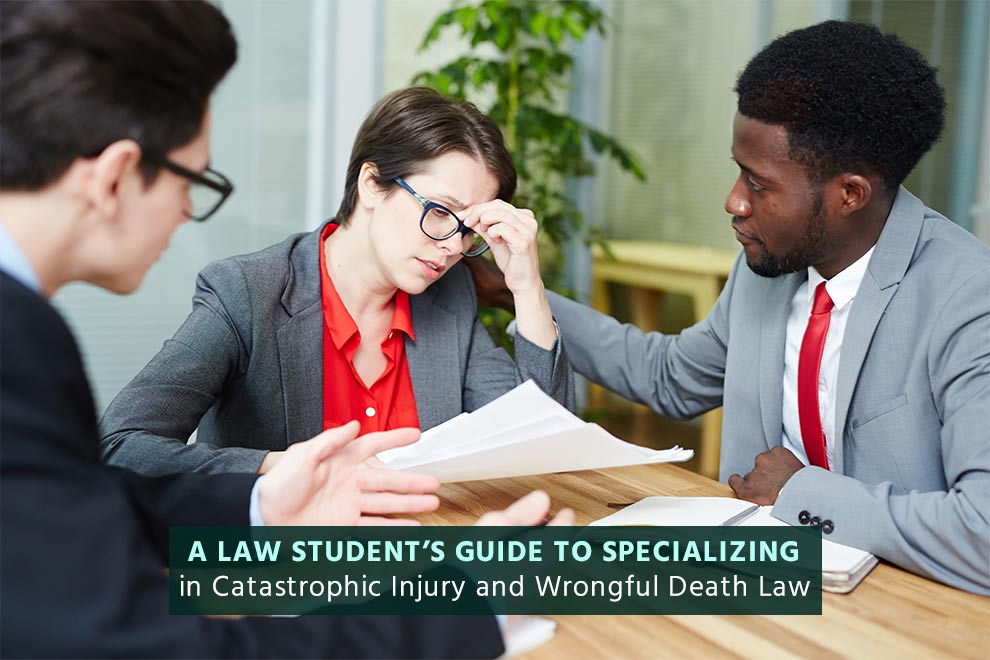
Entering law school often brings a mix of excitement and anxiety about the future. For aspiring attorneys, deciding on a practice area early in their academic journey can provide a significant advantage when it comes to securing clerkships and building a professional network. The legal field is expanding, making specialization more appealing than ever. According to the U.S. Bureau of Labor Statistics, there is a projected 5 percent overall job growth for lawyers between 2025 and 2035, resulting in about 28,700 average annual job openings. This faster than average growth means opportunities are abundant for those with focused expertise and a clear career trajectory.
While many students gravitate toward corporate law or criminal defense, civil justice pathways offer deeply rewarding careers. Much like the academic steps required to enter pediatric medical malpractice law, specializing in catastrophic injury and wrongful death requires a unique blend of rigorous study and practical training. Future litigators in this field must prepare for intense courtroom advocacy, highly emotional casework, and the heavy responsibility of fighting for grieving families.
Navigating Complex State-Specific Statutes
Success in civil litigation begins with mastering tort law, but students must understand that these rules vary drastically across jurisdictions. While law school curriculums generally teach comparative fault, practicing attorneys must adapt to the specific statutes of their state. Choosing to become a wrongful death lawyer in Scranton is a particularly demanding path because the state follows a strict pure contributory negligence rule. This means that if a deceased victim is found to be even one percent at fault for an accident, the surviving family is completely barred from recovering civil damages.
Understanding these local nuances is critical for case evaluation. In Scranton, claims must be filed within exactly three years from the date of the victim’s death, as dictated by state statutes. Furthermore, calculating damages requires high-level technical skills. The state legally caps non-economic damages for medical malpractice wrongful death claims brought by two or more surviving family members at specific amounts that adjust annually. Future attorneys must also learn to distinguish between wrongful death statutes, which compensate survivors for their loss, and survival statutes, which cover the victim’s damages incurred before the exact moment of death.
Gaining Practical Trial Experience
Reading case law is only the foundation for aspiring attorneys. Catastrophic injury lawyers must be exceptionally skilled in trial advocacy. To eventually achieve official board certification in Civil Trial Law from the National Board of Trial Advocacy, an attorney must document extensive courtroom experience. This includes active involvement in at least 45 days of trial and participation in at least 100 additional contested matters like evidentiary hearings or binding arbitrations.
Law students should begin building these skills long before graduation. Several specialized training programs and competitions offer simulated courtroom environments to help aspiring litigators hone their craft. Students should actively seek out the following opportunities:
- American Bar Association Competitions: The ABA hosts Trial Advocacy Competitions that require student teams to navigate multi-hour simulated trials and receive direct feedback from practicing judges.
- National Trial Advocacy Programs: Organizations like the American College of Trial Lawyers offer tuition-free programs that use immersive, hands-on drills to train the next generation of civil litigators.
- State-Specific Trial Academies: The New York State Bar Association, in collaboration with the National Institute for Trial Advocacy, hosts intensive academies where new attorneys perform core trial skills like jury selection and expert witness cross-examination.
- Law School Clinics: Many universities offer civil justice clinics where students can handle real cases under the close supervision of licensed faculty, providing invaluable early exposure to client counseling.
Developing Psychological Resilience
A career in wrongful death and catastrophic injury law involves prolonged exposure to graphic evidence and grieving families. Consequently, occupational health research shows that attorneys in this niche are at an exceptionally high risk for vicarious, or secondary, trauma. To build a sustainable career, future attorneys must acknowledge these emotional demands early on.
Law students must proactively learn how to protect their mental health. Legal industry statistics cited by the Black Dog Institute indicate that approximately 33 percent of lawyers experience distress linked to depression. This highlights the critical need for psychological resilience training early in a legal career. A recent seminar hosted by the Beverly Hills Bar Association specifically addressed the effects of vicarious trauma on trial lawyers, teaching them to identify physical and emotional symptoms like elevated cortisol, chronic fatigue, and hypervigilance.
Recent academic studies suggest that law firms and clinical supervision programs must actively cultivate structured peer-to-peer support networks. By fostering vicarious resilience, attorneys can maintain the emotional fortitude required to guide their clients through severe civil traumas without burning out. For law students, prioritizing self-care and emotional intelligence is just as important as studying the rules of evidence or mastering courtroom procedures. Choosing this demanding path means committing to lifelong learning, both in legal strategy and personal well-being.