School systems rarely stay the same for long. As communities expand, new schools open, student populations shift, and expectations from families begin to change. What holds everything together is not size, but clarity of purpose.
That sense of direction has shaped the growth of Corona-Norco Unified School District since its establishment in 1948. What began as a smaller district has grown into a system serving nearly 50,000 students across western Riverside County, about 45 miles southeast of Los Angeles. Today, it stands as the largest district in the Inland Empire and among the largest in the state.
Growth, however, has not been treated as an end in itself. The district’s vision reflects a broader aim, ensuring that students develop not only academic knowledge but also the motivation and resilience needed to succeed in a diverse and changing world. Classrooms are shaped with that goal in mind, where learning extends beyond textbooks into skills that carry forward into life.
The mission supports that direction through everyday practice. Educators focus on delivering strong instruction while also creating environments where students feel safe, supported, and encouraged. Teachers, staff, families, and the wider community each play a role in that process.
Guiding this work is a set of values that influence how decisions are made. Students remain the priority, collaboration is expected, and inclusion is treated as a strength. These ideas continue to shape how the district grows while staying grounded in its purpose.
Learning Pathways That Open Early and Expand Over Time
What students study often shapes how they see their future. That is why program choices matter as much as core instruction. Across the district, learning begins with strong academic foundations and gradually opens into a wide range of pathways. At the elementary level, programs such as Dual-Language Immersion allow students to begin learning Spanish or Mandarin from an early age, building bilingual and cultural understanding over time. Gifted and Talented Education programs provide additional support for students who need a more accelerated pace.
Within CNUSD, students can begin their International Baccalaureate journey as early as elementary school and continue through high school. Lincoln Fundamental Elementary offers the Primary Years Programme (PYP), while Corona Fundamental Intermediate School and Letha Raney Intermediate School provide the Middle Years Programme, supporting students through critical developmental stages. At the high school level, Centennial High School offers both the final years of the MYP and the prestigious IB Diploma Programme and the newly authorized IB Career Related Program, preparing students for college and beyond.
As students move into middle and high school, options become more specialized. Career Technical Education pathways offer hands-on experience in industry-specific fields, often leading to certifications by graduation. STEM-focused programs at Corona High and Roosevelt High introduce interdisciplinary learning that connects science, technology, engineering, and mathematics to real-world applications.
Opportunities also extend into college-level work. Through partnerships with local colleges, students can earn college credit while still in high school, with some completing an associate degree through our JFK Middle College High School. Programs such as International Baccalaureate and Visual and Performing Arts add further depth, while the Academy of Innovation, the district’s online school, provides a flexible, fully virtual option. These pathways allow students to shape their learning around both interest and direction.
Leadership Rooted in Experience and Community
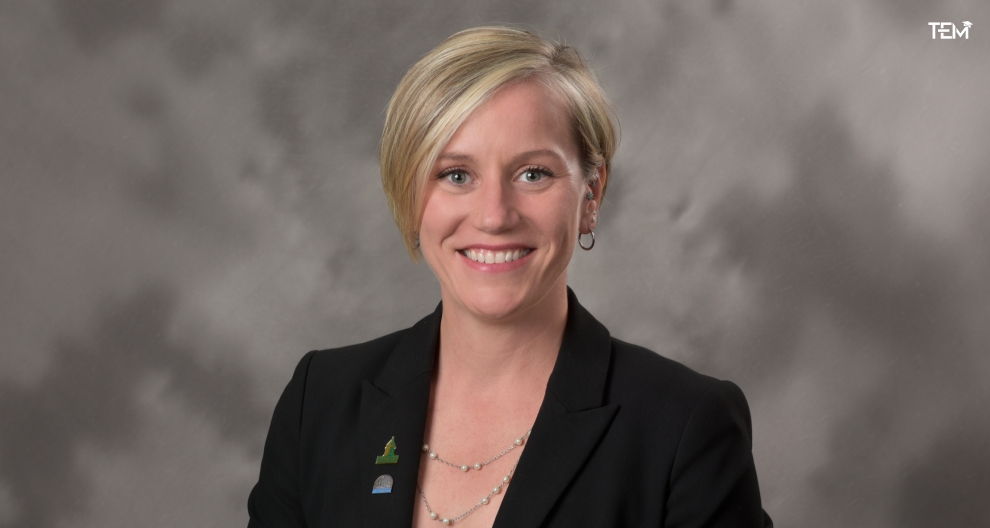
Leadership in a district of this scale often requires both technical expertise and a clear understanding of the community it serves. Within the district, that role is led by Ms. Dalia Gadelmawla, Superintendent since July 2025, along with a seven-member executive cabinet. With over a decade of service within the district and seventeen years in public education, she brings experience across financial management, operations, and long-term planning.
Her work has included overseeing large budgets, improving operational efficiency, and helping secure funding for facility upgrades and student support programs. She holds a degree in business finance, a master’s in public administration, and is currently pursuing a doctorate in educational leadership.
Her connection to the district extends beyond her role. As a parent of three CNUSD graduates, she understands the community from both a professional and personal perspective. Her focus remains on strengthening outcomes, expanding opportunities, and building inclusive school environments.
Building Partnerships Through Ongoing Dialogue
Conversations with the community tend to matter most when they happen regularly, not just during moments of change. Over time, those conversations begin to shape how a district listens and responds. At CNUSD, that exchange is built into how decisions are made.
The district brings together parents, students, educators, business leaders, and civic partners through groups such as the Superintendent’s Advisory Council, the LCAP Advisory Committee, and Educational Leadership Roundtables.
These are not one-time meetings. They function as ongoing spaces where ideas are tested, concerns are raised, and priorities are discussed in detail. Feedback gathered in these settings often informs how programs are adjusted and where resources are directed.
Local businesses and community organizations also contribute perspective, particularly when it comes to preparing students for life beyond school. Their involvement helps connect classroom learning with broader expectations.
Over time, this steady exchange creates a clearer line between the district and the communities it serves, where decisions are shaped with input rather than made in isolation.
Support Systems That Extend Beyond the Classroom
Student support across the district is structured to address academic progress, well-being, and postsecondary readiness together. School counselors and college and career guidance staff assist students with academic planning, graduation requirements, and future pathways. At the secondary level, this includes support with college applications, financial aid awareness, A–G requirements, career exploration, and access to Career Technical Education opportunities.
What stands out is how these supports are layered rather than separate. A student planning for college might also be working through personal challenges, and the system is built to respond to both without forcing one to wait for the other. On some campuses, that support begins early through structured counseling programs, while in others it takes shape through small intervention teams that meet regularly to review student progress and adjust support.
Districtwide efforts add another support layer. The Wellness Summit brings freshmen into conversations around mental health and self-awareness at a stage when those ideas begin to matter more. Programs like Rescue A Generation create smaller, more consistent spaces where students receive mentorship over time rather than one-time guidance.
When needs become more complex, district social workers step in, working directly with families to build plans that extend beyond school. Attendance concerns are addressed with the same care, focusing on understanding patterns before applying solutions.
CNUSD: Where Your Future Takes Flight
Through changing times, what remains constant in Corona-Norco Unified School District is its dedication to students and the community. Beyond programs and pathways, it is the daily work of educators, families, and staff that shapes each student’s experience, guiding them, supporting them, and preparing them for what lies ahead. In that steady commitment, the district continues to be a place of possibility and belonging, where every student has the chance to move forward with purpose, where every student’s future takes flight.
Quotes
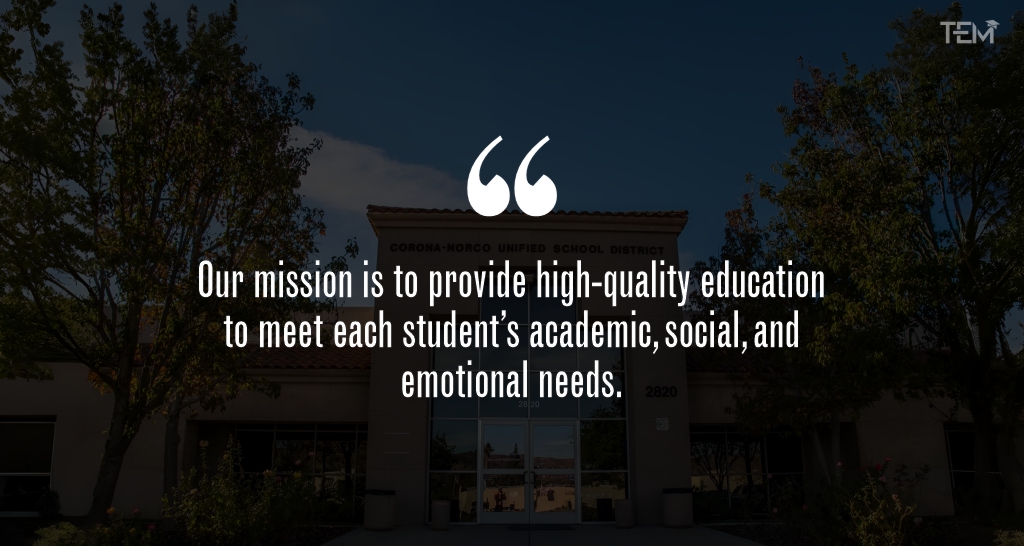
“Our vision is that every student has the knowledge, skills, motivation, and resilience to thrive in a diverse global community.”