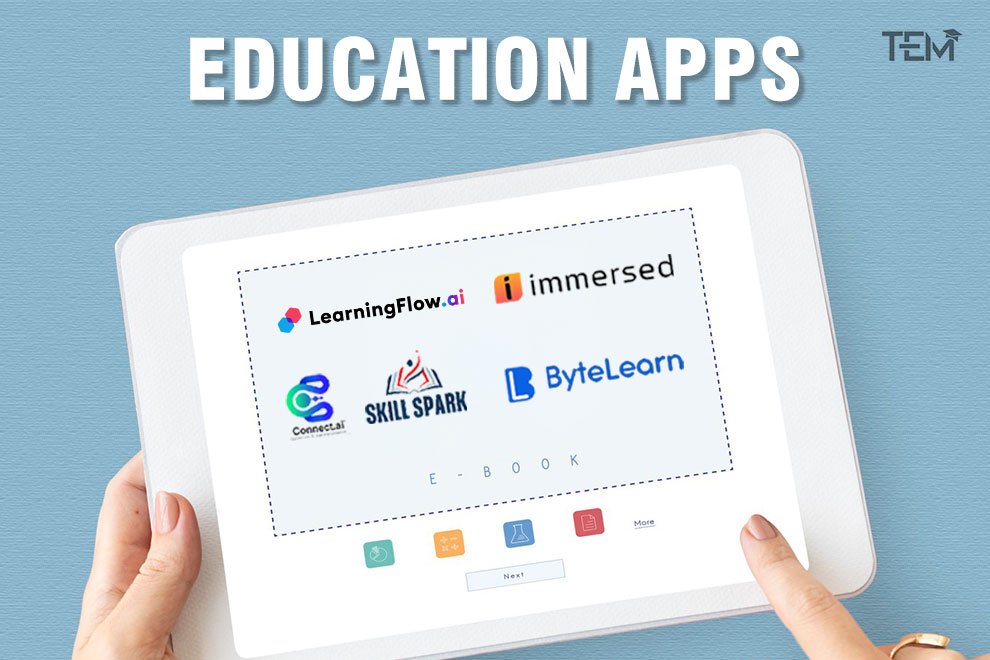
Students today have access to thousands of education apps, but most of them waste your time. The ones that actually work use AI, adapt to how you learn, and fit into your daily routine without feeling like a chore.
In 2026, the EdTech market is projected to reach $214 billion. Students now demand AI-powered personalization and adaptive learning paths that adjust to their specific pace and knowledge gaps.
In the US alone, 63% of high school students use digital learning tools daily, no longer waiting for the classroom to start learning. Whether it is during a commute, between classes, or late at night before an exam, education apps have become the go-to study companions for millions of students worldwide.
This guide explores the top tools currently dominating the academic landscape, helping you choose the right one to stay ahead in your studies.
Best Education Apps for Students in 2026: At a Glance
| Apps | Best For |
| 1. Khan Academy | Free academic learning |
| 2. Duolingo | Language learning |
| 3. Quizlet | Exam preparation & flashcards |
| 4. Notion | Student organization & productivity |
| 5. Coursera | University-level online courses |
| 6. Photomath | Math problem solving |
| 7. Google NotebookLM | AI-powered studying |
| 8. Anki | Long-term memorization |
| 9. Goodnotes | Digital note-taking |
| 10. Brainly | Peer-to-peer homework help |
What Makes a Great Education App in 2026?
In 2026, the standard for a “good” education app has shifted. Simple digital textbooks are no longer enough. Students now expect AI-powered personalization, adaptive learning paths, and real-time feedback that adjusts to their pace and knowledge gaps.
The most successful apps today also build in gamification to keep users engaged, accessibility features for every type of learner, and collaboration tools for team-based work. And the results speak for themselves. Mobile learners score 12% higher on tests compared to students using traditional methods alone. Students who use mobile learning apps for 3 or more hours weekly show 15% higher retention rates.
This shift is not temporary. It is how students study now.
Here is what the best education apps offer in 2026:
- AI study assistance for instant clarification on any topic
- Personalized learning that adapts to your goals and weak areas
- Mobile accessibility so you can study anywhere, even offline
- Interactive learning through quizzes, videos, and gamified lessons
- Collaborative features to work with classmates in real time
- Cost savings since many top apps are free or far cheaper than tutoring
Here are the 10 best education apps for students right now
1. Khan Academy: The Leader in Free Academic Learning
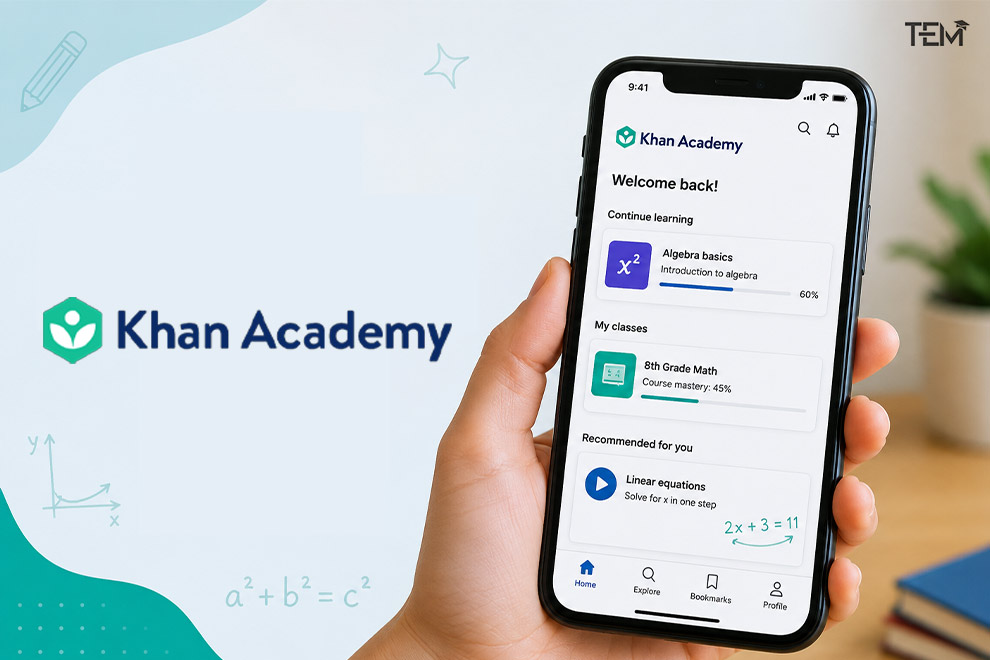
Khan Academy remains the gold standard for free, high-quality education. It is widely recognized for its massive authority in the education space, particularly within the United States school system. The platform provides comprehensive resources for math, science, and SAT preparation, making it a staple for high school students.
As Sal Khan, the founder of Khan Academy, once noted, “The idea is that if you let a student master a concept, they will have the foundation to learn anything.” This philosophy of mastery-based learning is why it continues to be one of the best education apps available.
Why it’s a top pick in 2026:
Khan Academy offers a completely free, world-class education for anyone. Its mastery-based model ensures students move forward only when they genuinely understand a concept. With a personalized learning dashboard that tracks progress, it is the premier choice for students on a budget seeking curriculum-aligned tools.
2. Duolingo: AI-Powered Language Learning
If you are looking for AI-powered language learning, Duolingo is the undisputed leader with over 500 million users. In 2026, Duolingo will use sophisticated AI to create personalized lessons that adjust difficulty based on your performance in real time.
Why it’s a top pick in 2026:
The app’s success lies in gamification. By turning learning into a game with streaks and leaderboards, it maintains extremely high student engagement. Whether you are learning Spanish for a class or Japanese for fun, Duolingo makes the process feel like a bite-sized 8-minute game rather than a chore.
3. Quizlet: The Ultimate Exam Preparation Tool
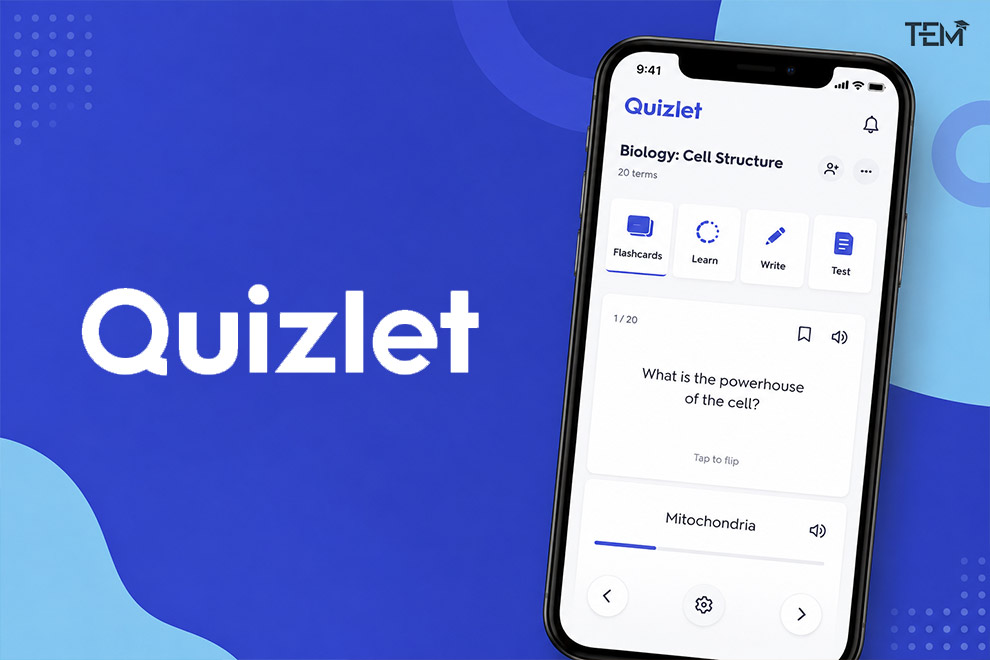
Quizlet has been the go-to for flashcards and exam preparation for over a decade. By 2026, it will have solidified its position by incorporating AI-powered study modes and spaced repetition learning. These features help students move information from their short-term memory into their long-term knowledge base.
Why it’s a top pick in 2026:
The platform adapts to your weak spots and prioritizes terms you keep getting wrong. Its “Test” mode is specifically designed to simulate the pressure and format of a real exam, making it a favorite for active recall-based revision.
4. Notion: Centralizing Student Productivity
Notion is the ultimate student productivity app. It allows students to build custom dashboards to manage their entire academic life. From tracking assignment deadlines to organizing research notes, Notion provides a flexible workspace that grows with you.
Why it’s a top pick in 2026:
With Notion AI built in, you can summarize notes and organize information automatically. It offers a free plan for students and serves as a clean, customizable space for those who struggle to stay organized across multiple subjects.
5. Coursera: University-Level Learning
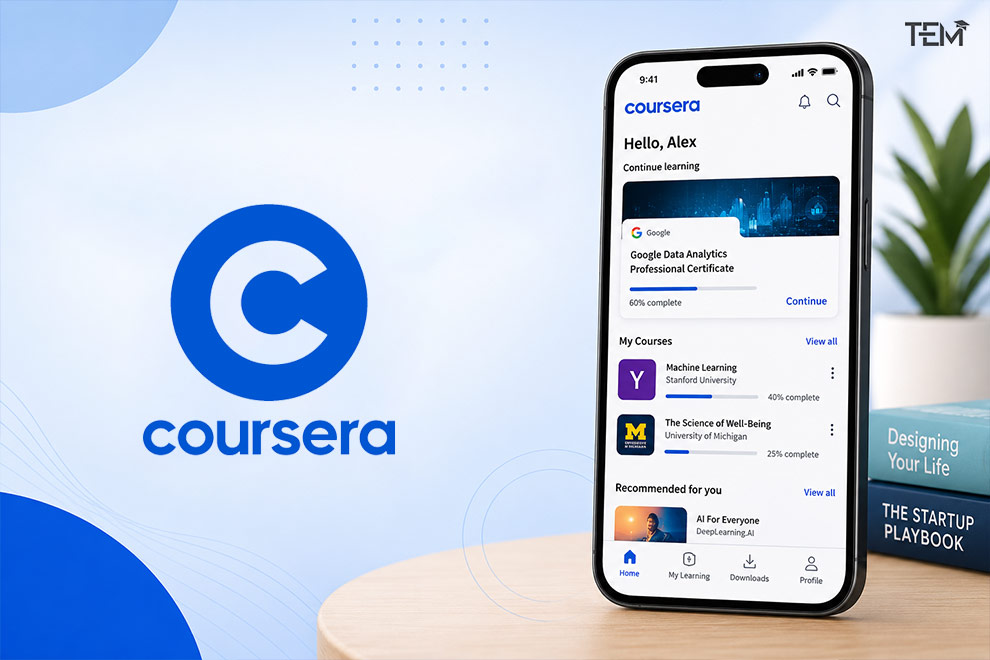
For students looking to expand their knowledge beyond the traditional classroom, Coursera offers access to the best online learning apps. It hosts courses from prestigious institutions like Harvard, Stanford, and Google. These certificates are highly valued by employers and help students improve their career readiness.
Why it’s a top pick in 2026:
Coursera provides university-style courses with graded assignments and peer reviews. Recent student discussions highlight its courses in Python, data analytics, and AI as the most valuable for career growth in the current market.
6. Photomath: Simplifying Math Problem Solving
Photomath is an essential AI homework app for any student struggling with mathematics. By simply scanning a math problem with a camera, students receive instant, step-by-step explanations. It covers everything from arithmetic to calculus.
Why it’s a top pick in 2026:
It teaches rather than just solves. Its AI-powered explanations are written in plain English, helping high school students verify their work and understand complex concepts without needing an expensive private tutor.
7. Google NotebookLM: The Future of AI Study Assistants
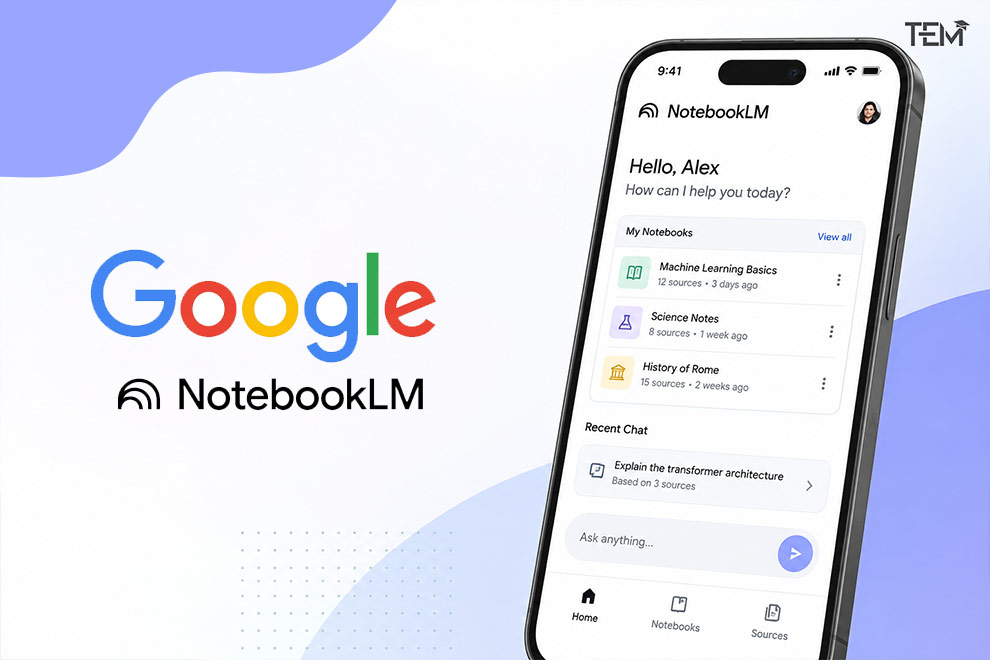
Google NotebookLM is the breakout AI study assistant app of 2026. It is designed to help students synthesize information by acting as a personalized research assistant. You upload your lecture notes or PDFs, and the AI generates summaries, study guides, and quizzes from that exact material.
Why it’s a top pick in 2026:
Unlike other tools, NotebookLM is “source-grounded,” meaning it builds study sessions only from your uploaded course materials. Recent updates include persistent session memory for flashcards, allowing you to pick up exactly where you left off.
8. Anki: Mastering Long-Term Memorization
Anki is one of the best memorization apps due to its scientifically backed spaced repetition system (SRS). It is the preferred tool for medical and law students who need to retain vast amounts of complex data over the years.
Why it’s a top pick in 2026:
Anki is incredibly effective for high-stakes academic environments where long-term retention is mandatory. The community has built thousands of pre-made decks for licensing exams, making it the gold standard for intensive study.
9. Goodnotes: The Premier Digital Note-Taking App
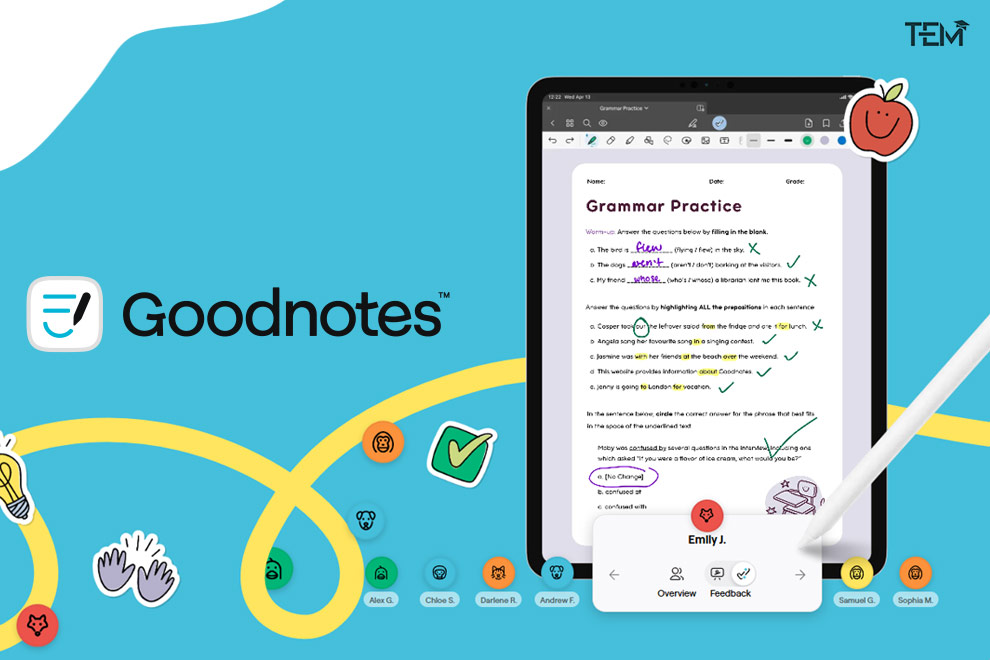
For students who prefer the feel of writing by hand, GoodNotes is the best note-taking app for students. It has grown significantly alongside the iPad ecosystem, becoming the standard for lecture annotation and PDF study workflows.
Why it’s a top pick in 2026:
Goodnotes AI-powered handwriting recognition allows you to search through your handwritten notes as if they were typed. It combines the tactile benefits of handwriting with digital organization, making it essential for law, med, and engineering students.
10. Brainly: Community-Driven Homework Help
Brainly rounds out our list as a top choice for homework help apps. It is a community-driven platform where students get answers from verified experts and peers. It is particularly popular with Gen Z students who value fast problem-solving.
Why it’s a top pick in 2026:
Brainly offers a unique combination of community answers and AI-assisted verification. It is fast, free, and perfect for those moments when you need a clear explanation for a single difficult question rather than a full lesson.
Challenges and Risks of Education Apps for Students
Here are the biggest challenges the industry faces right now and what lies ahead.
- Screen fatigue and distraction: Students are already staring at screens all day. Adding more app time can hurt focus rather than help it.
- Over-reliance on AI answers: Many students use AI-powered apps to get answers instantly without actually understanding the concept behind them.
- Unequal access: Not every student has a reliable smartphone, stable internet, or the money for premium app subscriptions, which widens the learning gap.
- Data privacy concerns: Education apps collect a significant amount of student data, and not all platforms are transparent about how they store or use it.
- Keeping students engaged long-term: Gamification works well at the start, but streaks and badges can lose their appeal quickly once the novelty wears off.
- Accuracy of AI-generated content: AI study tools can occasionally produce incorrect summaries or misleading flashcards, which is a real risk when students trust them blindly.
- Replacing depth with convenience: Apps are great for quick revision, but they can push students toward surface-level learning instead of deep, critical thinking.
- Keeping up with curriculum changes: Education apps need constant updates to stay aligned with changing school and university syllabi across different regions.
How AI Is Transforming Education Apps in 2026
The global AI in education market is projected to exceed $25 billion in 2026. And it shows. AI-powered learning is no longer a bonus feature. It is the core of what separates the best education apps from the rest.
Apps like NotebookLM, Duolingo, and Photomath use AI to personalize content, generate study materials, and adapt difficulty in real time. AI study apps can now analyze your uploaded documents and produce flashcards, quizzes, summaries, and audio explanations within seconds. AI-powered personalization has been shown to increase learner satisfaction by 40% and improve learning outcomes by 20%, according to recent research.
The biggest shift in 2026 is that AI tutors are moving from generic question-answer bots to document-grounded, context-aware study assistants. NotebookLM is the clearest example of this: it does not guess what to teach you. It reads your actual course material and builds your study session from that. This is adaptive learning taken to a new level.
Conclusion: Which Education App Should You Use?
Selecting from the 10 best education apps for students in 2026 is about finding the tools that fit your personal study style. Whether you need the structured courses of Coursera, the memorization power of Anki, or the organizational genius of Notion, these platforms are designed to help you beat the competition and succeed.
As mobile learning and personalized education continue to evolve, staying updated with the latest digital tools will be your greatest academic advantage. Embrace the power of AI-powered learning and take control of your educational future today.
The education apps market in 2026 is smarter, more personalized, and more accessible than ever before. Whether you are prepping for exams, learning a new skill, or simply trying to stay on top of coursework, there is an app on this list that will make a real difference. Pick the one that fits your study style and start using it today.
FAQ
1. Which is the best education app for students?
The best education app depends on your needs. For general academic learning, Khan Academy is the leader. For productivity, Notion is unmatched. If you need math help, Photomath is the top choice.
2. Are education apps effective?
Research shows that education apps are effective for students using mobile learning for 3 or more hours weekly, show 15% higher retention rates, and significant improvements in test scores.
3. What are the best free education apps?
Khan Academy is the overall best education app due to its high-quality, free curriculum and new AI tutor, Khanmigo. For organization, Notion is the top choice, while NotebookLM leads for AI-driven research.
4. Can education apps replace classrooms?
No, education apps cannot fully replace classrooms. While they are powerful tools for immersive learning, they work best as a supplement to enhance the school experience.