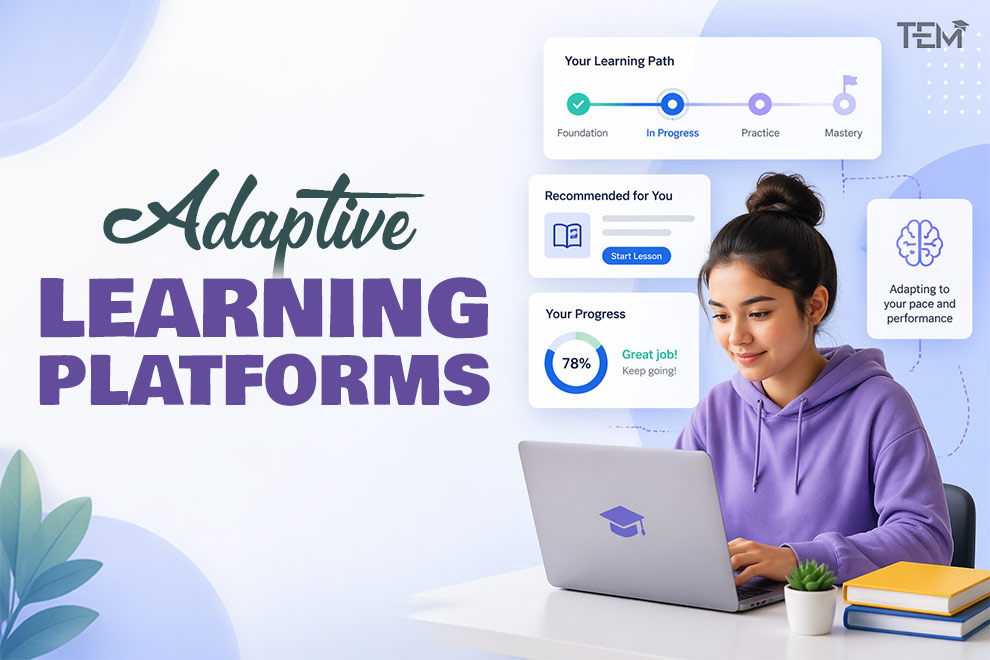
As of 2026, the global education market has fully embraced technology that thinks alongside the student. Adaptive Learning Platforms are at the forefront of this shift, moving away from static online courses toward dynamic, AI-driven experiences. These systems use complex algorithms to analyze how a person learns and then change the curriculum in real-time to match their needs.
This article serves as a comprehensive guide to understanding how these platforms are making education more efficient, personal, and effective for everyone.
KEY TAKEAWAYS
- Dynamic Content Delivery: Adaptive platforms evaluate every answer and keystroke in real time to adapt lessons instantly.
- Core Difference: Personalized learning is a broad teaching philosophy, whereas adaptive learning is the specific AI software that automates individual adjustments.
- Rapid Market Growth: The global adaptive learning industry reached $5.26 billion in 2026, growing at nearly 20% annually.
- Top Beginner Platforms: Leading tools include Khanmigo, ALEKS, Duolingo Max, DreamBox, and i-Ready.
What is an Adaptive Learning Platform?
An adaptive learning platform is a digital educational tool that uses artificial intelligence and data analytics to customize the learning experience for every user. Unlike traditional digital textbooks that present the same page to every reader, these platforms act like a private tutor.
The platform monitors your every move, how long you spend on a paragraph, which quiz questions you miss, and even how quickly you click through a video. It then uses this information to build a unique path just for you. If you are a fast learner, it skips the basics. If you are struggling, it provides extra hints and foundational lessons.
In 2026, Adaptive Learning Platforms will have become the standard in both K-12 schools and corporate upskilling programs.
How Adaptive Learning Platform Works (The “Brain” Behind the Screen)
Adaptive learning platforms rely on machine learning algorithms and continuous data tracking to create an optimal learning environment for every student.
The Step-by-Step Learning Cycle
- Initial Diagnostic Assessment: The software evaluates the learner’s baseline knowledge to identify existing strengths and skill gaps.
- Real-Time Performance Analysis: As the student works through exercises, algorithms track accuracy, time spent per question, and common errors.
- Automated Content Adjustment: The platform adjusts problem difficulty, changes the instruction format, or offers hints based on live performance data.
- Mastery Verification and Feedback: Instant corrections help students fix misunderstandings immediately before moving on to advanced concepts.
As Khan Academy founder Sal Khan stated in his TED Talk, “How AI Could Save (Not Destroy) Education”:
“The way we’re going to do that is by giving every student on the planet an artificially intelligent but amazing personal tutor.”
That vision forms the foundation of modern adaptive platforms today.
Key Benefits of Adaptive Learning Platforms for Beginners
If you’ve never used an Adaptive Learning Platform before, it can completely change the way you feel about school. These systems are built to make sure you don’t waste your time or get burned out.
Here are the four biggest benefits:
- Faster Concept Mastery: Because students skip material they have already mastered, overall learning efficiency increases. Some platform studies indicate time savings of 30% to 50% compared to traditional instruction, though results vary by subject.
- Targeted Learning Support: Students receive tailored hints and practice problems precisely when they encounter difficulty, preventing frustration.
- Actionable Teacher Dashboards: Educators receive live alerts identifying which students require one-on-one help, saving valuable administrative time.
- Reduced Anxiety: Learners move at their own pace without feeling pressured by the progress of their peers.
Adaptive Learning vs. Personalized Learning: What’s the difference?
People often mix these two terms up, but by 2026, there will be a big difference between them. Knowing the difference helps you pick the best tools for your goals.
Think of it this way: Personalized learning is a choice you make, while Adaptive learning is a change the computer makes for you.
- Quick Comparison
| Feature | Personalized Learning | Adaptive Learning |
| Primary Driver | Teacher strategy and student preferences | AI algorithms and real-time data |
| Pacing Control | Flexible schedules and custom goals | Automated, real-time difficulty scaling |
| Core Method | Project options, choice boards, and custom pathways | Data-driven software exercises and adaptive quizzes |
| Implementation | Classroom philosophy and curriculum design | Digital software platforms and LMS tools |
The Simple Breakdown:
- Personalized learning is the idea that students should have a say in what they learn.
- Adaptive learning is the engine that uses data to figure out the fastest, most effective way for you to learn it.
Real-World Adaptive Learning Platform Examples
In 2026, a few specific Adaptive Learning Platforms are leading the way. You’ve probably heard of them, but they’ve become much more powerful recently.
Here are the top tools students and schools are using right now:
- Khan Academy (Khanmigo): This is like having a super-smart tutor. Instead of just giving you the answers, the AI (called Khanmigo) asks you questions to help you figure it out yourself. It’s great for math, science, and even coding.
- ALEKS: Mostly used for math and chemistry, ALEKS is famous for knowing exactly what you’re “ready to learn.” It maps out everything you know and fills in the gaps so you never feel lost.
- Duolingo Max: The famous language app now lets you have real video calls with AI characters. It listens to how well you speak and adjusts the conversation to match your skill level.
- DreamBox: This is a favorite for younger students (K-8). It uses games and visual puzzles to teach math, and the difficulty changes in real-time based on how you play.
- i-Ready: You’ll often see this one in classrooms. It gives teachers a “behind-the-scenes” look at how you’re doing in reading and math, helping them give you exactly the help you need.
Beginner’s Platform Comparison
| Platform | Best For | Target Grade / Audience |
| Khanmigo | Guided AI tutoring in STEM subjects | K-12 and Higher Education |
| ALEKS | Math and chemistry skill gap-filling | Middle and High School |
| Duolingo Max | Interactive language speaking practice | All ages |
| DreamBox | Game-based elementary math instruction | K-8 |
| i-Ready | Diagnostic-driven reading and math practice | K-8 |
2026 Market Stats and Figures
This technology isn’t just a fad; it’s growing fast. Recent 2026 reports from groups like Business Research Insights and Research and Markets show just how much the world is leaning into this new way of learning:
Data from The Business Research Company’s Adaptive Learning Global Market Report 2026 highlights the rapid expansion of this technology:
- Market Value: The global adaptive learning market grew from $4.39 billion in 2025 to $5.26 billion in 2026.
- Annual Growth: The sector is expanding at a 19.9% compound annual growth rate.
- Key Drivers: Widespread cloud software adoption, increased demand for data-driven teaching tools, and investments in remote and hybrid education models
The Role of Data in Adaptive Learning Platforms
Data is the fuel that makes Adaptive Learning Platforms run. In 2026, we don’t just look at grades; we look at Learning Analytics. This means the computer watches the process of how you learn, not just the final result.
- How Data Helps You
The platform acts like a silent observer. For example:
The “Struggle” Signal: If you spend five minutes on a single slide, the AI notices. It thinks, “Is this content too hard, or is the student really interested?” * The Response: Based on what you do next, it might offer a simpler explanation or suggest a deeper video on that topic.
Safety First: Data Privacy and AI Safety
Because adaptive platforms collect continuous data on student performance, data privacy regulations are essential.
- US Student Protections: Software must adhere to federal standards like COPPA and FERPA to guard student identities and academic records.
- Global Regulations: Software operating internationally must follow GDPR and the EU AI Act to ensure transparent algorithm behavior and data security.
- Data Safeguards: Modern platforms utilize end-to-end encryption to protect learner records from unauthorized access.
Why Everyday Educators and Learners Should Care
Microsoft CEO Satya Nadella revived a famous concept from Steve Jobs in a 2026 update, emphasizing that technology should serve as a “bicycle for the mind.”
Jobs originally used the phrase to explain how personal computers amplify human intelligence. Nadella applied this idea to artificial intelligence in education. Adaptive platforms do not replace teachers or human effort. Instead, they handle repetitive practice and data tracking, giving educators more time for creative teaching, mentorship, and student connection.
Conclusion
Adaptive Learning Platforms have officially ended the era of the “average” student. In 2026, we’ve realized that no one is truly average; we all just have different speeds and styles of learning.
While human teachers are amazing, it’s hard for one person to give 30 different students exactly what they need at the same time. These AI tools provide the patience and precision that humans sometimes can’t. They never get tired of explaining a concept in a new way until it finally clicks for you.
Whether you are a student in school, a parent helping your child, or a professional learning a new skill, embracing these platforms is the fastest way to reach your goals. The future of education isn’t about working harder; it’s about learning smarter.
FAQ
1. What is an adaptive learning platform?
An adaptive learning platform is a digital educational system that uses AI to monitor a student’s performance and automatically adjust the content, difficulty, and pace of the lessons to suit that individual’s needs.
2. Are adaptive learning platforms better than traditional classrooms?
Adaptive learning platforms are not meant to replace classrooms but to enhance them. They handle the “drills” and “repetition,” which allows human teachers to spend more time on mentorship, discussion, and hands-on projects.
3. Do I need special hardware to use Adaptive Learning Platforms?
No. Most modern Adaptive Learning Platforms, like Khan Academy or Duolingo, work on standard smartphones, tablets, and laptops. However, a stable internet connection is usually required for the AI to process your data in real time.
4. How do adaptive learning platforms keep students motivated?
Most Adaptive Learning Platforms use “gamification.” This includes giving badges, points, and streaks for consistent work. By keeping the difficulty level “just right,” not too easy and not too hard, they keep students in a state of focused flow.
5. Is my data safe on an adaptive learning platform?
In 2026, reputable Adaptive Learning Platforms will follow strict global privacy laws. Always check that the platform you are using has a “Privacy by Design” certification to ensure your learning data is protected.