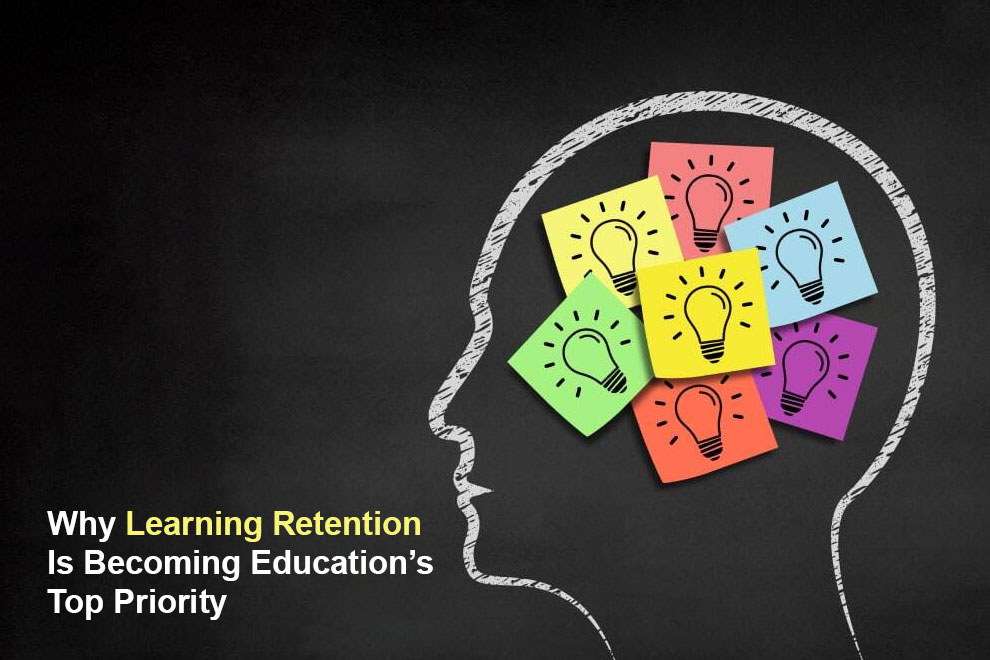
The landscape of modern education is shifting. For decades, the focus remained almost exclusively on how information is delivered. Success was usually measured by how much content could be packed into a curriculum and how quickly students could move from one module to the next. However, a growing gap has emerged between what’s taught and what’s actually remembered. This realization is turning learning retention into the single most important metric for educators and learners alike.
The Problem with Information Overload
This is an era where there’s unprecedented access to data. A student can pull up a lecture from a world class university on a phone while sitting in a coffee shop. But having access to information isn’t the same as truly integrating knowledge. The human brain’s evolved to filter out the vast majority of what it encounters so it doesn’t get overwhelmed. When the educational process only focuses on pushing data, the brain treats that information like temporary noise.
The result is a phenomenon often called the forgetting curve. Without intentional strategies to anchor knowledge, most people forget about seventy percent of what’s been learned within twenty four hours. In a professional world that demands high level problem solving and critical thinking, this level of loss just isn’t acceptable anymore.
Shifting from Completion to Mastery
The traditional model of education often rewards the act of finishing. A student finishes the book, passes the test, and then moves on. But true expertise requires that information moves from short term memory into long term storage. That’s where it can be synthesized and applied to new situations.
Educators are now prioritizing methods that encourage deep processing. This means moving away from passive listening and toward active engagement. When a learner has to work to retrieve information, the neural pathways associated with that knowledge become stronger. This is why the shift from passive reading or static notes to notes to flashcards has become such a common approach for those focused on long-term retention. Turning notes into questions forces the brain to recall information rather than simply recognize it, which makes learning more durable over time.
The Role of Spaced Repetition
One of the most effective tools in the quest for better retention is spaced repetition. Instead of cramming information into a single intense session, learners encounter the material at increasing intervals. This method takes advantage of the way the brain builds memory. Each time a concept is revisited just as it’s about to be forgotten, the memory gets reinforced.
Schools and corporate training programs are starting to build these intervals into their structures. Rather than a one and done seminar, they’re implementing follow up sessions and micro learning modules. These keep the core concepts alive in the learner’s mind over weeks or months.
Emotional Connection and Context
Data alone is rarely memorable. The brain prioritizes information that feels relevant, urgent, or emotionally resonant. This is why storytelling has become such a vital component of modern teaching. When a concept is wrapped in a narrative or tied to a real world problem, it gains a hook that allows it to stick.
Context is the glue of memory. If a student understands why a piece of information matters to a life or career, they’re far more likely to retain it. Education is moving toward a model where the why is established before the how or the what.
The Future of Durable Learning
As technology continues to handle the storage of facts, the human role in education will focus more on understanding. There is no need to memorize every date in history when the internet exists, but it is vital to retain the frameworks that allow for the understanding of historical patterns.
The priority isn’t just to learn anymore. It’s to learn in a way that lasts. By focusing on retention, we ensure that education is an investment that pays dividends for a lifetime, rather than a fleeting experience that disappears the moment the final exam is over.