


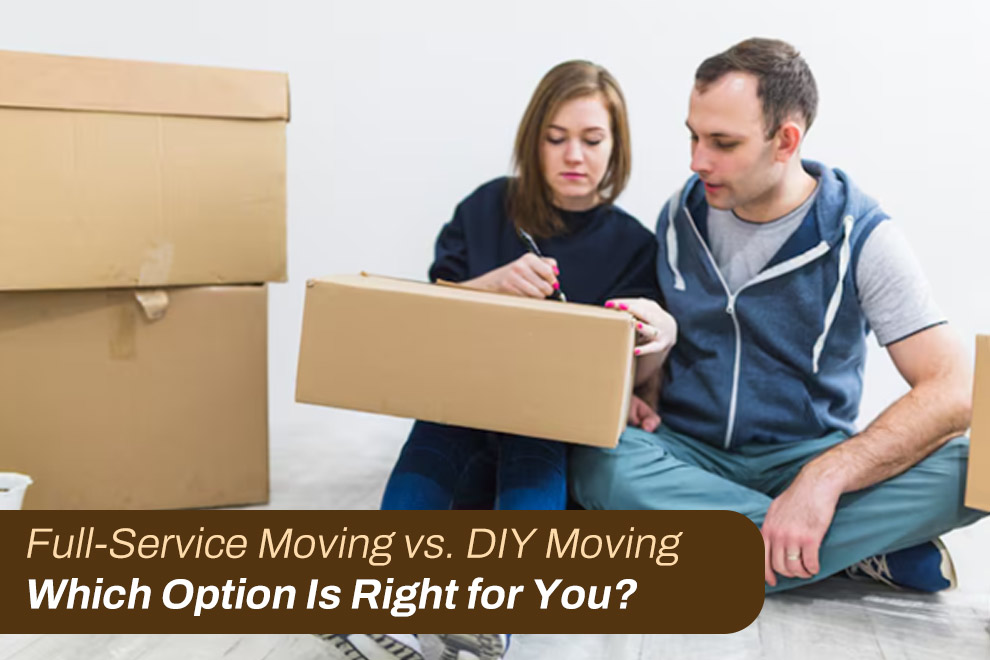
Moving looks manageable until the boxes multiply, the truck still needs booking, and moving day suddenly depends on weather, traffic, timing, and whether your helpers actually show up. The choice between full-service moving and DIY moving is not simply “expensive versus cheap.” It is a trade-off between money, time, physical effort, control, and risk.
The right option depends on the size and distance of your move, your budget, how much time you can give it, and whether you are comfortable handling the logistics yourself.
Full Service Moving and DIY Moving: A Side-by-Side Comparison
At its core, this moving options comparison comes down to one question: how much of the process do you want to manage yourself?
Full-service moving usually costs more because you are paying for labor, transportation, equipment, and potentially packing or specialty services. DIY typically has a lower upfront price, but your real total can also include truck rental, fuel, packing materials, equipment, tolls, lodging, and time away from work.
Current moving cost data shows that professional moving prices vary widely by distance, home size, and service level. That makes a written, move-specific estimate more useful than relying on a single national average.
What Full Service Moving Actually Includes
“Full service” can cover more than loading a truck. Depending on the company and quote, services may include packing, furniture disassembly, loading, transportation, unloading, reassembly, unpacking, storage, and specialty-item handling.
For interstate moves, the planning also becomes more important. Delivery windows, inventory accuracy, carrier identity, valuation coverage, and written estimates all deserve attention. If you are comparing full service long distance movers, review how interstate moves work before signing a contract and confirm exactly which services are included in the estimate.
Full service is often worth considering when you are moving a large household, relocating a long distance, working under a tight deadline, moving with children or older family members, or dealing with heavy, fragile, or unusually valuable items.
What DIY Moving Really Demands
DIY moving puts you in control of the schedule, packing process, truck, route, loading, unloading, and most of the problem-solving on moving day.
That flexibility is valuable, especially for a small local move. It also means you need to account for more than the rental rate. A realistic DIY budget should include fuel, mileage or rental terms, moving blankets, dollies, straps, boxes, tape, food for helpers, parking costs, tolls, and possible overnight stays.
Professional moving guidance also notes that hiring movers may make more sense for long-distance moves, large quantities of belongings, heavy or fragile items, limited planning time, or physical limitations. A hybrid approach can reduce costs by letting you pack yourself while paying for loading, unloading, or transportation.
Full Service vs DIY: The Main Decision Factors
Cost
DIY is usually the better fit when minimizing cash outlay is the priority and the move is small and straightforward. Full service becomes easier to justify when the value of your time, the amount of labor required, and the complexity of the move are high.
Compare total costs rather than headline prices. For DIY, include fuel, supplies, equipment, lodging, tolls, and lost work time. For professional service, ask what the written estimate includes and what could trigger additional charges.
Time and Convenience
Packing, lifting, driving, unloading, and returning equipment can turn a DIY move into a multi-day project. Full service reduces the amount of hands-on work you need to manage, although you still need to prepare important documents, valuables, essentials, and access details for moving day.
Physical Effort
DIY moving requires lifting, carrying, bending, loading, and often driving a larger vehicle than you normally use. If you are not comfortable with those tasks—or do not have reliable help—professional labor may be worth the added cost.
Control and Flexibility
DIY offers maximum control over packing, timing, route, and how belongings are handled. Full service requires more coordination with another company’s schedule, but it can remove a large amount of physical and logistical work.
Risk and Protection
For interstate moves, do not assume “insurance” automatically means full replacement coverage. Federal rules require interstate movers to offer two liability options: Full Value Protection and Released Value. Released Value is provided at no additional charge but offers only minimal protection, so review the federal valuation guidance and your moving documents carefully before choosing.
When Full-Service Moving Makes the Most Sense
Full service is generally the stronger choice when:
- You are moving across state lines or a long distance.
- You have a large home or a high volume of belongings.
- You have pianos, antiques, artwork, safes, or other difficult items.
- Your schedule leaves little time for packing and loading.
- Heavy lifting would be difficult or unsafe for you.
- You want one provider or coordinated team managing more of the process.
For interstate moves, verify whether you are dealing with a carrier or broker and check its registration information before committing. Do not choose solely on price; licensing, services, coverage, written estimates, and the company’s role in the move all matter.
When DIY Moving Is the Smarter Call
DIY can be a practical choice when the move is local, your household is small, you have dependable help, and you are comfortable doing the lifting and driving.
It can also work well when your schedule is flexible. You can pack gradually, move smaller loads on your own timetable, and decide exactly how everything is handled.
The biggest mistake is treating the truck rental price as the entire moving cost. Build a complete budget before deciding.
The Hybrid Approach: A Useful Middle Ground
You do not have to choose between doing everything yourself and paying for every possible service.
A hybrid move might mean packing your own boxes but hiring labor to load and unload. You might rent a container and handle packing while a professional company manages transportation. Or you might move everyday belongings yourself and hire specialists for a piano, safe, or fragile collection.
This approach keeps some DIY savings while removing the tasks that require the most strength, equipment, or expertise.
A Practical Checklist for Your Final Decision
Before choosing, ask:
- What is my realistic all-in budget?
- How far am I moving?
- How much time can I devote to packing and moving?
- Can I safely handle the lifting?
- Do I have reliable help?
- Am I comfortable driving a moving truck?
- Do I own specialty or high-value items?
- What protection applies if something is lost or damaged?
- For an interstate move, have I checked the company’s registration and role?
If several answers point to complexity, full service may justify the extra cost. If the move is small, local, flexible, and physically manageable, DIY may be the better value.
Frequently Asked Questions About Full Service vs DIY Moving
Is it cheaper to move yourself or hire movers?
Moving yourself is usually cheaper upfront, especially for a small local move. Compare the complete DIY cost—including truck rental, fuel, supplies, equipment, tolls, and your time—with written professional estimates before deciding.
Can I pack myself and still hire professional movers?
Yes. Many moving companies offer partial-service options. Packing your own belongings while hiring professionals for loading, transportation, or unloading can lower labor costs while reducing the hardest physical work.
How far in advance should I book movers?
Start gathering quotes as early as practical, particularly for long-distance moves or moves during busy periods. Earlier planning gives you more time to compare providers, review estimates, verify credentials, and understand what is included.
What should I check before hiring an interstate mover?
Confirm whether the company is a mover or broker, verify its federal registration and U.S. DOT number, review the written estimate, and understand the valuation option you select. Interstate movers and brokers are subject to federal consumer-protection requirements.
Does homeowners or renters insurance cover a DIY move?
Coverage varies by policy. Do not assume your household policy covers damage during a self-move or truck rental. Review your policy and any rental-company protection options before moving day.
Is a hybrid move worth it?
It can be. A hybrid move often works best for people who want to control packing and costs but do not want to handle heavy lifting or long-distance transportation themselves.
Bringing It All Together
There is no universal winner in the professional movers vs DIY debate. The best way to move house is the option that matches your budget, timeline, physical capacity, distance, and tolerance for logistics.
Run the numbers honestly. Compare the full cost of DIY with written professional estimates, not just the most visible price on either side. For a simple local move, DIY may be perfectly sensible. For a large, time-sensitive, specialty, or long-distance relocation, paying professionals to manage more of the work can be money well spent.
Also Read: Why Experienced Car Shipping Beats DIY Hauls