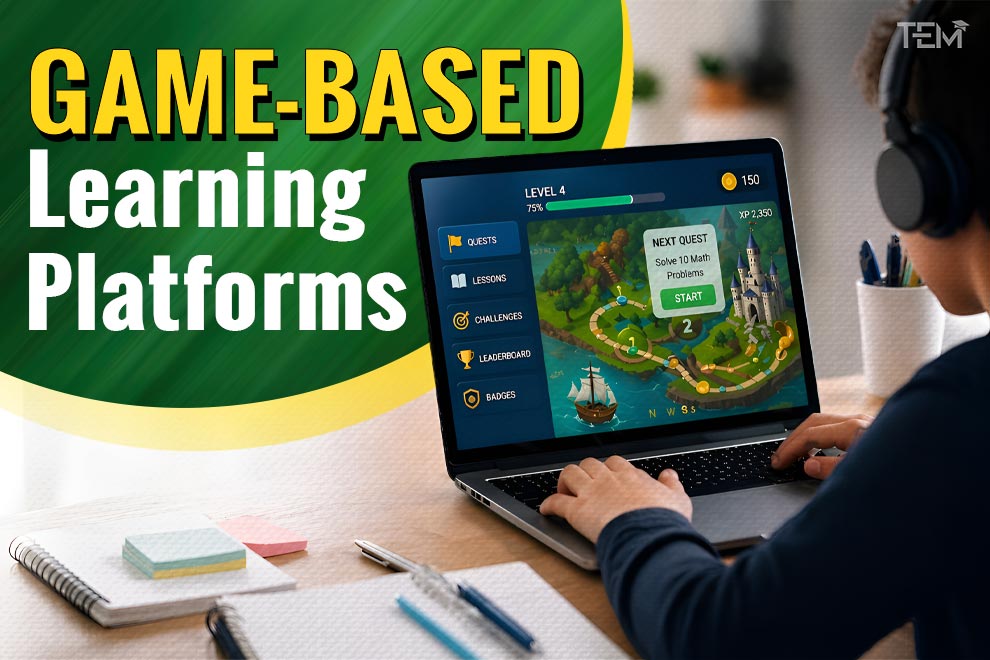
Game-based learning uses digital or physical games to help students master new skills and retain information. By 2026, this approach will have moved from a novelty to a core part of modern education, directly integrating lessons into game mechanics. Recent data shows that the global game-based learning market has surged, with schools reporting a 40% increase in student participation when using these tools. Unlike simple gamification in education, which only adds points to a task, game-based learning uses full games to create an immersive experience.
This article explores the top game-based learning platforms for students in 2026 to help you choose the right platforms for your educational needs.
What is Game-Based Learning?
Game-based learning (GBL) is a teaching method where games serve as the primary vehicle for learning. It encourages active learning by requiring students to solve problems and make decisions to progress. Historically, education relied on passive listening, but GBL changes this by making the student the main character in their educational journey.
As digital Game-Based Learning Platforms became more accessible in the early 2010s, platforms like Kahoot! began to bridge the gap between play and study. Today, these platforms are sophisticated enough to handle complex subjects like medicine and coding through high-stakes simulations. Research indicates that students using GBL score up to 14% higher on skills-based assessments compared to those in traditional settings.
Common Types of Game-Based Learning Platforms
Choosing the right platform depends on your specific goals, as different learners require different approaches to stay motivated.
Here are the main types of Game-Based Learning platforms available today:
- Quiz-Based Learning Platforms: These platforms use competitive quizzes, real-time leaderboards, and rewards to drive engagement. They are perfect for quick reviews, checking student understanding, and boosting classroom energy.
- Simulation-Based Learning Platforms: These provide safe, virtual environments where students practice real-world skills through immersive scenarios. They are essential for technical subjects like science, medicine, and engineering, where hands-on practice is vital.
- Adventure and Story-Based Games: These use narrative missions and storytelling to teach concepts step-by-step. Younger students often benefit most from this creative approach, as it makes learning feel like an epic quest.
- Skill-Based Learning Games: These focus on specific pedagogical principles to build foundational skills, such as early math or literacy. These platforms often combine interactive mechanics with solid educational theory to ensure learning is effective.
- Gamified Learning Platforms: While these are not full games, they use game elements like badges, points, and rewards to maintain long-term student motivation. They are best for encouraging consistent habits and long-term engagement with a subject.
Top Game-Based Learning Platforms for Students in 2026
The following list highlights the best game-based learning platforms currently leading the industry. Many offer options for both free game-based learning platforms and paid game learning platforms for advanced features.
1. Kahoot! for Group Learning
This platform excels at creating real-time competition through interactive quizzes that are widely used in classrooms today. Kahoot is considered one of the best for group revision because it turns a standard lesson into a social game show where students compete for the top of the leaderboard.
- Free Limitations: The free version is limited to basic quiz types and up to 10 participants per session.
- Paid Cost: Individual “Study” plans start at $3/month (billed annually) for up to 50 participants, while teacher plans for larger classrooms start around $19/month.
2. Quizizz for Individual Study
Quizizz is a leader in self-paced learning by offering quizzes that students can complete at their own speed. It is highly homework-friendly and provides teachers with detailed performance reports to track where each student needs more help.
- Free Limitations: The “Starter” plan allows basic quiz creation and hosting but lacks advanced question types and AI tools.
- Paid Cost: The “Super” plan for individual teachers starts at approximately $5/month, while the “Premium” tier with AI features is about $10/month.
3. Duolingo for Language Acquisition
Duolingo uses a gamified learning approach to make mastering a new language feel like a game. By using “streaks” and rewards for daily practice, it breaks down complex grammar and vocabulary into bite-sized lessons that are easy to digest.
- Free Limitations: The free version includes ads and a “Heart” system that limits lessons if you make too many mistakes.
- Paid Cost: Super Duolingo removes ads and provides unlimited hearts for about $12.99/month (or $84/year). A Family Plan is available for $119.99/year for up to six users.
4. Prodigy Math for K-12 Practice
Prodigy Math is an adventure-based math platform that is fully curriculum-aligned. It is particularly effective for younger students because it hides math problems within a fantasy world, making practice feel like an epic quest.
- Free Limitations: The free version provides full access to educational content but limits in-game rewards, pet evolutions, and character customization.
- Paid Cost: “Level Up” memberships start at $9.95/month, while “Ultimate” plans that include extra gear and focus areas cost around $14.95/month
5. Minecraft: Education Edition for STEM
This simulation platform focuses on creativity, design, and teamwork. It is a staple in STEM education because it allows students to build complex structures and learn the basics of coding in a safe, virtual environment.
- Free Limitations: There is no “free-forever” version, though a limited free trial is often available for users with valid school emails.
- Paid Cost: For eligible educational institutions, it costs approximately $5.04 per user/year. Non-academic users or homeschoolers pay around $36 per user/year.
6. Classcraft for Classroom Management
Classcraft turns the physical classroom into a giant role-playing game where students take on specific roles. It focuses on improving behavior and teamwork by giving the teacher a controlled environment to reward positive actions.
- Free Limitations: The basic free version offers limited character customization and basic behavior management tools.
- Paid Cost: The “Teacher Premium” plan, which unlocks personalized quests and advanced analytics, costs $120/year (roughly $10/month).
7. Brainscape for Exam Preparation
Brainscape uses smart flashcards and spaced repetition. This platform is built for memory-heavy subjects. It tracks progress and uses a gamified system to ensure students focus on the concepts they find most difficult.
- Free Limitations: Users can create and share text-based cards for free, but the free version limits access to premium expert-curated content and image uploads.
- Paid Cost: Pro subscriptions start at $19.99/month, with an annual option at $95.99/year. They also offer a “Lifetime” access pass for a one-time fee of about $199.99.
Why Kahoot is a Classroom Favorite?
Kahoot remains a top pick in 2026 because it masterfully combines social interaction with instant academic feedback. It is widely considered one of the best game-based learning platforms because it transforms the traditional, often silent classroom into a high-energy “game show” environment. Teachers can create a custom quiz in under five minutes, making it an incredibly efficient tool for busy educators.
At Tottington Primary School, teacher Simon Hunt replaced stressful test prep with live Kahoots, turning practice papers into low-anxiety games that provide instant feedback.
Similarly, Miami Dade College uses these competitive quizzes to break up long lectures, resulting in higher attendance and participation. These real-world applications prove that using the best game-based learning platforms can help students score up to 14% higher by keeping them focused and engaged.
Why Use Game-Based Learning?
The shift toward gamified learning is backed by several key benefits that improve how students process information. By moving away from passive instruction, these Game-Based Learning Platforms create a dynamic environment where students can thrive.
- Improves Engagement: Games capture interest far more effectively than traditional lectures, often increasing time-on-task by 30%. Students are naturally more interested in exploring concepts through play than through traditional methods.
- Better Retention: When students interact with content, they remember it for a longer period. Studies show retention rates can improve by as much as 90% with interactive play because the brain processes the information through active participation rather than passive listening.
- Critical Skill Development: Playing educational games helps build essential problem-solving, decision-making, and creativity skills. These platforms challenge students to think critically to overcome obstacles and progress through levels.
- Personalized Learning: Many modern platforms use AI to adapt to a student’s individual pace and skill level. This ensures that the content is neither too easy nor too difficult, keeping the learner in an optimal state of growth.
“Games are the only force in the known universe that can get people to take actions against their self-interest, in a predictable way, for extended periods of time.” Gabe Zichermann, Gamification Expert.
Looking Toward the Future
By the end of 2026, we expect to see even more growth in this Game-Based Learning Platforms sector as educational technology moves toward more immersive and intelligent experiences. The way students interact with digital content is shifting from simple screens to fully responsive environments.
- AI-Powered Personalization: Future games will automatically adjust their difficulty and content based on real-time student performance. This ensures that every learner stays challenged without becoming overwhelmed.
- Virtual and Augmented Reality: VR and AR technologies will allow students to step inside virtual classrooms or experience historical events firsthand. This high level of immersion makes complex subjects much easier to visualize and understand.
- Immersive Virtual Classrooms: These digital spaces will combine social interaction with deep, simulation-based tasks. Students can collaborate with peers from around the world in a shared, game-like environment to solve real-world problems.
While the benefits of these advancements are clear, users should still be mindful of challenges like excessive screen time. It is vital to ensure that games are backed by solid educational goals rather than just entertainment value. Proper guidance from teachers remains essential to help students get the most out of these powerful tools.
Conclusion
Using the top game-based learning platforms for students in 2026 is no longer just an option for tech-savvy teachers; it is a necessity for modern education. These game-based learning platforms transform passive learners into active participants, making education more effective and enjoyable. Whether you choose Kahoot game-based learning for quick reviews or Minecraft for complex STEM projects, the goal remains the same: to foster a love for learning through play. As technology evolves, Game-Based Learning Platforms will continue to offer even more personalized Learning and immersive learning ways to master the skills of tomorrow.
Frequently Asked Questions
- What is the main difference between gamification and game-based learning?
The main difference between gamification and game-based learning Gamification adds game elements like points to traditional tasks, while game-based learning uses actual games as the primary tool to teach core concepts.
- Are there free game-based learning platforms available for schools?
Yes, there are free game-based learning platforms available for schools. Many top tools, like Kahoot! and Quizizz, offer free versions that provide essential features for classroom engagement and individual study.
- How does game-based learning improve student memory?
Game-based learning improves student memorization, encourages active participation and repetition through interactive play, which helps students retain information up to 90% better than passive listening.
- Can these platforms be used for complex subjects like science or coding?
Education Edition, and various simulation platforms allow students to practice technical skills in safe, virtual environments. These game-based learning platforms are used for complex subjects like science or coding, such as Minecraft
- What is the role of a teacher in a game-based learning environment?
In a game-based learning environment, teachers act as guides who set educational goals and ensure students stay focused, helping them balance screen time with meaningful learning outcomes.