The history of the US–Iran conflict stands as one of the most dramatic transformations in modern geopolitics. This relationship began with cooperation and has culminated, as of 2026, in open military confrontation.
Since February 28, 2026, the United States and Israel have been conducting large-scale strikes against Iran, targeting its nuclear program, military infrastructure, and leadership, a confrontation decades in the making.
In the early twentieth century, the United States and Iran maintained friendly diplomatic relations. American advisers worked in Iran’s financial and administrative systems, and both nations saw each other as useful partners in an increasingly complex international landscape.
Over time, however, political decisions, ideological differences, and strategic interests reshaped the relationship. Events such as the nationalization of Iran’s oil industry, the 1953 coup, and the Iranian Revolution gradually transformed cooperation into deep mistrust.
Understanding how this shift occurred is essential for anyone trying to interpret the current war. The history of the US–Iran conflict reveals how global power struggles, economic interests, and domestic politics can redefine alliances and shape international relations for decades.
History of US–Iran Conflict: Understanding the Origins
Before tensions emerged, the United States and Iran maintained relatively cordial ties. In fact, during the early twentieth century, many Iranian leaders viewed the United States as a neutral power compared with European colonial states.
Iran, known internationally as Persia until 1935, held a strategically important position between Asia, the Middle East, and the Soviet Union. Its geography and natural resources gradually made it a significant focus of international politics.
1. Early Diplomatic Ties in the 20th Century
Formal diplomatic relations between the United States and Iran began in the late nineteenth century. Unlike Britain and Russia, which had long competed for influence in Persia, the United States initially played a limited political role.
American educators, missionaries, and financial advisers worked in Iran, helping modernize certain administrative systems. Because the United States was not perceived as a colonial power, Iranian leaders often welcomed this cooperation.
However, global politics began to change rapidly after the Second World War. As the Cold War intensified, the Middle East gained strategic importance for both Western powers and the Soviet Union. Iran soon became a key piece in this geopolitical puzzle.
2. Iran’s Strategic Importance in Global Politics
Iran’s importance to global powers was shaped by two major factors: its geographic location and its vast oil reserves.
Located near the Soviet Union during the Cold War, Iran became strategically valuable to the United States as a potential barrier against communist expansion in the Middle East. At the same time, oil discoveries earlier in the twentieth century transformed Iran into one of the world’s most important energy producers.
Growing frustration over foreign control of Iran’s oil resources would soon set the stage for one of the most decisive moments in the history of US–Iran relations.
The 1953 Coup: A Turning Point in US–Iran Relations
The crisis surrounding Iran’s oil industry reached a dramatic climax in 1953. What began as a dispute over national resources soon turned into one of the most controversial political interventions of the Cold War.
At the center of the crisis was Prime Minister Mohammad Mosaddegh, whose decision to nationalize Iran’s oil industry challenged powerful foreign interests and reshaped Iran’s domestic politics. The events that followed would deeply influence how many Iranians viewed the United States for generations.
1. Who Was Mohammad Mosaddegh?
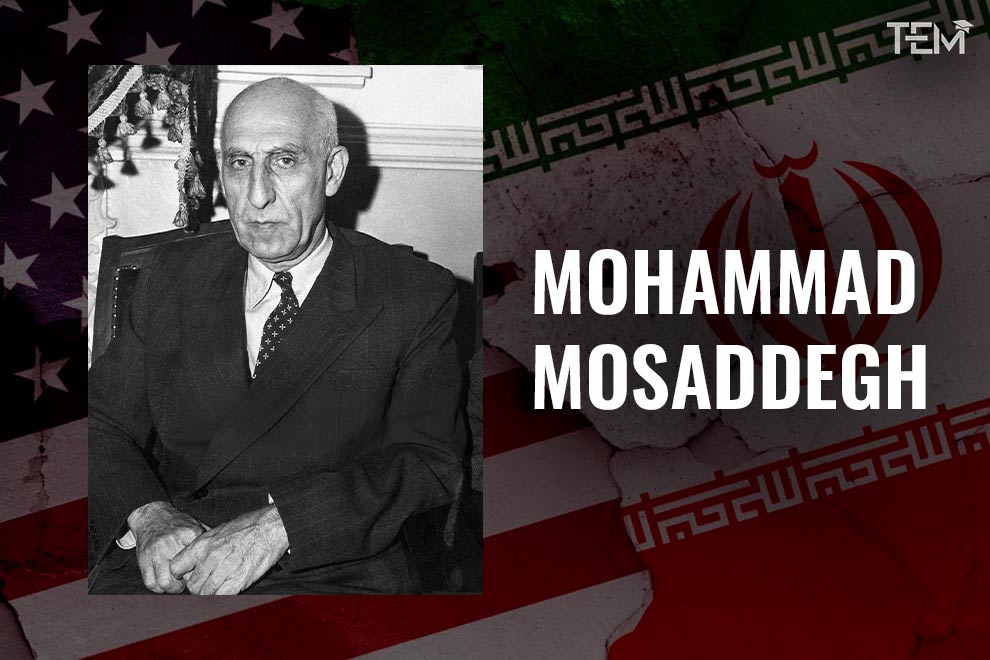
Mohammad Mosaddegh was a nationalist leader who became Iran’s prime minister in 1951. Educated in Europe and known for his strong support of constitutional democracy, he believed that Iran should control its own natural resources.
At the time, the country’s oil industry was dominated by the Anglo-Iranian Oil Company, a British corporation that managed most of Iran’s oil production and profits. Many Iranians believed the arrangement unfairly benefited foreign companies while leaving Iran with limited economic gains.
Mosaddegh argued that nationalizing the oil industry would allow Iran to strengthen its economy and regain control over its resources. His decision gained strong public support across the country. However, the move triggered a serious international crisis.
2. Nationalization of Iran’s Oil Industry
In 1951, Iran’s parliament voted to nationalize the country’s oil industry. The decision effectively removed control of oil production from the Anglo-Iranian Oil Company and placed it under Iranian management.
The British government strongly opposed the move. Oil revenues were central to Britain’s economy, and the nationalization threatened both financial interests and political influence in the region.
Britain responded with economic pressure and legal challenges while seeking international support to reverse the decision. When diplomatic efforts failed, British officials began exploring other ways to remove Mosaddegh from power. The situation quickly drew the attention of the United States.
3. Operation Ajax and the Role of the CIA
During the early years of the Cold War, American leaders were increasingly concerned about the spread of communism. Some policymakers feared that political instability in Iran could create an opportunity for Soviet influence.
In 1953, U.S. intelligence officials worked with British counterparts to support a covert operation aimed at removing Mosaddegh from power. The plan became known as Operation Ajax.
The operation was carried out by the Central Intelligence Agency with assistance from British intelligence services. Through a combination of political pressure, propaganda campaigns, and support for opposition groups, the operation ultimately led to Mosaddegh’s removal from office.
Following the coup, authority returned to Iran’s monarch, Mohammad Reza Pahlavi, commonly known as the Shah. The Shah strengthened his rule with strong political and military backing from the United States.
4. How the Coup Changed Iranian Public Opinion
In the short term, the coup appeared to stabilize Iran’s political system and strengthen the country’s alliance with the United States. Washington viewed the Shah as an important partner in maintaining regional stability during the Cold War.
However, the long-term consequences were far more complex. Many Iranians believed that foreign powers had interfered in their democratic process by removing an elected leader. Over time, this perception contributed to growing resentment toward both the Shah’s government and the United States.
This sentiment did not immediately lead to open confrontation. For more than two decades, Iran and the United States continued to maintain a close strategic partnership. Yet beneath the surface, political dissatisfaction within Iran continued to grow, setting the stage for another dramatic transformation in the country’s history.
The Shah’s Rule and the US–Iran Alliance (1953–1979)
After the 1953 coup, Iran entered a new political era under the leadership of Mohammad Reza Pahlavi. The Shah consolidated power and strengthened Iran’s relationship with the United States, which saw his government as a reliable partner in the Middle East during the Cold War.
For more than two decades, Iran and the United States maintained close diplomatic, military, and economic ties. American advisers worked with Iranian institutions, and the Shah pursued an ambitious program of modernization designed to transform the country into a powerful regional state.
Despite these efforts, political tensions inside Iran continued to grow. While modernization brought economic growth and infrastructure development, many Iranians felt excluded from political decision-making and were concerned about the direction of social change.
These internal pressures would eventually contribute to one of the most significant revolutions of the twentieth century.
1. Modernization and Western Influence in Iran
During the 1960s and 1970s, the Shah launched a series of reforms known as the White Revolution. These reforms aimed to modernize Iran’s economy and society through land redistribution, industrial expansion, and improvements in education.
With support from the United States, Iran invested heavily in infrastructure projects such as highways, factories, and universities. The country’s oil revenues also increased dramatically, providing resources for rapid economic development.
At the same time, Western cultural influence became more visible in Iranian society. Urban areas saw new businesses, modern lifestyles, and expanded access to education.
While some citizens welcomed these changes, others believed that traditional cultural and religious values were being weakened. The pace of modernization created divisions between different social groups, particularly between urban elites and more conservative communities.
2. Military and Economic Cooperation with the United States
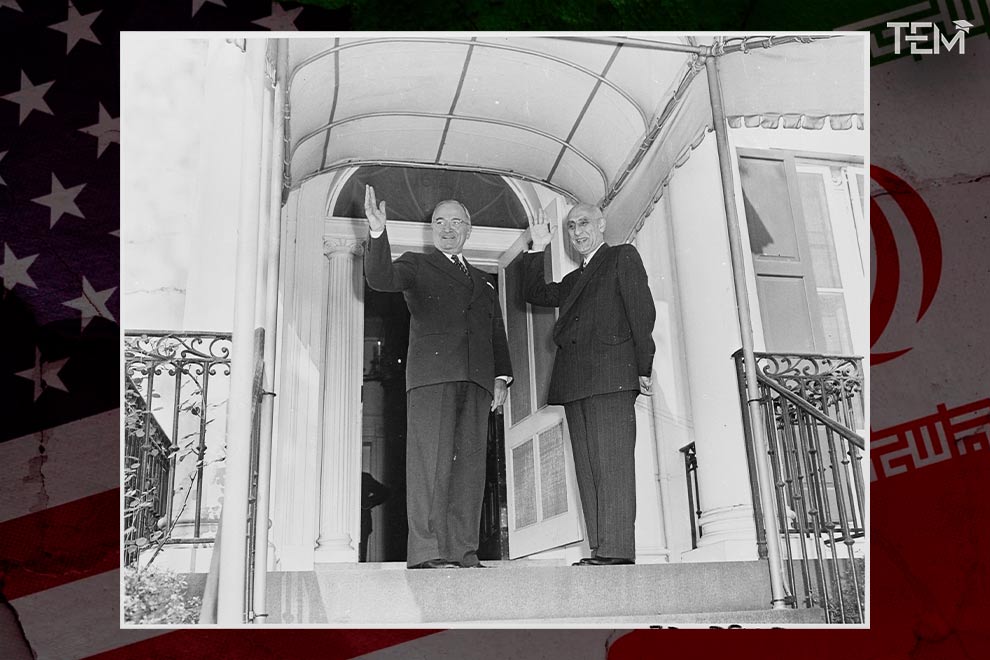
The alliance between Iran and the United States deepened throughout the Cold War. Under the Shah’s leadership, Iran became one of the largest buyers of American military equipment. The United States provided advanced weapons, training programs, and technical assistance to strengthen Iran’s armed forces.
Economic ties also expanded. American companies participated in major development projects, while Iranian oil exports supplied energy to global markets. This close partnership benefited both governments, but it also reinforced the perception among some Iranians that their country’s leadership was too closely aligned with Western interests.
3. Growing Public Dissatisfaction Within Iran
Despite economic progress, political freedoms in Iran remained limited. Opposition parties were restricted, and the Shah’s government maintained tight control over political activity.
Critics argued that the government relied heavily on security institutions to suppress dissent. These measures created growing frustration among students, intellectuals, and religious leaders.
One of the most influential voices opposing the Shah was Ruhollah Khomeini, a religious scholar who criticized the government’s policies and its close relationship with Western powers.
His speeches and writings gained attention among groups that felt marginalized by the country’s rapid transformation. His growing influence turned a political protest movement into a revolutionary force.
By the late 1970s, economic challenges, political restrictions, and cultural tensions combined to create widespread unrest. Protests began spreading across major cities, signaling that the stability of the Shah’s government was increasingly uncertain.
The Iranian Revolution and the Fall of the Shah
1. Collapse of the Shah’s Government
By early 1979, demonstrations had spread across Iran’s major cities. Large crowds gathered in public spaces calling for political reform and an end to the monarchy.
Faced with increasing unrest, Mohammad Reza Pahlavi left Iran in January 1979. His departure marked the effective collapse of the monarchy that had ruled the country for decades.
Soon afterward, Khomeini returned to Iran and was welcomed by massive crowds. Within months, the country’s political structure was transformed through a national referendum that replaced the monarchy with a new form of government.
2. Creation of the Islamic Republic
Following the revolution, Iran established a new political system known as the Islamic Republic.
This system combined elements of republican governance with religious leadership. Under the new structure, Khomeini became the country’s Supreme Leader, holding significant authority over political and religious matters.
The revolution also reshaped Iran’s foreign policy. The new leadership strongly criticized Western influence and sought to redefine the country’s role in international politics. Relations with the United States deteriorated rapidly during this period.
Many Iranian revolutionaries believed that Washington had supported the Shah’s government for decades, particularly after the events of 1953. This growing mistrust soon led to one of the most dramatic diplomatic crises of the twentieth century.
The Iran Hostage Crisis That Shocked the World
In November 1979, a group of Iranian students stormed the U.S. embassy in Tehran. The students claimed they were protesting against American interference in Iranian affairs and feared that the United States might attempt to restore the Shah to power.
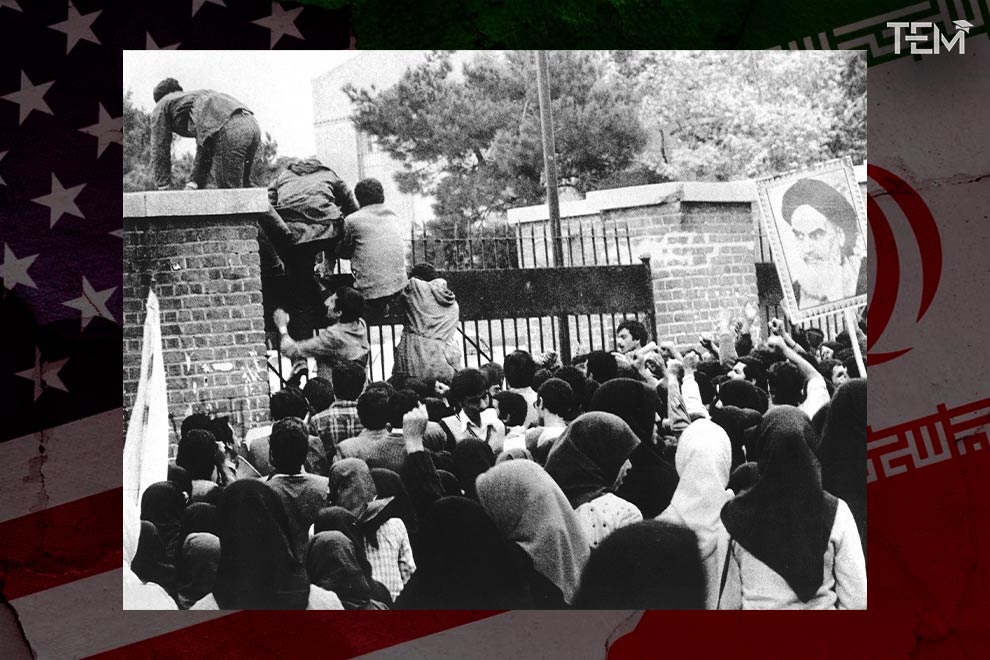
During the takeover, 52 American diplomats and citizens were taken hostage. The hostages remained captive for 444 days, making it one of the longest diplomatic crises in modern history.
The incident deeply damaged relations between the two countries. The United States responded by imposing economic sanctions and cutting diplomatic ties with Iran.
The crisis finally ended in January 1981, when the hostages were released following negotiations mediated by Algerian diplomats. However, the damage to the relationship between Washington and Tehran proved lasting. The hostage crisis not only intensified political hostility but also symbolized the deep mistrust that had developed between the two nations.
Regional Conflicts and Rising Tensions in the 1980s
After the Iranian Revolution and the hostage crisis, relations between the United States and Iran entered a new phase defined by regional conflict and strategic rivalry. Throughout the 1980s, the two countries found themselves on opposite sides of several geopolitical developments shaped by war, covert operations, and competing interests in the Persian Gulf.
1. The Iran–Iraq War
In 1980, Iraq launched a large-scale invasion of Iran, beginning what became one of the longest and most destructive conflicts in the modern Middle East. The war was initiated by Iraqi leader Saddam Hussein, who hoped to take advantage of the instability that followed Iran’s revolution.
The conflict quickly escalated into a prolonged war lasting eight years. Both sides suffered heavy casualties, and large parts of the border region were devastated.
During the war, the United States adopted a complex policy. While Washington officially maintained neutrality, it increasingly viewed Iraq as a counterbalance to Iran’s revolutionary government.
As a result, the United States provided indirect support to Iraq through intelligence sharing and economic assistance. Tensions between American forces and Iranian units also increased in the Persian Gulf, where both countries sought to protect shipping routes and oil supplies.
The war eventually ended in 1988 with a ceasefire brokered by the United Nations, but it left deep political and economic scars across the region.
2. The Iran-Contra Affair
Even as the United States publicly opposed Iran’s government, secret diplomatic actions during the mid-1980s revealed the complexity of the relationship. In what became known as the Iran-Contra affair, officials within the administration of Ronald Reagan secretly facilitated the sale of weapons to Iran.
The goal was partly to secure the release of American hostages held by militant groups in Lebanon. Profits from these arms sales were then redirected to support anti-communist rebel groups in Nicaragua known as the Contras. When the operation became public in 1986, it triggered a major political scandal in the United States.
The affair exposed the complicated reality of Cold War politics, even while the two governments viewed each other with deep suspicion, secret negotiations were still taking place behind the scenes.
3. Growing Hostility Between Tehran and Washington
By the late 1980s, mistrust between Iran and the United States had deepened significantly. Iran accused the United States of supporting governments that opposed Iranian interests in the Middle East.
Meanwhile, American leaders criticized Iran for backing militant organizations and challenging regional stability. These tensions established a pattern that would continue into the following decades: indirect confrontation, diplomatic disputes, and ongoing competition for influence across the region.
The Nuclear Issue and Economic Sanctions
By the early 2000s, the conflict between the United States and Iran had entered a new phase focused on Iran’s nuclear program. Western governments became increasingly concerned that Iran’s nuclear activities could potentially be used to develop weapons.
Iranian leaders maintained that their program was intended for peaceful purposes such as energy production and scientific research. The disagreement became one of the most significant international security issues of the twenty-first century.
1. Concerns Over Iran’s Nuclear Program
International attention intensified in 2002 when previously undisclosed nuclear facilities in Iran became public. The International Atomic Energy Agency began conducting inspections to determine whether Iran’s activities complied with international agreements.
While Iran insisted its program was peaceful, several Western governments, including the United States, argued that its uranium enrichment activities could lead to weapons development. These concerns triggered a long series of negotiations involving multiple world powers.
2. International Sanctions and Diplomatic Pressure
As negotiations stalled, the United States and several international partners introduced economic sanctions targeting key sectors of Iran’s economy, including oil exports, banking systems, and international trade.
Supported by United Nations Security Council resolutions, the measures placed significant pressure on Iran’s economy, currency instability, reduced oil revenues, and limited access to global financial systems, creating major challenges for the country.
3. The Iran Nuclear Deal and Its Collapse
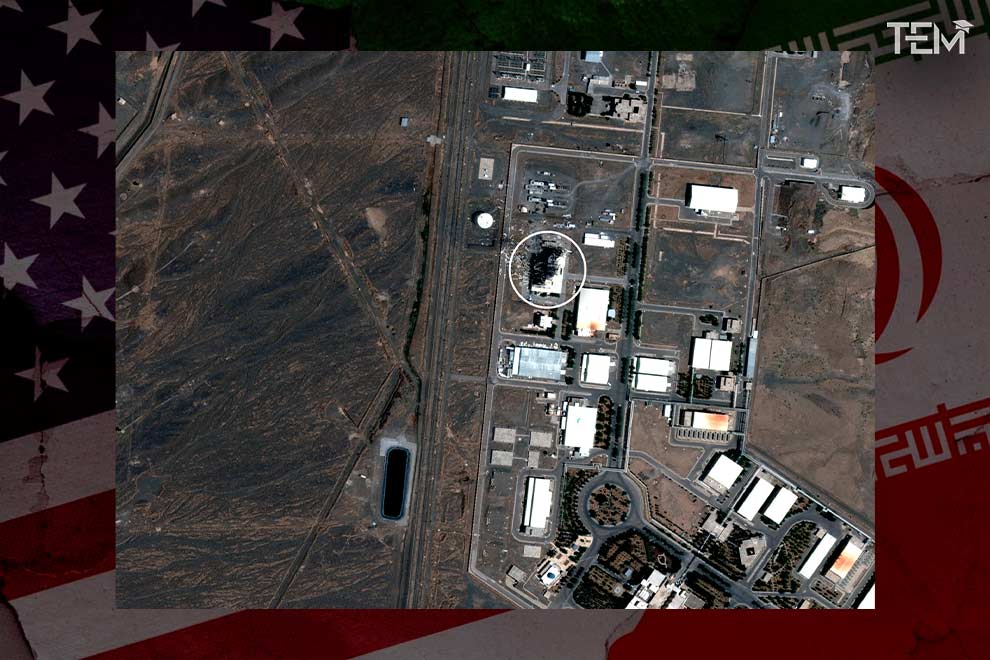
In 2015, Iran and six world powers, the United States, the United Kingdom, France, Russia, China, and Germany, signed the Joint Comprehensive Plan of Action. The deal limited Iran’s nuclear activities in exchange for lifting many economic sanctions.
Iran agreed to reduce uranium enrichment levels, allow international inspections, and limit centrifuge operations. In return, sanctions were lifted, and Iran regained access to global trade and financial systems.
The agreement appeared to ease tensions, but its life was short. In 2018, the United States withdrew from the deal and reinstated sanctions. Iran gradually rolled back its commitments in response, resuming and expanding its uranium enrichment program over the following years.
By 2024, the IAEA reported that Iran had accumulated an unprecedented stockpile of uranium enriched to near weapons-grade levels, with no credible civilian justification for the quantities involved.
Modern Escalations: From Proxy War to Direct Conflict
In the years following the nuclear deal’s collapse, the rivalry between the United States and Iran intensified on multiple fronts. Rather than direct confrontation, both countries initially competed through proxy influence across the Middle East.
1. Proxy Conflicts and the Soleimani Strike
Iran built strong relationships with armed and political organizations across the region, most prominently Hezbollah in Lebanon, as well as groups in Syria, Iraq, and Yemen. Through these alliances, Iran expanded its regional influence significantly. The United States, meanwhile, supported regional partners in the Gulf to counterbalance Iranian power.
A major turning point came in January 2020 when the United States carried out a drone strike near Baghdad International Airport that killed Iranian military commander Qasem Soleimani.
Soleimani had been Iran’s most influential military strategist and the architect of its regional proxy network. Iran responded with missile strikes against American military bases in Iraq. The confrontation did not escalate into a broader war at the time, but it demonstrated how quickly direct military conflict could materialize.
2. From Fragile Standoff to Regional Escalation (2021–2024)
The Biden administration attempted to revive the nuclear deal through indirect negotiations, but talks ultimately stalled.
The regional landscape shifted dramatically after the Hamas attacks on Israel on October 7, 2023, which triggered the Gaza war. Iran’s network of proxy forces, including Hamas, Hezbollah, and Houthi groups in Yemen, became direct participants in the widening conflict.
Israeli military operations throughout 2024 significantly weakened these organizations, degrading Iran’s regional reach. Iran and Israel also exchanged direct missile and drone strikes in April and October 2024, the first open, direct military exchanges between the two countries.
The Twelve-Day War: June 2025
On June 12, 2025, the International Atomic Energy Agency formally declared that Iran was violating its non-proliferation obligations. Iran responded by announcing plans to open a new uranium enrichment site. The following day, Israel launched a large-scale unilateral military strike against Iran, targeting nuclear facilities at Natanz, Fordow, and Isfahan, along with missile infrastructure and senior military officials.
The conflict that followed lasted twelve days. Israel quickly degraded Iran’s air defense systems and caused significant damage to its military and nuclear infrastructure.
On June 22, the United States joined the campaign under the codename Operation Midnight Hammer, conducting its own strikes against Iran’s underground nuclear facilities. The confrontation ended on June 24 after intensive mediation by Oman. American officials estimated that the combined strikes set Iran’s nuclear program back by approximately two years.
The twelve-day war did not resolve the underlying tensions. Iran’s economy, already under severe strain from sanctions, deteriorated further.
In September 2025, the United Kingdom, France, and Germany triggered the snapback mechanism under the original 2015 nuclear agreement, reimposing international sanctions. Public frustration inside Iran intensified sharply.
1. The 2025–2026 Iranian Protests
In late 2025, mass nationwide protests erupted across Iran, the largest demonstrations since the Islamic Revolution. Driven by economic collapse, infrastructure failures, and deep dissatisfaction with the government’s handling of the war, Iranians took to the streets in all 31 provinces.
The government responded with a severe crackdown in January 2026. Casualty estimates vary widely across sources, but thousands of protesters were killed, with some human rights organizations putting the figure above 30,000.
The crackdown drew international condemnation. President Trump publicly supported the protesters and warned the Iranian government. The events accelerated the US military buildup in the region, which by mid-February 2026 was described as the largest American force concentration in the Middle East since the 2003 invasion of Iraq.
2. Failed Diplomacy in February 2026
Against this backdrop, the United States and Iran held three rounds of indirect nuclear talks in February 2026, mediated by Oman.
The first round took place on February 6 in Muscat. Talks continued through the month, with the core dispute centered on whether Iran would abandon uranium enrichment entirely, a US demand Tehran initially rejected, insisting on its right to peaceful nuclear technology.
On February 25, Iranian Foreign Minister Abbas Araghchi stated that a historic agreement was within reach ahead of renewed talks in Geneva.
Two days later, on February 27, Oman’s Foreign Minister Badr Al-Busaidi announced a breakthrough, declaring that Iran had agreed to never stockpile enriched uranium and to accept full IAEA verification. Despite this announcement, the United States launched strikes the following morning.
Operation Epic Fury: The War of 2026
On February 28, 2026, the United States and Israel launched a large-scale joint military offensive against Iran, which the United States named Operation Epic Fury and Israel named Operation Roaring Lion.
Nearly 900 strikes were conducted in the first twelve hours alone. The operation targeted Iran’s missile infrastructure, air defense systems, nuclear facilities, and leadership directly.
Supreme Leader Ayatollah Ali Khamenei was killed in the opening wave of strikes on February 28, along with dozens of senior Iranian officials. His death, the most consequential event in Iranian domestic politics since the 1979 revolution, fundamentally altered the character of the conflict. Under Iran’s constitution, an Interim Leadership Council was established on March 1 to exercise the functions of the head of state.
Iran’s Assembly of Experts was disrupted when Israeli strikes destroyed the building where it was scheduled to convene on March 3. Mojtaba Khamenei, the late supreme leader’s son, was formally elected as the new Supreme Leader on March 8, 2026, with pledges of allegiance from the IRGC and senior government officials.
1. Iran’s Retaliation and Regional Spillover
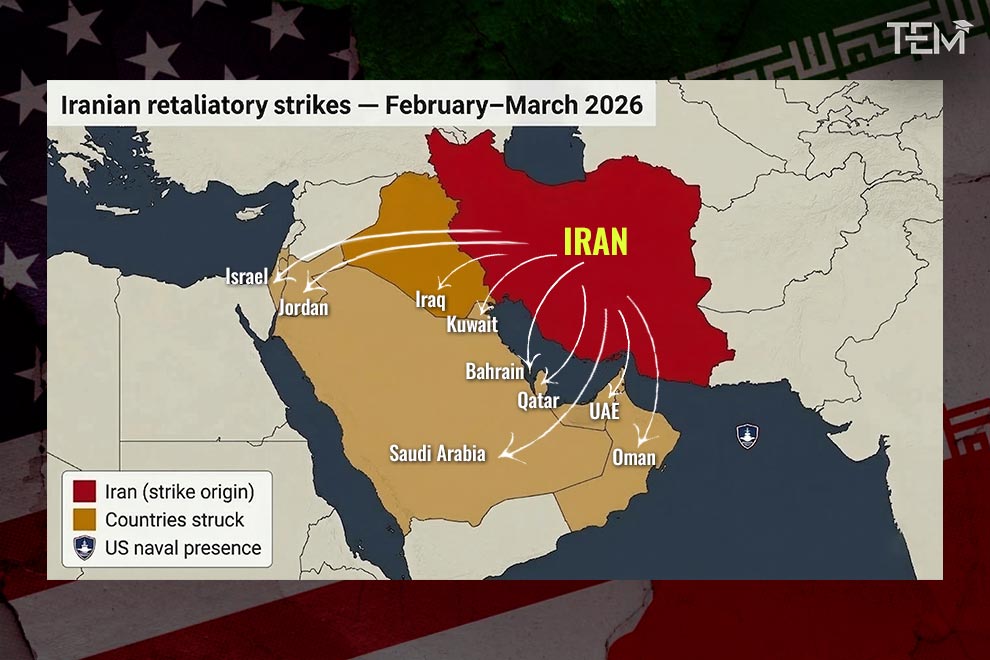
Iran responded with a sustained campaign of missile and drone strikes targeting American military installations and allied infrastructure across the region.
Iranian strikes hit facilities in Bahrain, Kuwait, Qatar, Saudi Arabia, Oman, the United Arab Emirates, Jordan, Iraq, and Israel, all countries either hosting American forces or directly involved in the conflict. A French chief warrant officer was killed in Iraq’s Kurdish region, becoming one of the first Western non-American casualties of the conflict.
Iran also moved to restrict shipping traffic through the Strait of Hormuz, driving oil prices sharply higher and threatening global energy supply chains. Dubai International Airport, one of the world’s busiest, was struck by drone attacks and temporarily halted operations.
Shipping lines rerouted to avoid both the Strait of Hormuz and the Red Sea, where Iran-aligned Houthi forces had previously disrupted traffic. Hezbollah in Lebanon launched fresh attacks against Israel in support of Iran, drawing the Lebanese government to ban Hezbollah’s military activities and prompting new Israeli operations in Lebanon.
2. The State of the Conflict: March 2026
As of mid-March 2026, the conflict has entered its third week with no clear off-ramp. US Central Command confirmed that American forces have struck more than 5,000 targets inside Iran since the campaign began.
Thousands of Iranian civilians have been killed or wounded, according to the Iranian Red Crescent and independent human rights groups. Six American service members have been confirmed killed in Iranian retaliatory strikes.
Iran’s new leadership has characterized the confrontation as existential and has shown no sign of seeking an early ceasefire. The United States and Israel have stated their objectives as degrading Iran’s nuclear program, ballistic missile capability, and naval forces goals that analysts expect will take weeks or months to fully achieve.
The UN Security Council has been unable to act due to veto dynamics among its permanent members. The UK, France, and Germany have condemned Iranian counter-strikes while simultaneously calling for a return to diplomacy, a position that reflects the deep divisions among Western allies over the campaign.
Why This Conflict Matters: Global Stakes in 2026
The war between the United States and Iran is no longer a future risk; it is an active reality reshaping the Middle East and reverberating across global markets and international institutions. Understanding its historical roots is essential to understanding why it erupted when it did and what comes next.
1. Impact on Middle East Stability
The conflict has simultaneously drawn in Gulf states, Lebanon, Yemen, and Iraq. Countries that had spent recent years building diplomatic ties with both Iran and the West are now absorbing Iranian retaliatory strikes on their soil.
The death of Khamenei and the disruption of Iran’s leadership succession have made the region’s political future deeply uncertain, with no clear line between military objectives and what a post-conflict Iran might look like.
2. Influence on Global Energy Markets
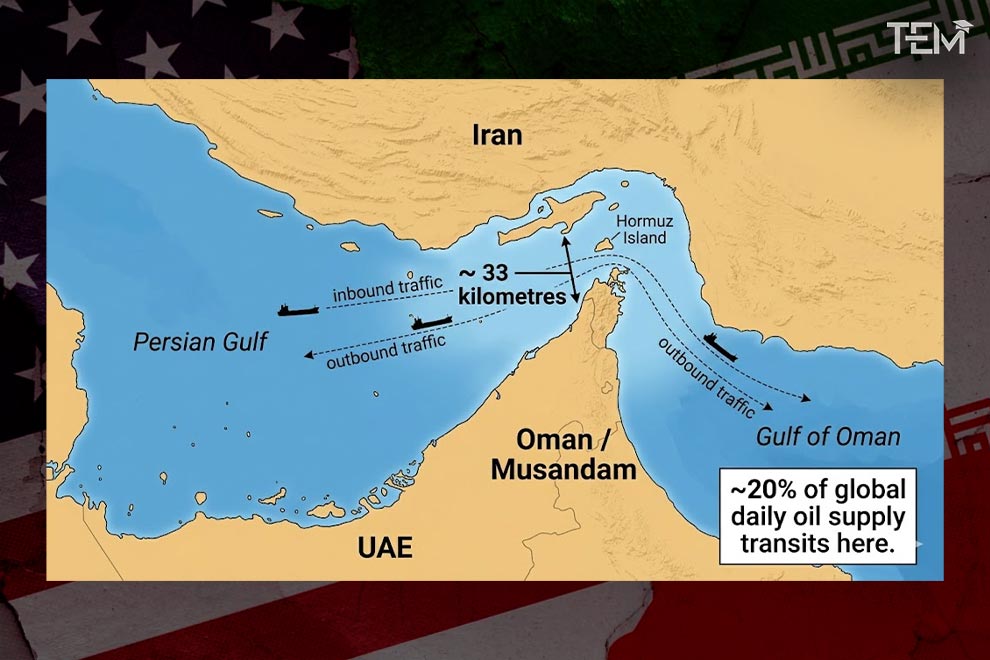
Iran’s restriction of the Strait of Hormuz, through which a significant share of the world’s daily oil supply passes, has already sent energy prices sharply higher. Qatar’s energy minister warned that Gulf states could be forced to shut down production if Iranian targeting of oil infrastructure continued.
Shipping reroutes away from both the Strait and the Red Sea have added time and cost to global trade flows, with downstream effects on consumer prices worldwide.
3. Implications for International Law and Diplomacy
The United States has framed its actions as self-defense under the UN charter. Iran and several international partners have condemned the strikes as a violation of international law.
The conflict represents one of the most significant tests of the international rules-based order since the 2003 invasion of Iraq, and its outcome will influence how other nations calculate the costs and limits of military action against nuclear programs for years to come.
How the US–Iran Conflict Is Studied in International Relations Programs
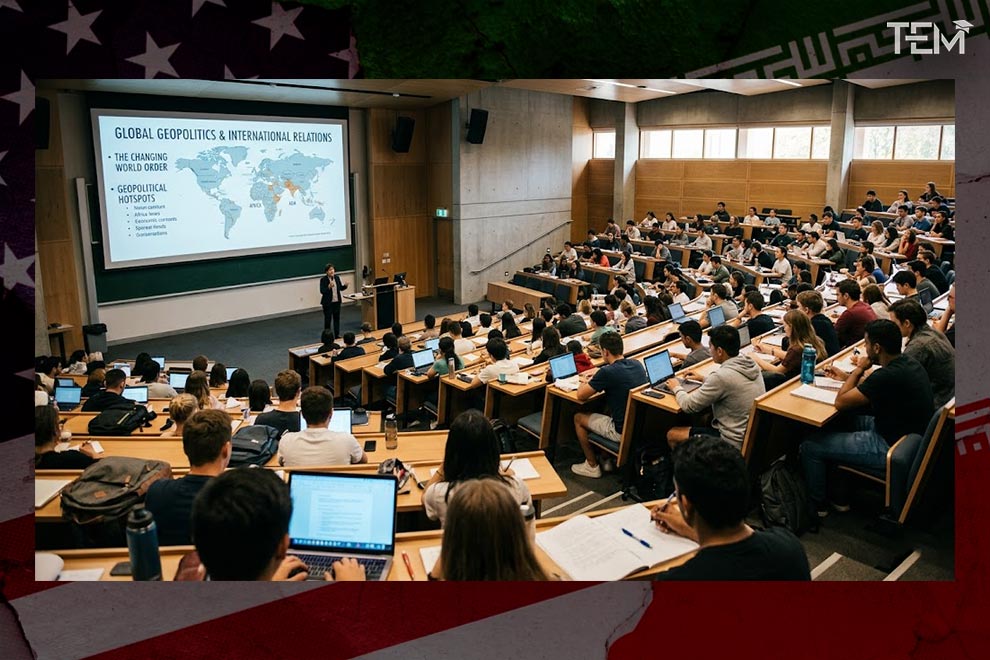
The history of the US–Iran conflict has become one of the most taught case studies in university-level international relations programs worldwide. It offers a rare opportunity to examine nearly every major theory of IR – realism, liberalism, constructivism, and dependency theory – through a single, continuous relationship spanning more than seven decades.
1. A Case Study in Realism and Power Politics
Realist scholars use the US–Iran conflict to illustrate how states behave as rational, self-interested actors in an anarchic international system. The 1953 CIA-backed coup is frequently examined as a textbook example of great-power intervention driven by strategic and economic interests rather than democratic principles.
The Cold War framing that justified the coup, containing Soviet expansion, demonstrates how security calculations override other foreign policy considerations when a state perceives a threat to its vital interests.
The nuclear standoff that dominated the 2000s and 2010s is similarly used to teach balance-of-power theory. Iran’s pursuit of nuclear capability, from a realist perspective, is understood not as ideological defiance but as a rational attempt by a mid-level power to acquire a credible deterrent against stronger adversaries, particularly the United States and Israel.
2. Liberalism, Institutions, and the Limits of Diplomacy
Liberal institutionalists point to the 2015 Joint Comprehensive Plan of Action as evidence that multilateral diplomacy and international institutions can constrain state behavior – and to the 2018 US withdrawal from that agreement as evidence of their fragility.
The collapse of the JCPOA is now a standard case study in how domestic political changes in one signatory state can unravel years of multilateral negotiation, undermining the credibility of international agreements more broadly.
The repeated failure of back-channel talks, including the Omani-mediated rounds of February 2026 that ended just days before Operation Epic Fury, is used in IR classrooms to study the gap between diplomatic signaling and actual strategic intent, and the conditions under which states choose military action over a negotiated settlement even when a deal appears within reach.
3. Constructivism: Identity, Ideology, and Perception
Constructivist scholars examine how identity and historical memory shape state behavior in ways that purely material analyses cannot explain. The Iranian Revolution of 1979 is a defining case: it was not a change in Iran’s material capabilities, but a transformation in the state’s ideology and self-perception, that fundamentally altered its foreign policy.
The concept of “the Great Satan” applied to the United States by revolutionary leaders illustrates how ideational factors can entrench conflict even when both sides might benefit materially from cooperation.
The 1953 coup occupies a central place in Iranian national identity and political memory in a way that has few parallels in modern diplomatic history. IR scholars use it to explore how historical grievances become embedded in a state’s foreign policy culture, constraining the options available to future leaders regardless of their personal preferences.
4. The Conflict as a Lens for Contemporary IR Concepts
Beyond the major theoretical frameworks, the US–Iran conflict is used to teach a wide range of contemporary IR concepts. Proxy warfare through Iran’s network of allied groups in Lebanon, Syria, Iraq, and Yemen illustrates how states project power indirectly to avoid the costs of confrontation.
The use of economic sanctions as a coercive instrument and the debate over their effectiveness and humanitarian costs are central to courses on economic statecraft.
The 2026 military campaign raises live questions in international law courses about the legality of preventive strikes against nuclear programs, the scope of self-defense under the UN Charter, and the responsibility to protect civilian populations.
For students of IR, the history of the US–Iran conflict is not simply a regional dispute; it is a compressed archive of how states compete, negotiate, misread each other, and occasionally stumble into wars they did not fully intend. That is precisely why it remains one of the most instructive and widely assigned cases in the discipline.
Lessons from History: Understanding a Complex Rivalry
The history of the US–Iran conflict reveals how alliances can transform into rivalries through a series of political decisions, strategic interests, and historical events. From cooperation in the early twentieth century to the open military confrontation of 2026, each phase of this relationship reflects broader changes in global politics.
The war that began on February 28, 2026, was not a sudden eruption. It was the product of more than seven decades of interventions, revolutions, sanctions, proxy wars, and failed diplomacy, each episode narrowing the space for a peaceful resolution.
Understanding this long historical journey does not make the current conflict inevitable in hindsight, but it does make it comprehensible, and it underscores why the choices made in the weeks and months ahead will shape the Middle East for a generation.
FAQs
- Why does the Strait of Hormuz matter in the US–Iran conflict?
The Strait of Hormuz matters because roughly 20 percent of the world’s daily oil supply passes through it, giving Iran significant leverage over global energy markets. Iran borders the Strait and can restrict or threaten shipping as both a military and economic weapon, which it did in February 2026, driving oil prices sharply higher and threatening a global energy crisis.
- Do the United States and Iran currently have diplomatic relations?
No, the United States and Iran have had no formal diplomatic relations since 1980, when ties were severed following the Iran hostage crisis. Indirect talks mediated by Oman continued into February 2026 but collapsed two days before the United States and Israel launched Operation Epic Fury on February 28, 2026.
- How has the US–Iran conflict influenced Middle East alliances?
The 2026 war has forced Gulf states, which had quietly improved ties with Iran in recent years, to absorb Iranian retaliatory strikes on their territory after allowing US forces to operate from their bases. The conflict has deepened the Israel-US military partnership while straining Washington’s relations with European partners who oppose the scope of the military campaign.
- Who is Iran’s new supreme leader after Khamenei’s death?
Iran’s new supreme leader is Mojtaba Khamenei, son of the late Ayatollah Ali Khamenei, who was killed in the opening strikes of Operation Epic Fury on February 28, 2026. Mojtaba was formally elected by Iran’s Assembly of Experts on March 8, 2026, with IRGC commanders and senior officials pledging allegiance immediately after.