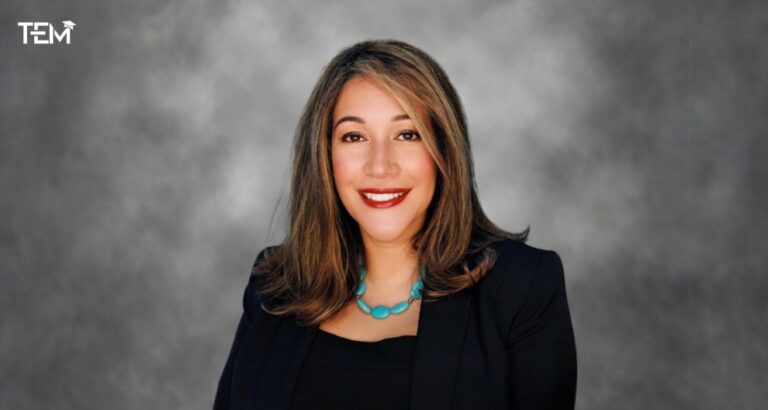
Modern universities ask more of their leaders than ever before. They must understand industry, care about students, manage complex organizations, and still see the human stories behind every decision. Engineering schools, in particular, need leaders who respect technical rigor while also valuing creativity, collaboration, and inclusion. It is in this demanding space that Dr. Karinna M. Vernaza has built her career.
Dr. Vernaza serves as the Dean of the College of Engineering and Business at Gannon University, where she guides eight academic departments and multiple outreach initiatives. Her path to this role did not follow a simple line. She began with hands-on training at the United States Merchant Marine Academy, earning a degree in Marine Engineering Systems and a second engineer merchant marine officer license. Those early years taught her discipline, teamwork, and the value of practical problem-solving. Later, at the University of Notre Dame, she completed both a master’s degree and a doctorate in Mechanical Engineering. There, mentors encouraged her to see education as a way to multiply the impact of engineering knowledge.
Over more than two decades in higher education, Dr. Vernaza has moved from faculty member to senior leader while staying connected to the classroom and the community. She has helped secure major grants, guided programs through national accreditation, and supported initiatives that link technology with public need. Colleagues often note her steady focus on people as well as projects. As she has said, “Engineering changes lives only when we remember who we are serving.”
Her story reflects more than professional advancement. It reflects a commitment to opportunity, especially for students who do not always see themselves in engineering. As a woman and a Latina in a field still learning how to welcome both, Dr. Vernaza approaches leadership with intention and empathy. The result is a career that joins technical excellence with a clear sense of purpose.
Roles, Responsibilities, and Career Milestones
Dr. Vernaza serves as the chief academic and administrative officer for a college that includes eight departments, fifty-five full-time faculty members, and twelve staff professionals. She leads strategic planning, enrollment growth, accreditation, budgeting, and partnerships with industry and community organizations. Her work requires attention to daily operations while also keeping a long view of how engineering and business education must evolve.
Among her proudest accomplishments is the creation of Gannon University’s Institute for Health and Cyber Knowledge, also known as I-HACK, an innovation space designed to connect students with real problems and real employers. She also guided the launch of a 1.5 million dollar ARC POWER-funded Center for Manufacturing and Technology. Under her leadership, the college completed successful ABET, ACBSP, and CAHME accreditation cycles. She helped design National Science Foundation (NSF) S-STEM scholarship programs and supported the TRANSFORM NSF ADVANCE grant to expand opportunities for women in STEM. Dr. Vernaza often says, “Leadership is strongest when it opens doors for others.”
Mission, Structure, and Academic Vision
The College of Engineering and Business, under Dr. Vernaza’s leadership, is guided by a clear mission to prepare students as ethically grounded and career-ready professionals. The college brings together business, computing, and engineering so that students learn to think across disciplines rather than in narrow silos. It offers five bachelor’s degrees in engineering, including biomedical, electrical, environmental, mechanical, and software engineering. Students in computing choose from computer science and cybersecurity, while the business division offers seven majors ranging from accounting and finance to marketing, management, economics, aviation, and sport business. Graduate options include master’s degrees in engineering, computing fields, business administration, and healthcare administration.
Programs are designed as pathways from undergraduate study to advanced credentials, with a strong emphasis on hands-on learning. The college also supports regional growth through the Gannon Entrepreneurial Ecosystem, which includes a MakerSpace, the Small Business Development Center (SBDC), and the NWPA Beehive Network.
Vision for 2026 and Beyond
Dr. Vernaza looks toward the next several years with a practical and student-centered vision. She plans to expand integrated credentials and stackable certificates so graduates can respond quickly to changing job markets. Another priority is to deepen partnerships with industry, inviting companies to help shape curriculum and to sponsor applied research that benefits the region. She also wants to grow programs that cross traditional boundaries, especially in artificial intelligence, sustainability, digital literacy, and virtual reality applications.
Building diverse talent pipelines remains central to her strategy. The college is increasing outreach to local schools, strengthening mentoring for faculty, and creating clearer pathways for first-generation students. Progress will be measured in straightforward ways, including student retention, job placement, diversity goals, and the number of active partnerships. As Dr. Vernaza often notes, “A plan matters only if it improves real outcomes for students and communities.”
Equity in Access and Opportunity
Dr. Vernaza approaches equity as a daily practice rather than a single program. She expands scholarship opportunities, including NSF S-STEM awards, to ensure that financial barriers do not decide who can study engineering or business. The college strengthens support systems such as peer tutoring, faculty mentoring, service learning, and paid experiential placements so that every student has more than one path to succeed. Community-based engineering projects also connect classroom knowledge with neighborhoods that need creative solutions.
Her team pays close attention to first-generation students, underrepresented groups, and women in STEM, groups that often face unseen hurdles. Advisors track progress early, intervene when students struggle, and celebrate milestones that build confidence. Dr. Vernaza believes opportunity grows when institutions listen carefully. She often reminds colleagues that fairness means giving students what they need, not simply giving everyone the same thing. This mindset guides how resources are planned and shared across the college.
Measuring Growth and Effectiveness
Dr. Vernaza views assessment as a tool for improvement rather than a paperwork requirement. The college tracks both direct and indirect measures to understand how students are progressing. Retention and graduation rates, job placement data, and results from licensure or certification exams provide a clear picture of readiness for professional life. Participation in research, internships, and service learning helps show how well students apply knowledge beyond the classroom. Alumni feedback adds another honest perspective on what the college does well and where it can grow.
Accreditation processes also shape how success is measured. Standards from ABET, ACBSP, and CAHME require programs to define outcomes and demonstrate progress. Faculty review curricula regularly, map learning objectives, and consult external advisory boards to keep programs aligned with industry needs. Capstone projects include reflective elements, so students evaluate not only technical skills but also ethics, teamwork, and community impact. Dr. Vernaza believes meaningful assessment must always connect back to the mission of educating responsible leaders.
A Leadership Moment Tested
Leadership, as Dr. Vernaza describes it, becomes real when certainty disappears. Her most demanding test arrived during the COVID-19 pandemic, when the college had to rethink nearly every part of how it taught students. Engineering and business programs depend on laboratories, teamwork, and face-to-face mentoring, yet those spaces suddenly became inaccessible. Instead of pausing, she chose to move forward with urgency and care.
Dr. Vernaza worked closely with faculty to redesign lab courses for hybrid formats and to find digital tools that could replace hands-on experiences as closely as possible. She supported training sessions so instructors felt confident using new technology and launched initiatives to strengthen digital literacy among students. Decisions had to be made quickly, but she insisted they remain guided by compassion.
Looking back, she says the crisis clarified what matters most. Clear communication, empathy for struggling students, and a willingness to adapt helped the college continue its mission. The experience, in her words, prepared the institution “not only for the world as it is, but for the world as it changes.”
Reimagining Education without Limits
If resources were unlimited, Dr. Vernaza would redesign public education around access, equity, and real-world purpose. She envisions community innovation centers where young students could encounter science and technology long before college. These centers would offer hands-on projects, mentoring, and career exploration so curiosity could grow into confidence. No child, in her view, should be excluded because of zip code or income.
She would also ensure that every student has reliable internet, modern learning tools, and classrooms shaped by culturally responsive teaching. Teachers would receive continuous professional development focused on project-based learning and the thoughtful use of data to support individual growth. Dr. Vernaza believes schools should mirror the collaborative workplaces students will one day enter. Education, she often says, must prepare people for life, not just exams. Her vision treats learning as a community investment that connects families, universities, and employers in a shared responsibility for the next generation.
Life beyond the Office
Dr. Vernaza believes that leadership flourishes when life includes time for family, curiosity, and rest. Her moments spent with her daughter are a top priority, and she safeguards those everyday experiences that strengthen their bond. Additionally, her trips to visit relatives in Panama help ground her and remind her of the values that shaped her upbringing.
Outside of work, she enjoys being outdoors. Biking, hiking, and long walks help her clear her mind after demanding weeks on campus. She also volunteers in her community, seeing service as a natural extension of her professional mission. Art, architecture, and new cuisines spark her imagination and often influence how she thinks about education. As she has said, “The best ideas rarely arrive at a desk. They show up when you are living.” These interests give her energy and perspective, allowing her to return to the college with patience and renewed focus.
The Road Ahead
Dr. Vernaza speaks about the future with the same steady confidence that has shaped her career. She wants to continue aligning innovation, inclusion, and real impact within higher education. Her immediate goal is to strengthen the College of Engineering and Business as a national example of mission-driven excellence. That work includes deeper partnerships with industry, expanded facilities for applied research, and a stronger focus on digital literacy and ethical leadership across every program. She believes universities must prepare graduates who can solve problems while also understanding the human consequences of technology and business decisions.
Beyond Gannon University, she hopes to contribute to wider conversations about the future of engineering and business education. Issues such as women’s leadership, equitable access to STEM fields, and workforce development remain close to her heart. She plans to stay active in national organizations, advisory boards, and mentorship networks where she can help shape policy and opportunity. For her, leadership is not about personal achievement but about creating space for others to rise.
Dr. Vernaza describes the next chapter as one of influence and amplification. She wants to expand pathways for students who have not always seen themselves in technical fields and to support the professionals who will follow her. The larger vision, she says, is simple: build institutions that serve people first and measure success by the doors they open for the next generation.
A Closing Reflection on Leadership
When asked what she hopes others carry forward from her story, Dr. Vernaza returns to a simple belief. Leadership, she says, should begin with humility, courage, and authenticity. Titles matter far less than the way a person treats colleagues and students each day. She measures success by the number of people who feel encouraged to try something they once thought impossible.
Her own path was shaped by mentors who noticed her potential before she fully saw it herself. Professors, supervisors, and community leaders opened doors and offered honest guidance. Those experiences formed her approach to leadership. She now tries to create the same sense of welcome for others, especially for students who are unsure whether they belong in engineering, computing, or business.
Dr. Vernaza often tells young professionals that influence grows through service. Listening carefully, admitting mistakes, and sharing credit build stronger teams than any formal strategy. She wants the college to be a place where every voice matters and where difference is treated as a source of strength.
Her message to readers is straightforward. “Lift as you climb,” she says. “If you have the chance to open a door, open it wider than you found it.” That conviction captures the spirit of her career and the example she hopes to leave behind.
Quotes
“Lead with humility, courage, and authenticity. True leadership is not about control—it’s about service, influence, and lifting others.”
“My goal is to build pathways, open doors, and create spaces where every student, colleague, and partner feels seen, heard, and empowered to lead.”
Also Read: The 10 Leaders Transforming Education, 2026