The Education Magazine
October 15, 2026
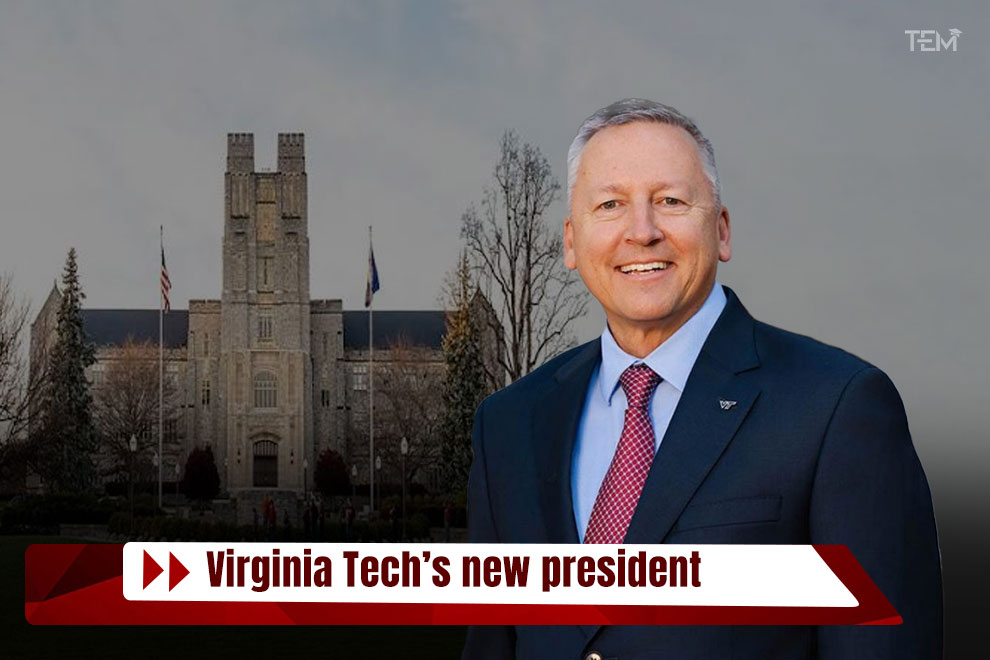
Virginia Tech has appointed Richard Linton, the current president of Kansas State University, as its 17th president. The appointment was announced by the Virginia Tech Board of Visitors on October 14, 2026. This brings Linton back to his alma mater, where he earned all three of his degrees.
Linton will take office on January 11, 2027, succeeding Timothy Sands, who has led the university since 2014. As Virginia Tech’s new president, Linton brings experience in academic leadership, research, and university administration.
What Is Richard Linton’s Educational Background?
Linton earned a bachelor’s degree in biology from Virginia Tech in 1988, a master’s degree in food science in 1991, and a Ph.D. in food science in 1994.
Linton’s career has included faculty and leadership positions at Purdue University, The Ohio State University, and North Carolina State University. At Purdue University, he became the founding director of the Center for Food Safety Engineering. He later chaired Ohio State’s food science and technology department before serving as dean of NC State’s College of Agriculture and Life Sciences from 2012 to 2022.
Linton’s experience across public research universities has prepared him for the demands of land-grant university leadership, including research, teaching, and public engagement.
Outgoing president Tim Sands welcomed his return in a statement on Virginia Tech’s official website, describing it as a ‘homecoming’ and highlighting Linton’s understanding of the mission of public, land-grant universities.
Linton’s return also makes him a Virginia Tech alumnus president, having earned his bachelor’s, master’s, and doctoral degrees at the university.
What Did Virginia Tech’s New President Richard Linton Achieve at Kansas State University?
Richard Linton’s Kansas State record includes reported gains in student enrollment, research expenditures, and philanthropic support during his presidency.
Linton’s tenure also highlights Kansas State’s research funding, with the university reporting a 30% increase in research expenditures. According to his official Virginia Tech biography, a strategic plan implemented during his tenure was associated with several results:
- More than 21,000 students: Under Linton’s leadership, Kansas State’s university enrollment growth strategy resulted in undergraduate and graduate enrollment exceeding 21,000 students.
- 30% increase in research expenditures: Research investment grew during Linton’s tenure.
- Nearly $1.2 billion in philanthropic gifts: Kansas State received nearly $1.2 billion in philanthropic gifts from donors during Linton’s tenure.
- More than $216 million for agricultural innovation: The Agricultural Innovation Initiative secured support from philanthropic, state, and federal sources.
In Linton’s October 14 letter, he separately reported $428 million in state and federal funding, describing it as the largest such investment in Kansas State’s history. In the letter to the Kansas State community, Linton described the appointment as a return to his roots,
“Having earned all three of my degrees from Virginia Tech, this opportunity brings my professional journey full circle.”
What Could Virginia Tech’s New President Mean for the University?
Linton’s experience in research funding, student enrollment, fundraising, and public engagement is relevant to Virginia Tech’s new president role as a public research and land-grant university. Linton’s background could inform the university’s approach to research investment, student success, partnerships, and economic development.
However, Kansas State’s reported results do not guarantee the same outcomes at Virginia Tech. The universities operate in different settings, and Linton’s priorities will become clearer as he begins his presidency.
Virginia Governor Abigail Spanberger also welcomed the appointment, highlighting Linton’s background in food science, agricultural innovation, and addressing food insecurity. In a statement from the governor’s office, she said she looked forward to working with him to support Virginia Tech and prepare students for lifelong success.
As Virginia Tech’s new president Linton prepares to take office in January, his immediate challenge will be to understand the university’s priorities and determine how his experience can support its future. His appointment combines a personal connection to Virginia Tech with a leadership record shaped by other major public universities.