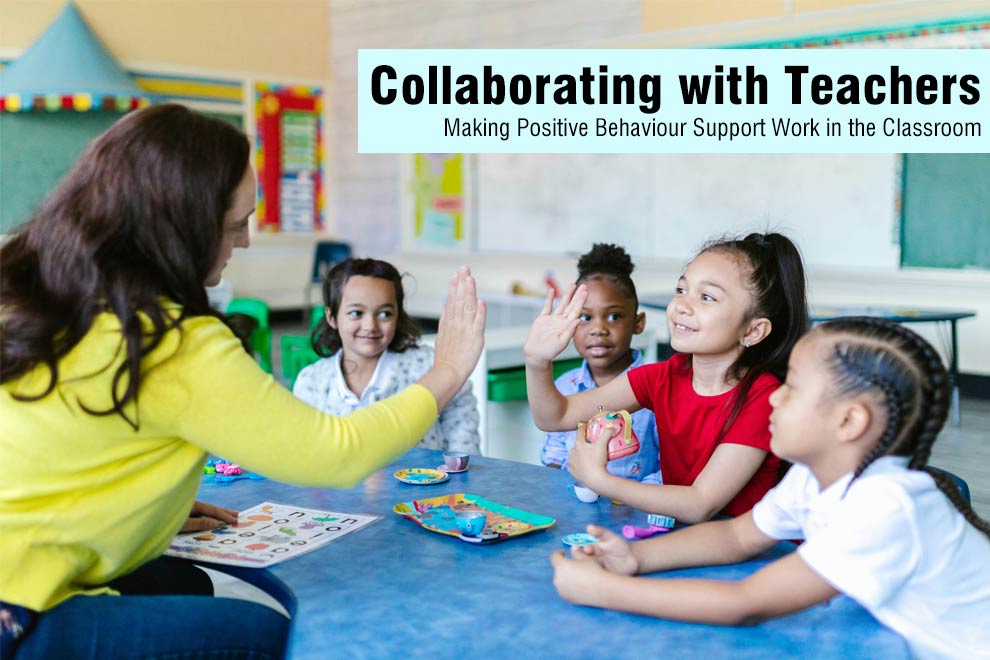
Clearly, the present class setting may be regarded as lively and diversified, but at the same time, it has presented its own share of challenges. Anybody who has been around a primary or secondary school setting over the last few years shall concur with this notion that one of the greatest challenges presented to someone in that setting is behaviors of students exhibiting disciplinary problems.
That is where the need for more embracing and forward-thinking strategies comes in. By emphasizing positive behavioral support, we move our focus away from simply reacting to bad behaviors to actively teaching our kids the skills they need to succeed. We don’t achieve such success in a vacuum; it requires genuine collaboration between teachers, specialists, and families.
What Positive Behaviour Support Is and Isn’t
It’s about understanding the “why” behind a child’s behaviour. At its core, positive behaviour support isn’t about rules; nor is it a punishable system of operations. Rather, it is an evidence-based framework that looks at a student’s environment and teaches them replacement behaviours that serve the same function as their challenging ones.
According to a systematic review published in PubMed, this approach significantly reduces challenging behaviours while increasing more helpful, prosocial alternatives. In Australia, many schools adopt this through the Positive Behaviour for Learning (PBL) initiative. Data from the NSW Department of Education shows that when these frameworks are implemented with fidelity, schools see a measurable improvement in student engagement.
Unlike old-school punitive measures that often alienate neurodiverse students, this method is strengths-based. It assumes that every child wants to do well if they have the right tools, making the classroom a safer, more predictable space for everyone.
Teachers at the Heart of Effective Behaviour Support
You are the person who best understands your students. The “what” is provided by the specialists, and you are responsible for providing the “how” for the classroom flow. The successful implementation of the support strategies relies, at times, on the small, daily actions you take every morning, such as providing crystal-clear expectations and using positive reinforcement techniques to reinforce good behavior among students.
Research, as shown by Evidence of Learning, emphasizes that classroom strategies, like quality teacher-student interactions, are the key and foundation of good behavior. That is, being a “warm demander” means one who demands a lot, as well as offers a tremendous amount of support.
Thus, by reading data and making observations to see when a struggle happens, a teacher can prepare a classroom or environment to prevent a meltdown. This type of reflective practice not only benefits the student, but also provides a teacher with the confidence of having a plan that goes beyond simply “managing” a moment of crisis.
Partnering with Support Staff: Shared Goals, Shared Plans
No teacher should ever feel like they’re on an island. The most successful approach is when teachers and supporting staff co-design goals, so that the language in the classroom fits with the provision offered in these specialist settings. For a number of families, this is a journey that begins before primary school.
In local communities, quality Armstrong Creek childcare providers often work alongside early childhood professionals to embed foundational behavioural habits. By aligning strategies at this early stage, educators ensure that when a child eventually transitions into a school setting, they already have a consistent “toolkit” of responses.
Shared tracking tools and regular team check-ins between these various support tiers ensure everyone is pulling in the same direction, preventing the child from receiving mixed messages about expectations.
Involving Families and Community Supports
The child’s behaviour doesn’t stop at the school gate, and nor should our support!’ Building trust with parents and caregivers is a game-changer, and if families don’t feel like they are being “called in for a chat” only in response to ‘things going wrong,’ then things are a little different. Research published in the Australian Educational Researcher found that parents are crucial to behaviour change, as they are more likely to have a positive impact if their involvement is sustainable.
Where possible, try to maintain a “no surprises” policy. Regular updates, either by using an email or a communication book, can go a long way in maintaining consistency at each end. A child may be learning how to ask for a break in school, while at home, his parents may be actively encouraging this skill in their child. This ability will then be acquired in half the time. It is all about building a bridge that links the childcare centre, home, and school.
Evidence-Backed Tools and Resources for Teachers
If you want to get started, you don’t have to reinvent the wheel. In fact, there are a lot of concrete tools that can help you out. Visual schedules, “First/Then” boards, and choice boards can really alleviate anxiety for neurodiverse students.
Additionally, data collected by the Australian Council for Educational Research shows that Australian classrooms are commonly disrupted, which can be alleviated by improved structuring in environments. What you may wish to investigate further is the School-Wide Positive Behaviour Support Australian Handbook, which provides case studies on streamlined implementation into schools.
Professional development that focuses on functional behaviour assessment (FBA) can also empower you to look at data patterns like noticing that a student always acts out just before lunch. This is very helpful to make proactive tweaks to their schedule.
Monitoring Progress and Next Steps
How do we know if it really is working? It all depends on the data, and data, as scary as the word sounds, can be something as simple as making a tick mark on a post-it note or filling out an online form. It keeps an eye on how well or badly an intervention is working at reaching a goal, or if it actually does need a rethink.
Knowing when the data is showing a decrease in office referrals, for instance, or an increase in time on task, is a good sign you are “on the right track.” It is a living process that develops with the child and requires a good deal of reflection, not to mention a willingness to revise if needed!
Behaviour-Positive Classrooms Together
So, to get a supportive classroom, we don’t have to be perfect, but we have to be ‘collaborative.’ By supporting our teachers and our children through positive behaviour support, our children all get to shine. And if we’re doing it the way children need it, we may not even be stopping that bad behaviour, that good behaviour, at all, but maybe encouraging a love of learning that will stay with them forever.
Also Read: How Pro Athletes Can Educate College Teams on Promoting Responsible Behaviour