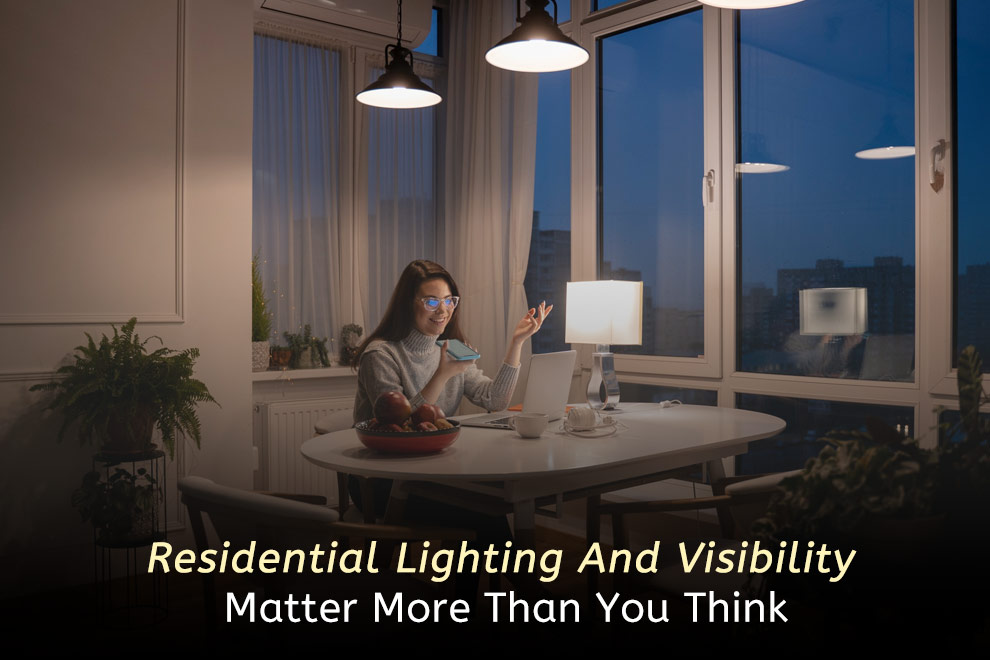
When most people think about home lighting, they think about whether they can see well enough to get from the driveway to the kitchen without bumping into something. That is part of the story, but it is a surprisingly small part. Lighting quietly shapes how a home feels, how safely people move through it, and how easily the body switches between being alert in the morning and ready for rest at night.
A house with thoughtful lighting is not just brighter. It is easier to navigate, easier to monitor, and easier to live in. That is one reason many homeowners think about lighting and visibility at the same time they consider a home security system with cameras. Clear sightlines, well lit entry points, and fewer dark corners make it easier to notice what belongs and what does not, whether that means a package at the front door, a guest arriving after sunset, or movement near a side gate.
What gets overlooked is that lighting is really a daily behavior tool. It guides attention. It creates habits. It changes how people use rooms, how quickly they settle down at night, and how confidently they move through the home. In other words, good lighting is not only about seeing. It is about steering the whole rhythm of the household.
Your Home Has Its Own Internal Clock
Every home teaches the body what time it is. Open the blinds in the morning, let sunlight hit the kitchen, and the house sends a clear signal that the day has started. Keep interiors dim all afternoon, then blast cool white light at 10 p.m., and the message gets scrambled.
Human sleep and alertness are closely tied to circadian rhythms, which are influenced by the light and dark cycle. The National Heart, Lung, and Blood Institute explains that bright artificial light in the evening can interfere with the body’s normal preparation for sleep, while daylight helps reinforce wakefulness and timing for the day. If you want a deeper look at how that works, the NIH overview of the sleep wake cycle and circadian rhythm is a useful resource.
This matters more than many people realize because the average home now does everything. It is an office, a classroom, a gym, a movie theater, and a place to sleep. When lighting stays in one mode all day, the brain loses those environmental cues that normally separate productive hours from restful ones. A brighter, cooler feeling light can support focus during active hours. Warmer, softer lighting in the evening can help the home feel calmer and less stimulating.
That shift does not require a fancy renovation. It can be as simple as using brighter task lighting in work areas during the day, opening curtains early, and avoiding intense overhead lighting late at night. The goal is to help the house match the time of day instead of fighting it.
Visibility Is a Safety Feature, Not Just a Design Choice
There is also the practical side. A poorly lit home asks people to make constant tiny guesses. Is that the edge of the stair? Is the toy still in the hallway? Is the walkway damp? Those tiny guesses add up, especially when someone is carrying groceries, waking up in the middle of the night, or moving quickly out the door.
Lighting reduces friction in everyday movement. Entryways need enough illumination to handle keys, bags, shoes, and changing weather conditions. Stairs need consistent lighting so shadows do not disguise depth. Hallways need coverage that helps people move naturally without stepping from bright glare into darkness. Bathrooms need lighting that works during the night without feeling harsh enough to fully wake the body.
The National Institute on Aging recommends good lighting in stairways, halls, and other walking areas as part of fall prevention at home. Their guidance on preventing falls at home room by room highlights something many households learn the hard way: lighting is one of the simplest home safety upgrades, yet one of the easiest to delay.
Even if no one in the home is older, that advice still applies. Kids running to answer the door, teenagers coming home late, adults carrying laundry down the stairs, guests unfamiliar with the layout, all of them benefit from better visibility. Good lighting is not just for emergencies or aging in place. It is for ordinary life.
Security Starts Before Anyone Touches a Lock
Lighting also affects security in a very human way. People feel safer when they can quickly read a space. A front yard with visible walkways and clearly lit access points feels more controlled than one with deep shadows and uneven coverage. The same goes for side paths, garages, back doors, and patio areas.
This is not about turning the whole property into a stadium. In fact, overly bright lighting can create glare, flatten depth, and make it harder to see beyond the brightest spot. The better approach is layered visibility. That means lighting where decisions happen, such as steps, gates, entrances, and transitions between indoor and outdoor areas.
Motion activated fixtures can help in targeted zones, especially near secondary access points. So can porch lights that make faces easier to recognize at the door. Indoors, lighting near windows and entryways can improve visibility without making the home feel exposed. The point is to remove uncertainty. A well lit environment helps residents notice unusual activity sooner and move with more confidence when they need to respond.
Brightness Alone Is Not the Answer
One of the biggest mistakes in residential lighting is assuming that more light automatically means better light. It does not. Harsh brightness in the wrong place can create shadows, glare on screens, and eye strain. Poorly aimed fixtures can leave one area overlit while the rest of the room still feels dim and awkward.
Placement matters just as much as intensity. A single overhead fixture in the center of a room rarely solves every need. Homes function better when lighting is layered across ambient, task, and accent purposes. In a kitchen, for example, under cabinet lighting may do more for safety and usability than another powerful ceiling fixture. In a bedroom, bedside lamps and dimmable warm light often support winding down better than bright overhead light alone.
Color temperature matters too. Cooler light often feels sharper and more energizing, which can be useful in workspaces, laundry rooms, and garages. Warmer light tends to feel more relaxing, which makes sense for bedrooms, living rooms, and evening routines. When homeowners choose lighting based only on what looks bright in the store, they often miss how that light will actually feel at 6 a.m. or 10 p.m.
The Best Lighting Plan Follows Real Life
The smartest lighting plans are built around how people actually live. Where do shoes pile up? Which hallway gets used at midnight? Which door is used most often after dark? Where do pets wander underfoot? Where does glare hit a camera view or make it hard to look out a window?
Answering those questions produces better results than copying a showroom layout. A useful home is one where lighting supports behavior without demanding attention. You reach the step and can see it. You open the back door and the yard makes sense. You wake up at night and the path to the bathroom is gentle, not blinding. You settle into the evening and the home gradually cues rest instead of keeping everyone mentally switched on.
That is why residential lighting matters more than people think. It is a quiet system working in the background, influencing safety, comfort, awareness, and sleep every single day. When it is done well, the home feels easier to use and easier to trust. And that is not a small upgrade. It is one of the most practical ways to make everyday life smoother, safer, and more balanced.