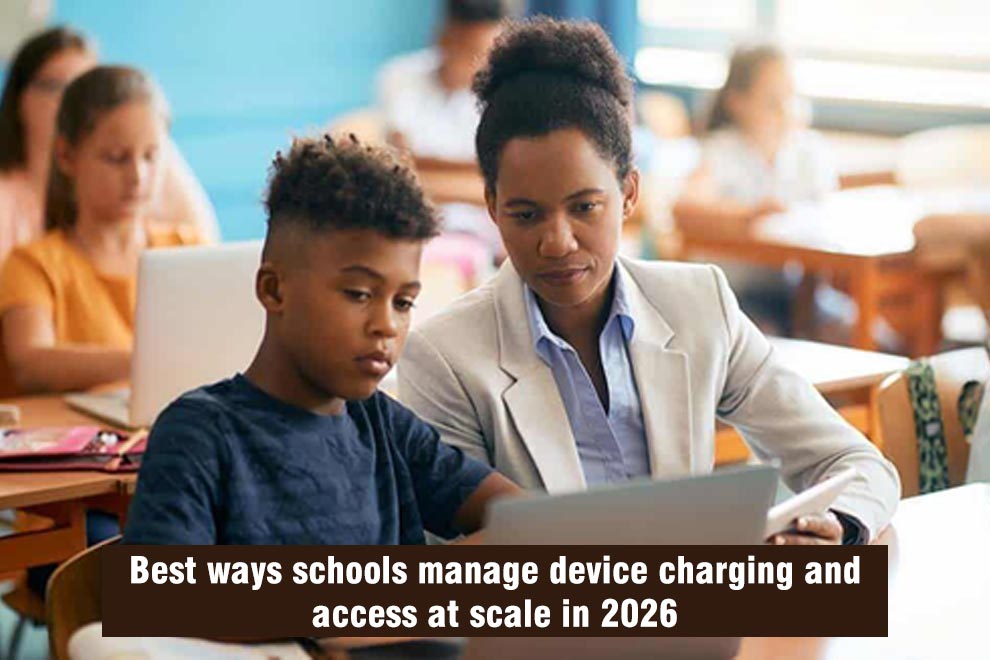
Today, more than 90% of schools provide students with learning devices, such as laptops and tablets, reflecting how deeply embedded 1:1 device programs have become in daily instruction.
However, 1:1 device programs come with operational strain. Districts report charging fatigue, higher rates of screen damage, battery wear, and the administrative burden of tracking thousands of devices across multiple campuses.
Device management requires continuous coordination across classrooms, libraries, and district offices. In response, schools are establishing decentralized, automated charging and access points that reduce IT workload and preserve accountability across the device lifecycle.
Scalable K–12 device management strategies
Sustainable 1:1 programs rely on a combination of physical infrastructure, software integration, and operational workflow redesign. The following approaches reflect how districts are structuring device logistics at scale.
Intelligent mobile charging carts
Many charging carts incorporate smart charging logic that regulates power flow to prevent battery wear, including:
- Sequenced charging cycles
- Temperature monitoring
- Remote reporting of device presence
- Integration with district inventory systems
Some IoT-enabled models notify administrators when devices are removed or left unreturned. This visibility reduces manual audits and improves end-of-day accountability.
Classroom-based power towers
Secondary schools increasingly deploy in-room charging towers. These compact vertical units allow students to top up devices during lessons.
Their purpose is simple — to prevent mid-class shutdowns.
Instead of redirecting students to a media center or managing loose cables during class, teachers can keep instruction on track while students power their devices directly in the room. This approach reduces instructional disruption during testing periods and project-based activities.
ForwardPass (automating the “broken-and-loaner” cycle)
As districts look to automate the broken-and-loaner cycle, many are establishing centralized service hubs in libraries or hallways. Deployed in these locations, smart lockers for K–12 device management by ForwardPass function as self-service kiosks that operate beyond standard help desk hours.
These systems support structured exchanges:
- A student deposits a damaged Chromebook in a locker bay
- The system assigns a fully charged loaner
- The transaction links to the student’s identity profile
- The exchange is logged in real time
Staff involvement is not required for routine swaps. Devices remain traceable, and instructional time is preserved. This model addresses one of the most persistent pain points in 1:1 environments — device downtime during the school day.
Zero-touch provisioning via MDM
Districts rely on mobile device management (MDM) platforms, such as Google Admin Console and Apple School Manager, to control device configuration, security settings, and user permissions.
Zero-touch provisioning is a feature within these platforms that automatically configures a device during its initial startup. Required applications, network settings, and security policies are applied without manual IT intervention.
When MDM systems are connected to charging carts or locker infrastructure, a returned loaner can be reset and reassigned immediately at checkout. The next student receives a device that is already configured for their profile and compliant with district policies.
This ensures:
- Student profiles load automatically
- Required apps appear immediately
- Security policies remain enforced
- Data is wiped between users
Centralized “genius bar” style student tech desks
Many districts now operate student-led technology teams. These programs function similarly to retail support counters but within the school environment.
Smart lockers often serve as holding bays for repaired devices. Students drop off malfunctioning equipment and receive notification once repairs are complete.
This workflow allows:
- Asynchronous repair cycles
- Reduced hallway congestion
- Clear intake and return documentation
- Peer-based technical learning opportunities
The model distributes support responsibilities without increasing full-time staffing.
RFID and asset tagging integration
Inventory audits traditionally required physical counting. Increasingly, districts integrate radio frequency identification (RFID) tags into devices and charging infrastructure.
When devices are plugged in overnight, embedded sensors detect and log that activity. The result is an automatic inventory check.
This supports:
- Nightly reconciliation of device counts
- Faster identification of missing assets
- Reduced manual audit hours
- Better audit accuracy
- Less administrative burden
USB-C power delivery standardization
The industry-wide shift toward USB-C Power Delivery has simplified charging ecosystems. USB-C PD allows higher wattage through a standardized connector. Standardization reduces complexity when hardware vendors change or during refresh cycles.
For schools, this translates into:
- Universal charging compatibility
- Reduced need for proprietary adapters
- Easier cart and locker upgrades
- Lower long-term replacement costs
Managed service provider hardware bundles
Some districts are moving toward Device-as-a-Service models. In this structure, hardware, software licences, and charging infrastructure are bundled into a per-student annual fee.
This approach provides:
- Predictable budgeting
- Coordinated refresh schedules
- Integrated warranty coverage
- Consolidated vendor management
While not universal, this model reflects a broader shift toward treating device logistics as a managed utility.
The 2026 K–12 infrastructure consensus
Managing devices at scale in 2026 requires automated physical workflows. Districts that align charging carts, self-service lockers, identity systems, and MDM platforms reduce downtime and protect instructional hours. The consensus is clear. Sustainable programs depend on automation, visibility, and predictable processes.
FAQ
How do smart lockers reduce IT staff workload in schools?
Smart lockers automate the loaner exchange process. Students complete device swaps independently, and transactions are recorded automatically. IT staff focus on diagnostics and repair rather than manual distribution.
What is the average ROI of automated device management for a large district?
Return on investment is typically measured in recovered instructional time and reduced device loss. Fewer class interruptions and improved asset tracking translate into measurable cost savings over multiple school years.
Also Read: The Critical Role of Connected Data in Modern QMS for Medical Devices