Semiconductors run the AI economy in 2026. Global chip sales hit a record $795.6 billion in 2025, and the World Semiconductor Trade Statistics organization expects worldwide sales to reach $1.5 trillion this year, driven mainly by AI data centers. But there isn’t one universal ranking of the world’s top semiconductor companies. NVIDIA, TSMC, Samsung, SK hynix, and ASML all operate in different parts of the semiconductor value chain. Some design chips. Some manufacture them. Some build the machines that manufacture them.
This list of the top 10 semiconductor companies in 2026 ranks each company by its role, scale, and influence across that value chain, not by a single financial number.
Top 10 Semiconductor Companies in 2026
Before the individual profiles, here is where each company sits and what it’s known for. To keep this table genuinely comparable, the “Key Strength” column describes each company’s role and technology rather than mixing revenue figures, margins, and market-share percentages that measure completely different things. Full, dated statistics for each company appear in its profile below.
| Rank | Company | Country | Semiconductor Role | Key Strength |
| 1 | NVIDIA | United States | Fabless, AI accelerator design | Leading AI GPU platform (Blackwell, Vera Rubin) built around the CUDA software ecosystem |
| 2 | TSMC | Taiwan | Pure-play foundry | Largest advanced-node manufacturer, with 2nm production and CoWoS packaging capacity |
| 3 | Samsung Electronics | South Korea | Memory, foundry, and chip design (IDM) | Only company spanning memory, foundry, and mobile chip design at meaningful scale |
| 4 | Broadcom | United States | Custom AI ASICs and networking silicon | Co-designs custom AI chips with hyperscalers and builds the Ethernet silicon that links them |
| 5 | SK hynix | South Korea | Memory manufacturer (HBM, DRAM) | Leading supplier of high-bandwidth memory for current AI accelerators |
| 6 | AMD | United States | Fabless, CPUs, GPUs, AI accelerators | Only major fabless company competing in CPUs, GPUs, and AI accelerators together |
| 7 | Intel | United States | IDM, CPU design plus foundry | One of the few Western companies still designing and manufacturing leading-edge logic in-house |
| 8 | Qualcomm | United States | Fabless, mobile and edge AI chips | Leading mobile processor platform expanding into automotive and on-device edge AI |
| 9 | Micron Technology | United States | Memory manufacturer (DRAM, NAND, HBM) | Fastest-growing major HBM supplier by recent quarterly revenue growth |
| 10 | ASML | Netherlands | Semiconductor equipment maker | Sole global manufacturer of EUV lithography systems |
This is an editorial ranking based on technology leadership, semiconductor business scale, AI relevance, manufacturing or design capability, global industry influence, and recent developments. It is not a claim that these are objectively the 10 largest companies in the world by revenue or market value, since that answer changes depending on which metric you use and which day you check it.
How We Ranked the Top Semiconductor Companies
Ranking semiconductor companies by market capitalization alone produces a different list every time the stock market moves. Ranking them by revenue alone unfairly compares a memory maker like Micron to an equipment supplier like ASML, since their business models work completely differently. So this list weighs several factors together:
- Semiconductor business scale.
- Technology leadership.
- AI and high-performance computing relevance.
- Manufacturing or design capability.
- Global industry influence.
- Strategic importance to the semiconductor supply chain.
Under these criteria, a pure equipment maker like ASML can rank alongside a chip designer like NVIDIA, even though they never compete for the same customer dollar. That is intentional. It reflects how the real semiconductor industry works.
Understanding the Semiconductor Value Chain
Before ranking these companies, it helps to understand that “semiconductor company” covers several different business models, as mapped in the OECD value chain analysis. A company’s position in this chain explains its role far better than its size does, and each company profile below states its position explicitly.
Fabless semiconductor companies
Fabless companies design chips but pay other companies to manufacture them. They own no factories, called fabs, of their own. NVIDIA, AMD, Qualcomm, and Broadcom all follow this model. It lets them focus entirely on chip architecture and software while foundries handle the enormously expensive job of actually building the silicon.
Foundries
Foundries manufacture chips designed by other companies. TSMC is the clearest example and the world’s largest pure-play foundry, meaning manufacturing is its only business. When NVIDIA designs a GPU, TSMC is usually the company that physically builds it.
Integrated Device Manufacturers (IDMs)
IDMs both design and manufacture their own chips. Intel and Samsung fall into this category, though both also now sell manufacturing capacity to outside customers, blurring the line between IDM and foundry.
Memory manufacturers
Memory manufacturers produce DRAM, NAND flash, and increasingly high-bandwidth memory (HBM), the specialized memory that sits next to AI accelerators. Samsung, SK hynix, and Micron dominate this category.
Semiconductor equipment companies
Equipment companies build the machines that make chip manufacturing possible. ASML makes lithography systems, the tools that print circuit patterns onto silicon wafers. Applied Materials makes a broader range of fabrication equipment. Without these companies, no foundry or IDM could produce an advanced chip.
Semiconductor IP companies
IP companies license chip architecture rather than manufacturing anything themselves. Arm is the leading example, licensing the processor designs that power most of the world’s smartphones and a growing share of data center chips.
1. NVIDIA

What NVIDIA does
NVIDIA is a fabless semiconductor company that designs GPUs and AI accelerators. As a fabless designer, it owns no factories and depends on foundries, mainly TSMC, to manufacture every chip it sells, including its Blackwell and newer Vera Rubin platforms.
Why NVIDIA ranks among the top semiconductor companies in 2026
NVIDIA matters in 2026 because AI data center spending is concentrated on its accelerators. The company reported record full-year revenue of $193.7 billion for fiscal 2026, up 68% year over year, and followed that with fiscal Q1 2027 revenue of $81.6 billion, up 85% year over year. Data center revenue reached $75.2 billion that quarter, up 92% year over year, and now accounts for roughly 90% of NVIDIA’s total business.
Key semiconductor technologies (and what differentiates NVIDIA)
NVIDIA’s real differentiator is not just its hardware. It is CUDA, the software layer that has kept developers building on NVIDIA GPUs for over a decade, combined with Blackwell GPUs, the newer Vera Rubin platform including the Vera CPU, and NVLink for connecting GPUs at scale.
2. TSMC

What TSMC does
TSMC is a pure-play foundry, meaning contract chip manufacturing is its only business. It does not design its own products. Fabless customers such as NVIDIA, AMD, and Apple send TSMC their chip designs, and TSMC’s factories physically build the silicon.
Why TSMC ranks among the top semiconductor companies in 2026
TSMC matters in 2026 because it manufactures most of the world’s most advanced AI chips. The company posted record Q2 2026 revenue of roughly $40 billion, up 36% year over year, with a gross margin of 67.7%. According to market research firm TrendForce, TSMC held about 72% to 73% of the global foundry market in the first quarter of 2026, well ahead of second-place Samsung’s foundry business.
Key semiconductor technologies (and what differentiates TSMC)
TSMC’s 2nm (N2) process uses a gate-all-around nanosheet transistor design that the company says is roughly 15% faster, or 30% more energy efficient, than its 3nm predecessor. Its CoWoS advanced packaging, which binds logic chips to HBM stacks, has reached yields above 98% at its largest reticle size, a scale few rivals currently match.
3. Samsung Electronics

What Samsung does
Samsung is not just a memory company. It manufactures DRAM and NAND as a memory maker, runs a foundry business that manufactures chips for outside customers, and designs its own mobile processors. This positions the company across three parts of the Samsung chip ecosystem at once. That mix makes Samsung both an IDM and a foundry, depending on which part of its business you look at.
Why Samsung ranks among the top semiconductor companies in 2026
Samsung matters in 2026 largely because of its memory business. Its semiconductor division posted a record operating profit of 89.49 trillion won, about $62 billion, in Q2 2026, up more than 1,800% year over year. Memory alone contributed roughly 99.7% of that quarter’s operating profit, while the foundry business remained unprofitable but improving.
Key semiconductor technologies (and what differentiates Samsung)
Samsung said it became the first company in the industry to begin mass production of HBM4 and ship commercial products in February 2026, a claim also reported by research firm TrendForce; SK hynix’s own HBM4 mass shipments followed in the second quarter. Samsung has also been the first to ship samples of the next generation, HBM4E, to customers.
4. Broadcom

What Broadcom does
Broadcom is not a merchant chip designer in the way NVIDIA is. It co-designs custom AI accelerators, called ASICs, with a small number of hyperscale customers, and separately builds the high-speed networking chips that connect thousands of those accelerators inside a data center. That combination of custom silicon plus networking is Broadcom’s specific place in the value chain.
Why Broadcom ranks among the top semiconductor companies in 2026
Broadcom matters in 2026 because custom AI silicon has become a real alternative to buying merchant GPUs. CEO Hock Tan has guided the company toward approximately $56 billion in AI semiconductor revenue for fiscal 2026, nearly triple the prior year; that figure is management’s own forecast rather than a final reported result. The company has also disclosed a $73 billion AI backlog.
Key semiconductor technologies (and what differentiates Broadcom)
Broadcom co-developed Google’s TPU and Meta’s MTIA accelerator, and it makes the Tomahawk 6 Ethernet switch, which the company describes as the industry’s first chip capable of 102.4 terabits per second, built to link over a million accelerators together. That networking layer is what separates Broadcom from a pure chip designer.
5. SK hynix
What SK hynix does
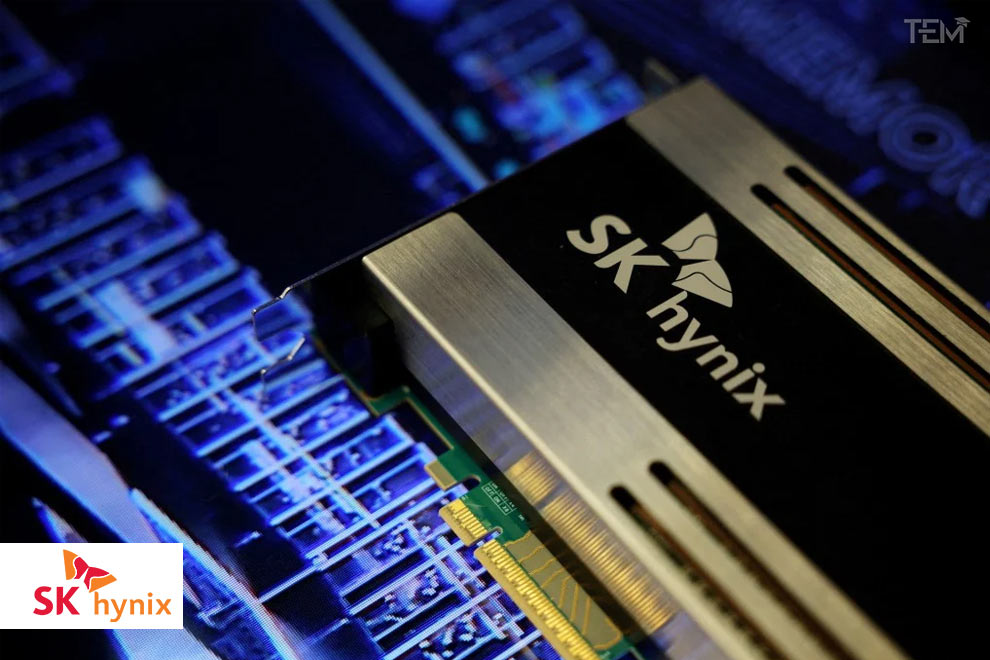
SK hynix is a memory manufacturer. It produces DRAM and high-bandwidth memory (HBM) that sits directly next to AI accelerators and feeds them data fast enough to keep up with AI workloads.
Why SK hynix ranks among the top semiconductor companies in 2026
SK hynix matters in 2026 because it has been the leading HBM supplier through the current AI buildout. The company posted record Q2 2026 revenue of 79.3 trillion won, up 257% year over year, with an operating margin of 76%, the highest in its history, and first-half 2026 revenue crossed 100 trillion won for the first time.
Key semiconductor technologies (and what differentiates SK hynix)
SK hynix’s HBM4 entered mass shipments in Q2 2026, and the company is developing HBM4E along with an early HBM5-era packaging technology it calls iHBM, designed to cut thermal resistance during operation. Analysts at UBS have estimated SK hynix could supply around 70% of the HBM4 going into NVIDIA’s Vera Rubin platform specifically, though that figure is a market projection rather than a company-confirmed number.
6. AMD

What AMD does
AMD is a fabless semiconductor company that designs CPUs, GPUs, and AI accelerators. Like NVIDIA, it owns no factories and depends mainly on TSMC to manufacture its chips, competing across data centers, PCs, and gaming.
Why AMD ranks among the top semiconductor companies in 2026
AMD matters in 2026 because its data center business has become a credible second option to NVIDIA. The company reported record Q2 2026 revenue of $11.5 billion, up 50% year over year. Its Data Center segment alone brought in $6.7 billion, more than double the prior year and now 58% of total company revenue.
Key semiconductor technologies (and what differentiates AMD)
AMD’s differentiator is its combined hardware and software stack: the Instinct MI400 series, including the MI455X and MI430X, the new Helios rack-scale AI system, sixth-generation EPYC server CPUs, and the open ROCm software stack, positioned as an alternative to NVIDIA’s CUDA.
7. Intel
What Intel does
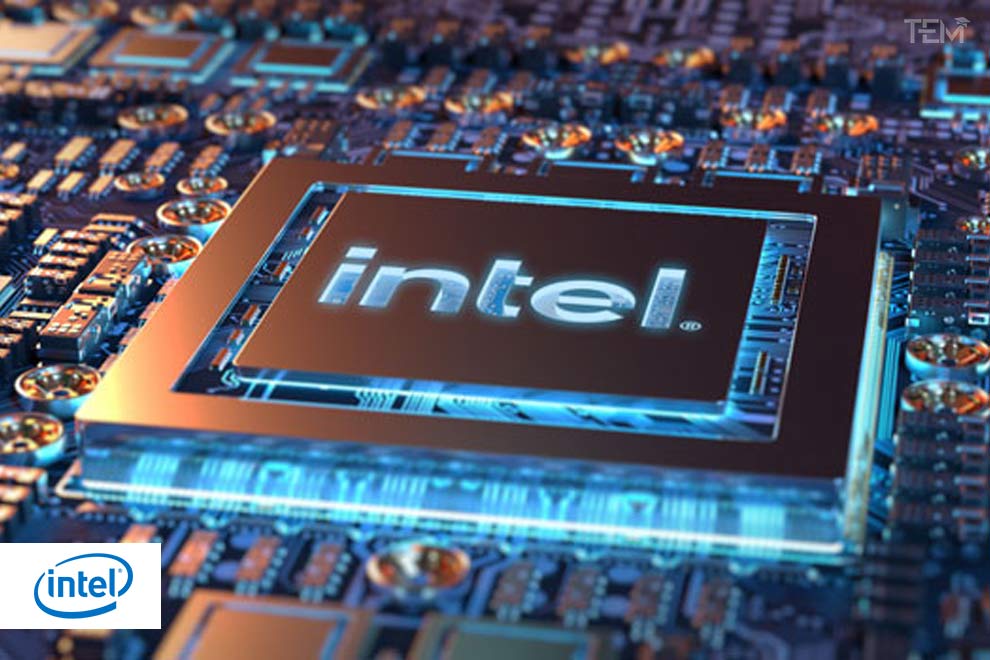
Intel designs its own CPUs, sold under the Core and Xeon brands, and also runs Intel Foundry, which is now taking on outside manufacturing customers. That combination of designing and manufacturing its own chips makes Intel one of the few remaining integrated device manufacturers, or IDMs, in the industry.
Why Intel ranks among the top semiconductor companies in 2026
Intel matters in 2026 not because it leads AI accelerators, but because its foundry turnaround has become central to diversifying advanced chipmaking outside Taiwan and South Korea. Intel Foundry’s operating loss narrowed to $2.1 billion in Q2 2026, improving for a second straight quarter.
Management said on its earnings call that yields across Intel 7, Intel 3, and 18A are tracking ahead of internal targets, though Intel has not published an exact 18A yield figure. Various analysts and media outlets have separately reported 18A yields climbing from roughly 65% toward the mid-to-high 80% range by mid-2026, but those numbers come from outside estimates, not from Intel’s own disclosures, and should be read as directional rather than confirmed.
Key semiconductor technologies (and what differentiates Intel)
The 18A process node is built around RibbonFET gate-all-around transistors and PowerVia backside power delivery, two structural changes designed to close the density and power gap with TSMC. Panther Lake, Intel’s newest laptop chip, is the first product shipping on 18A.
8. Qualcomm

What Qualcomm does
Qualcomm is a fabless semiconductor company that designs Snapdragon mobile processors. It has expanded steadily into automotive chips, industrial IoT, and on-device edge AI, and is now pushing into data center silicon as well.
Why Qualcomm ranks among the top semiconductor companies in 2026
Qualcomm matters in 2026 because it shows that AI chip growth is not confined to data centers. The company reported $9.95 billion in fiscal Q3 2026 revenue. Its automotive business grew 61% year over year to $1.59 billion, marking 23 straight quarters of double-digit automotive growth, while IoT revenue grew 9% to $1.83 billion.
Key semiconductor technologies (and what differentiates Qualcomm)
Qualcomm’s differentiator is on-device AI at scale: the fifth-generation Snapdragon Digital Chassis for vehicles, generative AI features running directly on Snapdragon mobile chips instead of in the cloud, and a new custom silicon program targeting $5 billion in data center revenue by fiscal 2027.
9. Micron Technology
What Micron does
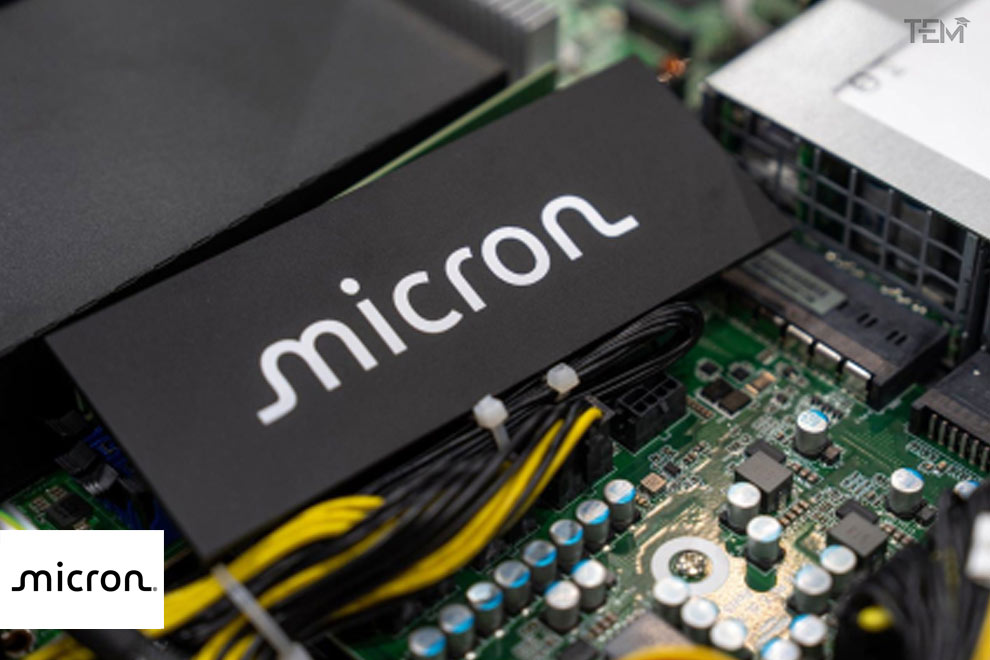
Micron is a memory manufacturer. It produces DRAM, NAND, and increasingly HBM, supplying both consumer devices and the AI data centers that now drive most of its growth.
Why Micron ranks among the top semiconductor companies in 2026
Micron matters in 2026 because AI growth benefits memory manufacturers as much as it benefits GPU companies, since every AI accelerator needs several HBM stacks attached to it. The company posted record fiscal Q3 2026 revenue of $41.46 billion, up 346% year over year, its fifth consecutive quarterly record, with gross margin reaching an all-time high of 84.9%.
Key semiconductor technologies (and what differentiates Micron)
Micron’s HBM4, built in 12-high configurations, is already in high-volume shipments, with HBM4E under development for 2027. The company has shipped over $1 billion in HBM4 revenue, and both HBM3E and HBM4 are fully booked through calendar 2027.
10. ASML

What ASML does
ASML does not make CPUs. It does not make GPUs. ASML makes the semiconductor manufacturing equipment, chiefly lithography machines, that other companies need to produce advanced chips in the first place. That places ASML at the equipment layer of the value chain, one step removed from every chip it helps make possible.
Why ASML ranks among the top semiconductor companies in 2026
ASML matters in 2026 because it is currently the only company in the world manufacturing EUV lithography systems, the machines needed to print the smallest transistor patterns. The company reported Q2 2026 net sales of €9.3 billion, up 21% year over year, and raised its full-year 2026 guidance to between €43 billion and €45 billion.
Key semiconductor technologies (and what differentiates ASML)
Extreme ultraviolet (EUV) lithography and the newer High-NA EUV systems are ASML’s core differentiator, since no other company currently builds machines capable of the same resolution. ASML also makes deep ultraviolet (DUV) immersion tools used for less advanced process nodes.
Semiconductor Industry Trends in 2026
Six trends explain most of what is happening across the top semiconductor companies this year.
AI accelerators
NVIDIA, AMD, and Broadcom are racing across two different models of AI compute: merchant GPUs sold broadly (NVIDIA, AMD) and custom ASICs co-designed with individual hyperscalers (Broadcom). AMD now projects the AI accelerator market could reach roughly $1.4 trillion annually by 2030.
High-Bandwidth Memory
Samsung, SK hynix, and Micron are all racing to ramp HBM4 production in 2026. Samsung expects memory shortages to persist through 2028, and all three companies have signed multi-year supply agreements to lock in demand years in advance.
2nm and advanced process nodes
TSMC, Samsung, and Intel are each pushing advanced logic nodes forward. TSMC’s N2 has already secured over 25 customer design tape-outs, Samsung is ramping 2nm foundry orders, and Intel’s 18A is in high-volume production, though its precise yield rate has not been officially disclosed by the company.
Advanced packaging and chiplets
TSMC, AMD, NVIDIA, and Intel increasingly rely on advanced packaging, not just smaller transistors, to boost performance. TSMC has said its CoWoS packaging capacity is expanding more than 80% this year alone to keep pace with AI chip demand.
High-NA EUV
ASML, Intel, TSMC, and Samsung are all working through the transition to High-NA EUV lithography. Intel became the first to use it in commercial mass production in mid-2026, a milestone ASML confirmed publicly.
Semiconductor supply-chain diversification
The United States, Taiwan, South Korea, Japan, and Europe are all investing heavily to diversify manufacturing, echoing findings from the Arthur D. Little supply chain study. According to the SIA 2026 Industry Report, the U.S. CHIPS Act has disbursed more than $52 billion in grants and loan guarantees, catalyzing hundreds of billions in private investments like TSMC’s $165 billion Arizona expansion.
Biggest Semiconductor Companies by Category
| Category | Leading companies |
| AI accelerators | NVIDIA, AMD |
| Foundry | TSMC, Samsung |
| Memory | Samsung, SK hynix, Micron |
| CPUs | Intel, AMD |
| Mobile chips | Qualcomm |
| Networking silicon | Broadcom |
| Lithography equipment | ASML |
| Semiconductor IP | Arm |
Conclusion
The top semiconductor companies in 2026 are not competing in one single race. NVIDIA and AMD design the AI accelerators, TSMC and Samsung manufacture them, SK hynix and Micron supply the memory that feeds them, and ASML builds the machines that make the entire process possible. Ranking these 10 companies together only makes sense once you see that “top semiconductor company” describes control over different pieces of the same ecosystem, not one contest with a single winner. As AI infrastructure spending pushes the industry toward $1.5 trillion in sales this year, that division of labor across the semiconductor value chain is likely to define the industry for years to come.
FAQ
- Which is the largest semiconductor company?
There is no single answer, because “largest” depends on the metric used. By quarterly manufacturing revenue, TSMC leads the foundry market, while NVIDIA leads by market value and Samsung’s combined electronics business leads by total revenue. Each company sits in a different part of the value chain, so direct comparisons can mislead.
- Who is the biggest semiconductor manufacturer?
TSMC is the biggest semiconductor manufacturer by contract, or foundry, revenue. It holds close to 73% of the global advanced foundry market as of mid-2026, according to earnings coverage of the company, and produces chips designed by NVIDIA, AMD, Apple, and dozens of other fabless companies.
- Is NVIDIA a semiconductor company?
Yes, NVIDIA is a fabless semiconductor company. It designs GPUs and AI accelerators, including its Blackwell and Vera Rubin platforms, but outsources actual chip manufacturing to foundries like TSMC. NVIDIA reported record data center revenue of $75.2 billion in its fiscal first quarter of 2027.
- Is TSMC a semiconductor company?
Yes, TSMC is a semiconductor company and the world’s largest pure-play foundry. It does not design its own chips. Instead, it manufactures processors for fabless customers such as NVIDIA, AMD, and Apple using advanced process nodes like its 2nm N2 technology.
- What does TSMC manufacture?
TSMC manufactures advanced logic chips designed by other companies, including AI accelerators, smartphone processors, and CPUs. It runs customer designs through processes like 3nm and 2nm production plus CoWoS advanced packaging, then ships finished silicon back for use in devices and data centers.
- Which companies make AI chips?
NVIDIA and AMD design merchant AI accelerators sold to many customers, while Broadcom co-designs custom AI chips, called ASICs, for hyperscalers like Google and Meta. TSMC and Samsung manufacture most of these chips, and Samsung, SK hynix, and Micron supply the high-bandwidth memory AI chips depend on.