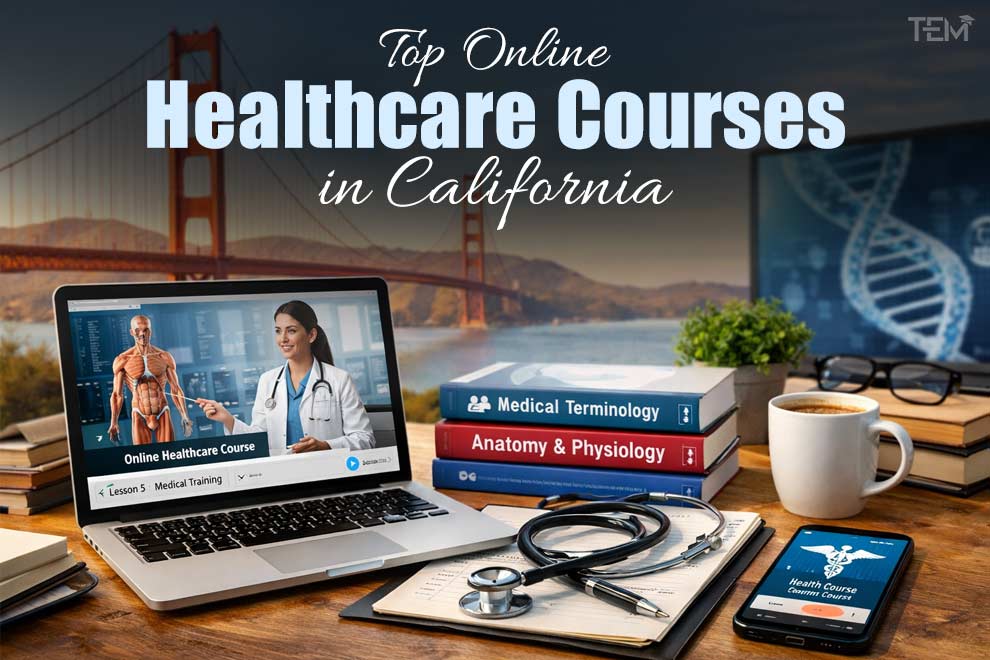
Finding the top online healthcare courses in California can be overwhelming with so many options available. Whether you are starting your healthcare journey or looking to advance your career, choosing the right online program is crucial.
California offers a range of accredited courses, from certificates in medical coding and nursing to advanced public health programs, all designed to be flexible and support career growth.
In this guide, you’ll discover the best online healthcare courses in California, how each program aligns with your goals, and the factors to consider before enrolling. We focus on accredited programs backed by credible universities and state-certified providers, ensuring your time and investment lead to tangible career outcomes.
By the end, you’ll have a clear understanding of which programs fit your professional aspirations, how to navigate enrollment, and the pathways these courses open in California’s dynamic healthcare sector.
Why Choose Online Healthcare Courses in California
California has emerged as a hub for online healthcare education, offering programs that combine flexibility, accreditation, and career-oriented curricula. For both beginners and experienced professionals, online courses provide an accessible way to gain critical skills without relocating or pausing your career.
1. Flexibility for Working Professionals
Most online healthcare programs in California are designed with asynchronous learning, allowing students to study at their own pace. Whether pursuing a certificate in medical coding, a nursing degree, or a public health program, learners can balance education with jobs, internships, or family commitments.
2. Accredited Programs for Career Credibility
California’s online healthcare courses are often offered by state-certified universities and accredited institutions such as the University of San Diego, UC Davis, and California Coast University. Accreditation ensures the program meets rigorous academic standards, improves employability, and is recognized by licensing boards.
3. Diverse Career Paths
Completing online healthcare courses opens opportunities in:
- Healthcare Administration: managing hospitals, clinics, and health systems
- Medical Coding & Billing: critical for revenue cycle management
- Public Health & Epidemiology: shaping policies and community health programs
- Nursing & Allied Health: including continuing education for licensed professionals
Many programs are actively reshaping healthcare careers by allowing professionals to upskill, transition into leadership roles, and stay competitive in a rapidly evolving healthcare sector.
While online programs offer flexibility for working professionals, those who prefer hands-on, in-person clinical training often look at campus-based options as well, such as colleges in Anaheim that provide direct patient care experience alongside classroom instruction.
4. Growth in Online Healthcare Education
According to Research.com, enrollment in online healthcare programs in California has grown steadily, reflecting the increasing demand for qualified healthcare professionals and the convenience of remote learning.
5. Skill Development That Matters
Beyond credentials, these courses equip students with practical skills such as electronic health record management, patient communication, and regulatory compliance, ensuring graduates are job-ready and competitive in California’s healthcare job market.
Top Online Healthcare Courses in California
California offers a wide spectrum of online healthcare courses, from short-term certificates to full degree programs. Below is a breakdown of high-quality programs, categorized by level and career focus.
Certificate Programs (Short-Term, Skill-Focused)
| Program | Institution | Duration | Cost (Approx) | Accreditation | Delivery |
| Medical Coding & Billing Certificate | University of San Diego | 6–12 months | $3,500 | WASC Accredited | Online, Asynchronous |
| Public Health Certificate | UC Davis | 12 months | $4,200 | UC Davis, WASC | Online, Flexible |
| Certified Nursing Assistant (CNA) | California Department of Public Health-approved Providers | 4–6 months | $1,200–$2,000 | State Certified | Online + Clinical |
| Health Care Management Certificate | California Coast University | 6–12 months | $3,800 | WASC Accredited | Fully Online |
Key Benefits:
- Quick upskilling and credentials
- Flexible schedules for working professionals
- Ideal for career changers or supplemental skills
Sources: University of San Diego, UC Davis, CDPH, California Coast University
Undergraduate Programs (Bachelor’s Level)
| Program | Institution | Duration | Cost (Approx) | Accreditation | Delivery |
| BS in Healthcare Administration | West Coast University | 3–4 years | $35,000 | WASC Accredited | Online/Hybrid |
| BS in Nursing (RN to BSN) | PMI.edu | 18–24 months (RN) | $25,000 | ACEN Accredited | Online, Flexible |
| BS in Health Informatics | California Medical College | 3–4 years | $30,000 | CA State-approved | Online + Externship |
For nurses looking to advance their qualifications, RN to BSN programs provide a flexible online path to leadership skills, advanced clinical knowledge, and increased career opportunities.
Key Benefits:
- Comprehensive knowledge of healthcare operations and patient care
- Prepares for professional certifications and management roles
- Fully online or hybrid formats support working students
Graduate & Advanced Programs (Master’s & Specialized Certificates)
| Program | Institution | Duration | Cost (Approx) | Accreditation | Delivery |
| Master of Public Health (MPH) | UC Davis | 2 years | $45,000 | CEPH Accredited | Fully Online |
| Health Care Leadership Certificate | University of San Diego | 6–12 months | $4,500 | WASC Accredited | Online, Asynchronous |
| Advanced Nursing Leadership | PMI.edu | 12–18 months | $28,000 | ACEN Accredited | Online |
Key Benefits:
- Designed for experienced professionals seeking leadership roles
- Advanced knowledge in policy, management, and healthcare systems
- Improves eligibility for higher-paying positions
Why These Programs Stand Out
- Accreditation: Ensures credibility and career recognition
- Flexibility: Many are self-paced or asynchronous
- Career-Relevant Skills: Focused on real-world skills like medical coding, health informatics, and nursing management
- Credible Institutions: Backed by universities and state-approved providers
How to Choose the Right Online Healthcare Course in California
Selecting the best online healthcare course in California requires more than picking a program with a flashy name. To ensure your time, effort, and investment translate into real career growth, focus on the following key factors:
1. Accreditation Matters
Accreditation ensures the program meets high academic and industry standards. For healthcare courses:
- Universities: Look for regional accreditation like WASC or ACEN for nursing programs.
- Certificates: Verify if they are approved by the California Department of Public Health (CDPH) or other state boards.
Accredited programs increase employability and are often required for licensing and continuing education credits.
2. Career Outcomes
Different programs prepare you for different roles:
- Medical Coding & Billing Certificates: Entry-level positions in healthcare administration or hospital billing
- Public Health Programs: Roles in epidemiology, health policy, or community health management
- Healthcare Administration Degrees: Managerial roles in hospitals, clinics, and insurance companies
Check official statistics or alumni outcomes on university sites to ensure graduates achieve the career results you desire.
3. Cost & Financial Aid
Programs vary widely:
- Certificates: $1,200–$4,500
- Undergraduate degrees: $25,000–$35,000
- Graduate programs: $28,000–$45,000
Many institutions offer payment plans, scholarships, and employer tuition reimbursement, so explore financial aid options before committing.
4. Learning Format & Flexibility
Consider your schedule and learning style:
- Asynchronous Courses: Study anytime, ideal for working professionals
- Hybrid or Online + Externship: Combines online learning with practical experience
- Self-Paced vs. Cohort-Based: Cohorts offer peer interaction, and self-paced learning allows flexibility
5. Reputation & Support
- Check faculty credentials, student support services, and alumni networks
- Programs from recognized universities like UC Davis, University of San Diego, PMI.edu, or California Coast University tend to carry more weight with employers
Tip: Make a checklist of these factors before shortlisting programs. Focus on accreditation, career alignment, flexibility, and cost to ensure you choose a course that truly advances your career.
Step-by-Step Enrollment Guide for Online Healthcare Courses in California
Once you’ve identified the top online healthcare course that fits your career goals, following a structured enrollment process ensures a smooth start. Here’s how to navigate it effectively:
1. Research Program Requirements
Every program has specific prerequisites:
- Certificates: Often require a high school diploma or equivalent
- Undergraduate Degrees: High school completion, transcripts, and sometimes standardized test scores
- Graduate Programs: Bachelor’s degree and relevant work experience for specialized certificates or master’s programs
Check the official program page for detailed eligibility criteria. (University of San Diego, UC Davis)
2. Prepare Your Application Materials
Common materials include:
- Academic transcripts
- Resume or CV highlighting healthcare experience
- Personal statement explaining career goals
- Letters of recommendation (for advanced or graduate programs)
Organize documents early to avoid delays.
3. Apply Online
Most programs allow fully online applications. Steps usually include:
- Create an account on the institution’s portal
- Complete personal and academic information
- Upload required documents
- Pay the application fee (if applicable)
4. Explore Financial Aid & Scholarships
Many programs offer financial support:
- Certificates: Scholarships, employer reimbursement
- Undergraduate & Graduate Degrees: FAFSA eligibility, university-specific scholarships
Check each institution’s financial aid page for application deadlines.
5. Complete Orientation & Registration
Once accepted:
- Attend online orientation sessions
- Register for classes and set up your learning platform account
- Review course syllabus, assignment deadlines, and technical requirements
6. Tips for Working Professionals
- Prioritize asynchronous courses for flexibility
- Use a dedicated study schedule to balance work, family, and learning
- Connect with alumni or mentors from the program for guidance
Your Path to Success in California’s Online Healthcare Courses
Choosing the top online healthcare courses in California is more than an academic decision; it’s a strategic step toward a fulfilling and high-impact career.
From short-term certificates to graduate programs, California’s online healthcare education offers flexibility, credibility, and practical skills that open doors to a wide range of opportunities in hospitals, clinics, public health organizations, and healthcare administration.
By focusing on accreditation, career alignment, and learning flexibility, you can select a program that not only enhances your knowledge but also positions you for growth in a competitive healthcare landscape.
With programs from trusted institutions like UC Davis, University of San Diego, PMI.edu, and California Coast University, you can be confident that your investment of time and resources translates into tangible career results.
Take the Next Step
Ready to transform your healthcare career? Explore these programs today, apply to the one that fits your goals, and share this guide with friends or colleagues looking to advance in healthcare. Your future in California’s thriving healthcare industry begins now.
FAQs
- Are online healthcare courses in California accredited?
Yes. Most reputable programs are accredited by regional bodies like WASC for universities or recognized state boards for certificates (e.g., California Department of Public Health for CNA programs). Accreditation ensures the course meets quality standards and is recognized by employers and licensing boards.
- Can I complete these courses while working full-time?
Absolutely. Many online courses are asynchronous, allowing you to study at your own pace. Hybrid or self-paced programs are especially popular for working professionals seeking certificates, undergraduate, or graduate-level courses.
- Do I need prior healthcare experience to enroll?
It depends:
- Certificates (e.g., medical coding, public health): Often require minimal or no prior experience
- Graduate programs (MPH, advanced nursing): Typically require a bachelor’s degree and some professional experience
- How much do online healthcare courses cost in California?
Costs vary:
- Certificates: $1,200–$4,500
- Undergraduate degrees: $25,000–$35,000
- Graduate degrees: $28,000–$45,000
Financial aid, scholarships, and employer reimbursement are often available.
- Will completing an online course improve my career opportunities?
Yes. These programs equip students with job-ready skills in areas such as medical coding, public health, healthcare administration, and nursing. Graduates can pursue roles in hospitals, clinics, insurance companies, and public health organizations.
- Are continuing education credits (CEUs) available online?
Many California-approved programs offer CEUs for licensed healthcare professionals, especially CNAs and nurses. Completing these credits online helps meet state licensing requirements while gaining new skills.