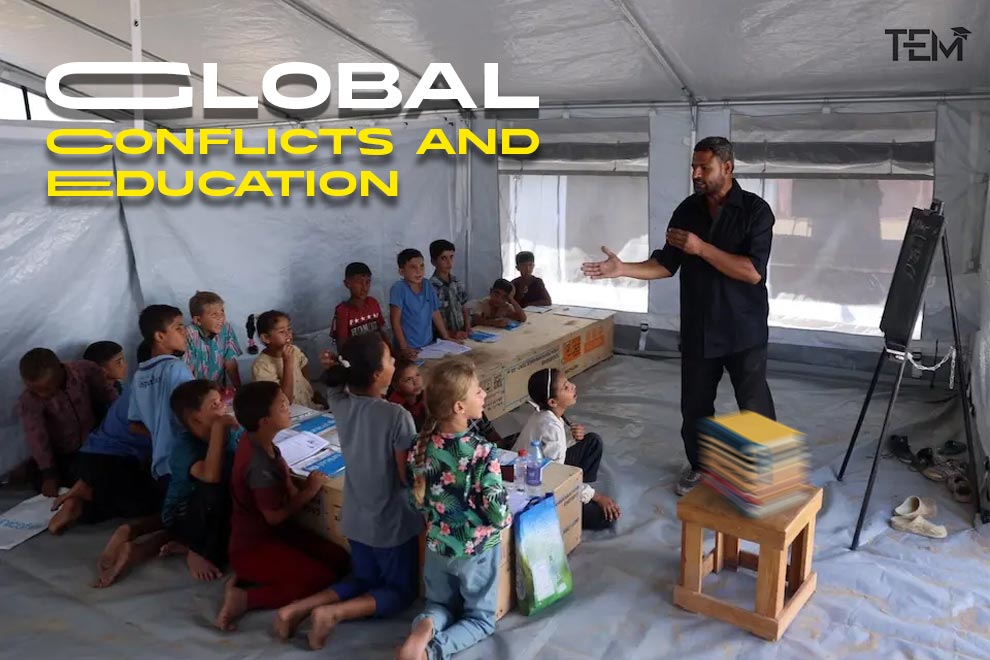
Global conflicts and education are inextricably linked when war breaks out, classrooms are among the first casualties, and entire generations of learners pay the price.
Across the world today, millions of children live in regions affected by armed conflict. For many of them, attending school is no longer certain. Classrooms are damaged or closed, teachers are displaced, and families are forced to flee their homes in search of safety.
According to UNICEF’s 2023 State of the World’s Children report, approximately 234 million school-aged children now live in crisis-affected environments. In these places, education becomes one of the first systems to break down when violence escalates.
When learning stops, the consequences stretch far beyond missed lessons, affecting economic development, social stability, and the long-term well-being of entire communities.
Yet education also remains one of the most powerful tools for recovery. Schools can offer safety, routine, and hope during times of uncertainty.
Understanding how global conflicts shape education systems is essential if policymakers, educators, and global institutions want to protect learning for future generations.
The Global Education Crisis in Conflict Zones
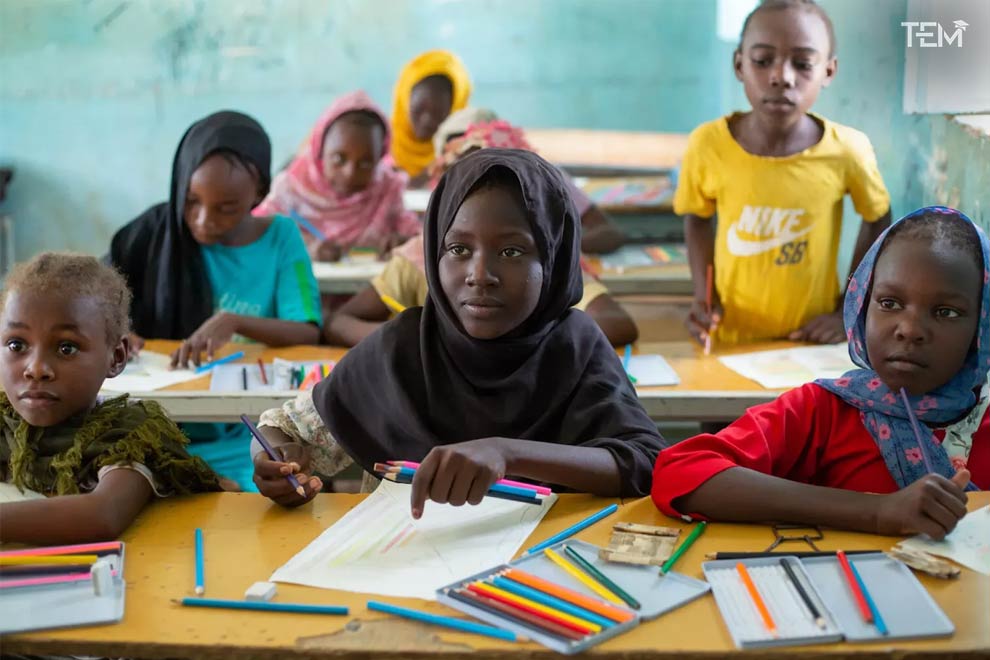
The link between global conflicts and education outcomes is well established. Armed conflicts create some of the most severe disruptions to education systems worldwide. While education challenges exist in many parts of the world, countries affected by war and instability face the most dramatic barriers to learning.
As noted above, UNICEF places this figure at approximately 234 million children, a population encompassing those affected by armed conflict, political instability, and wider humanitarian emergencies that destabilize national education systems.
In many of these regions, schools operate under constant uncertainty. Violence can damage infrastructure, disrupt academic calendars, and force teachers and students to leave their communities. As a result, children living in conflict-affected countries are significantly more likely to experience interrupted education compared with those in stable regions.
Research from UNESCO’s 2023 Global Education Monitoring (GEM) Report shows that more than half of the world’s out-of-school children live in conflict-affected countries. This statistic highlights how strongly armed conflict influences educational inequality across the globe.
For students growing up in these environments, access to learning often depends on factors outside their control, such as security conditions, displacement, or the availability of functioning schools.
Understanding the scale of this crisis is the first step toward identifying solutions that can protect education during periods of instability.
1. Scale of Disruption: Children Most at Risk
Within the 234 million children living in crisis-affected environments, certain groups face the steepest barriers. Children in refugee camps and internally displaced communities are among the most vulnerable, often cut off from any formal schooling for months or years at a time.
Several factors contribute to this disruption:
- Sudden school closures due to security threats
- Destruction of educational infrastructure
- Displacement of families and communities
- Shortages of teachers and learning materials
Children living in refugee camps or internally displaced communities face even greater challenges. Access to formal schooling may be limited, and education programs often struggle with overcrowded classrooms, limited funding, and a shortage of trained teachers.
For policymakers and education leaders, these numbers highlight a pressing challenge: ensuring that children living in conflict zones do not lose years of learning simply because of circumstances beyond their control.
2. Why Conflict-Affected Regions Face Education Gaps
Conflict creates structural problems that extend far beyond immediate safety concerns. When instability continues for months or years, education systems begin to weaken at every level.
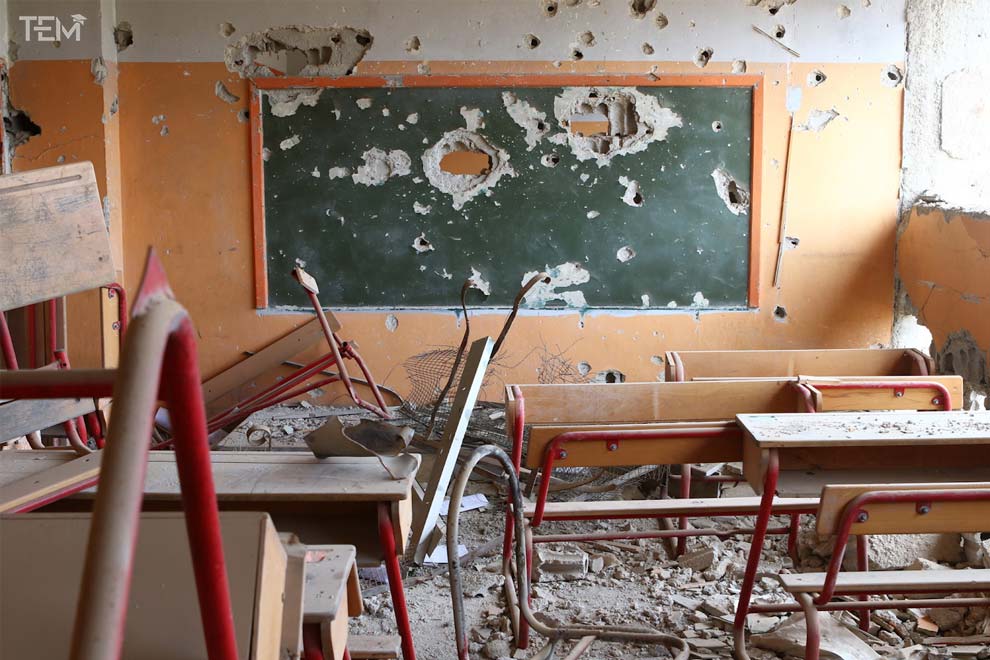
One of the most visible challenges is damaged or destroyed infrastructure. Schools may be hit during attacks or repurposed as shelters for displaced families. In some situations, educational buildings are even used by armed groups, making them unsafe for students and teachers.
Another major challenge is government capacity. When countries face political instability or economic collapse during conflict, education funding often decreases. Governments may struggle to pay teachers, maintain schools, or provide learning materials.
Displacement also plays a major role. Families fleeing violence frequently move to regions where schools are already overcrowded or unable to accept additional students. As a result, many displaced children remain out of school for extended periods.
Researchers studying global conflicts and education consistently find that these combined factors create compounding education gaps. Children not only fall behind academically but are also at greater risk of dropping out permanently, with girls and younger children disproportionately affected.
How Global Conflicts and Education Systems Break Down
Schools depend on four foundations to function: stable infrastructure, trained teachers, adequate funding, and functional governance. Armed conflict systematically undermines all four simultaneously, producing disruptions far more severe than any single factor alone.
Over time, these disruptions lead to long-term consequences such as learning loss, increased dropout rates, and reduced access to higher education. In some regions, entire generations of students grow up with limited formal schooling.
Understanding the specific ways education under armed conflict is affected helps policymakers and educators develop strategies that protect learning even during periods of instability.
“Attacks on schools and universities are not simply collateral damage in armed conflict; they are increasingly deliberate, designed to displace communities, destroy social cohesion, and deny children their futures.” — Global Coalition to Protect Education from Attack (GCPEA), Education Under Attack 2022 report.
1. Destruction of Schools and Learning Infrastructure
One of the most visible consequences of armed conflict is the destruction of education infrastructure.
Schools and universities often become unintended casualties during military operations. In other situations, educational buildings are deliberately targeted or repurposed for military use. This not only damages facilities but also creates an environment where students and teachers no longer feel safe returning to classrooms.
The Global Coalition to Protect Education from Attack (GCPEA) documented over 5,000 attacks on schools and universities across conflict-affected countries between 2020 and 2022 alone.
These incidents include:
- Airstrikes or shelling that damage school buildings
- Armed groups occupying classrooms or campuses
- Schools being used as military bases or shelters
When infrastructure is destroyed, the effects extend far beyond the physical buildings. Students may have to travel long distances to reach alternative schools, or they may lose access to education entirely.
Rebuilding schools after conflict is also a slow process. Governments often face financial constraints, while reconstruction efforts compete with other urgent humanitarian needs such as healthcare and housing.
As a result, many communities remain without functioning schools long after the violence subsides.
2. Teacher Shortages and Education Workforce Challenges
Teachers are the backbone of any education system, yet conflict frequently forces them to leave their communities.
When violence spreads, educators may relocate to safer areas or even flee the country altogether. In other cases, teachers are unable to work because schools are closed or salaries can no longer be paid.
This creates severe teacher shortages in already vulnerable regions.
For the students who remain, the absence of qualified teachers reduces the quality of education. Class sizes often increase dramatically, and schools may rely on volunteers or undertrained staff to continue lessons.
Teacher shortages also disrupt curriculum delivery. Specialized subjects such as science, mathematics, and languages may disappear from classrooms when qualified educators are no longer available.
In prolonged conflicts, rebuilding the teaching workforce becomes one of the most difficult challenges for governments attempting to restore education systems.
3. Interrupted Learning and School Closures
Even when schools remain physically intact, conflict often leads to repeated closures that interrupt the learning process.
Security threats, curfews, and population displacement can force schools to suspend classes with little warning. Students may miss weeks or months of instruction, making it difficult to keep pace with their curriculum.
Learning interruptions also affect academic motivation. Children who remain out of school for long periods are more likely to drop out permanently, especially when families face financial pressures or safety concerns.
For younger students, these interruptions can significantly slow literacy and numeracy development. For older students, disruptions may prevent them from completing secondary education or qualifying for university admission.
Over time, the cumulative effect of interrupted schooling can reduce employment opportunities and weaken economic development in conflict-affected countries.
The relationship between war and schooling is not just a short-term humanitarian concern; it is a long-term economic one, with the World Bank estimating that countries affected by fragility and conflict lose an average of two percentage points of GDP growth per year of sustained violence.
These disruptions highlight why education experts increasingly view schooling not only as a development priority but also as a critical component of humanitarian response during crises.
The Human Impact on Students
Behind every statistic about disrupted education is a child whose future has been altered by conflict. When schools close, or communities are forced to flee, students often face challenges that go far beyond missed lessons.
Understanding the true toll of education under armed conflict requires looking beyond enrollment statistics to the lived experience of displaced and traumatised children.
Displacement, uncertainty, and exposure to violence can shape a child’s development in ways that last well into adulthood.
For many students, the loss of stable schooling means losing a safe space where they can learn, socialize, and build confidence. In conflict-affected regions, education becomes not just a pathway to knowledge but also a source of protection and stability.
1. Displacement and the Refugee Education Crisis
Armed conflicts often force families to leave their homes suddenly, creating large populations of refugees and internally displaced people. For children, displacement frequently results in interrupted education.
Refugee communities often settle in regions where education systems are already under pressure. Local schools may struggle to accommodate large numbers of new students, leading to overcrowded classrooms and limited resources.
In many refugee settings, access to secondary education becomes particularly difficult. While primary schooling programs may be available in camps or temporary settlements, opportunities for older students are far more limited.
Language barriers, documentation requirements, and financial challenges can also prevent displaced children from enrolling in schools. As a result, many students spend years outside formal education.
According to UNHCR’s 2023 Global Trends report, only 68% of refugee children had access to primary education globally, and that figure dropped to just 40% globally at the secondary level, underscoring the severity of the access gap for older displaced learners.
2. Psychological Trauma and Learning Outcomes
The experience of living through conflict can have a profound effect on a child’s emotional and psychological well-being.
Children exposed to violence, displacement, or the loss of family members may experience stress, anxiety, or trauma. These experiences can make it difficult for students to concentrate in class, remember lessons, or maintain motivation to continue learning.
Educators working in conflict-affected regions often report that students require additional support beyond traditional academic instruction. Schools may incorporate psychosocial support programs to help children process their experiences and rebuild a sense of normalcy.
Safe and supportive learning environments can play an important role in helping students recover emotionally. When schools provide structure and routine, they help restore a sense of stability that children may have lost during conflict.
For this reason, many global education initiatives emphasize mental health support as an essential component of crisis education programs.
3. Gender Inequality in Conflict-Affected Education
Conflict can intensify existing gender inequalities in education, particularly in regions where girls already face barriers to schooling.
During periods of instability, families may prioritize the safety of girls by keeping them at home rather than sending them to school. In other situations, economic pressures force families to make difficult choices about which children continue their education.
Girls living in conflict zones also face increased risks of early marriage, household labor responsibilities, or exploitation. These factors can lead to permanent dropout from school.
Boys, on the other hand, may face different risks. In some conflict environments, adolescent boys are vulnerable to recruitment by armed groups or may leave school to support their families financially.
Addressing these gender-specific challenges requires targeted policies that protect access to education for all children during crises.
Ensuring equal opportunities for learning remains a critical step toward building more resilient societies after conflict.
Why Education Matters During Conflict
When conflict disrupts communities, education is often seen as a secondary priority compared to immediate humanitarian needs like food, shelter, and healthcare. However, global education experts increasingly emphasize that schooling is not just a long-term development goal; it is also a critical emergency response.
For children living in crisis environments, education can provide stability, protection, and a sense of normalcy during periods of uncertainty. Schools often become one of the few structured spaces where young people can continue learning, interact with peers, and rebuild hope for the future.
Protecting education during conflict is therefore not only about maintaining academic progress. It is also about safeguarding children’s well-being and helping societies recover once violence ends.
1. Schools as Safe Spaces for Children
In conflict-affected regions, schools frequently serve as more than places of learning. They become safe environments where children can find support, guidance, and routine.
For many students, the classroom is one of the few locations where they can experience a structured daily schedule. This routine plays a crucial role in helping children cope with the uncertainty created by war and displacement.
Schools can also protect from several risks that increase during conflict, including child labor, exploitation, and recruitment into armed groups. When children remain engaged in education, they are more likely to stay connected with their communities and less likely to face these dangers.
Teachers also play an important role as trusted adults who can identify signs of distress among students. Through mentoring and emotional support, educators help children rebuild confidence and resilience during difficult times.
In this way, schools act as protective spaces that support both learning and wellbeing.
2. Education and Long-Term Economic Recovery
The importance of education during conflict extends far beyond immediate protection. It also shapes the long-term recovery and stability of societies once peace is restored.
Countries affected by prolonged conflict often face significant challenges in rebuilding their economies. A skilled and educated workforce is essential for reconstruction, innovation, and sustainable development.
When large numbers of children lose access to education, the long-term consequences can include reduced productivity, limited employment opportunities, and slower economic growth.
Research published by the World Bank consistently shows that each additional year of quality schooling raises an individual’s earning potential by approximately 8–10%, making sustained education access one of the most cost-effective long-term investments in post-conflict recovery.
For this reason, international organizations increasingly advocate for integrating education into humanitarian responses from the earliest stages of a crisis.
Protecting learning during conflict is not only about helping students today, but it is also about safeguarding the future of entire nations.
Global Case Studies of Education Disruption
While global statistics reveal the scale of the crisis, individual country cases show most vividly how global conflicts and education intersect in practice and how quickly a functioning school system can collapse when war takes hold.
Across different regions, the patterns are similar. When conflict escalates, schools close, families flee their homes, and education systems struggle to function.
Examining real-world examples helps illustrate how global conflicts translate into everyday challenges for students trying to continue their education.
1. Iran 2026: Education Under Fire
The US-Israel military strikes on Iran that began on February 28, 2026, have added the latest and most urgent chapter to the global story of education disrupted by armed conflict.
Within the opening days of the strikes, a missile struck a site adjacent to a girls’ school in Minab, near Bandar Abbas, killing approximately 170 people, one of the deadliest single incidents involving a school-adjacent facility documented since the GCPEA began systematically tracking attacks on education infrastructure.
Beyond physical destruction, the conflict has severely disrupted digital learning across Iran. The Iranian government imposed sweeping internet blackouts during the conflict period, cutting off millions of students from online learning platforms at a time when digital education had become increasingly central to the country’s school system.
This directly mirrors the digital access barriers documented in conflict zones from Sudan to Gaza, but at a scale affecting one of the Middle East’s larger education systems.
For the millions of school-age children in Iran, the 2026 conflict represents not only an immediate safety crisis but a serious disruption to an education system that had, before the strikes, achieved near-universal primary enrollment.
The case underlines a recurring pattern in the relationship between global conflicts and education: no level of prior development makes a school system immune once armed conflict begins.
International bodies, including UNICEF, have called for the immediate protection of educational facilities under international humanitarian law, consistent with the obligations of all parties to armed conflict under the Geneva Conventions and the Safe Schools Declaration.
2. Education Challenges in Gaza
The conflict in Gaza has severely disrupted the education system and affected hundreds of thousands of students.
Many schools have been damaged or destroyed during military operations, forcing large numbers of students out of classrooms. In addition to infrastructure damage, widespread displacement has made it difficult for families to maintain consistent access to schooling.
According to UNICEF, more than 625,000 children in Gaza had their schooling disrupted as of early 2024, with over 90% of school buildings damaged, destroyed, or repurposed as displacement shelters. Some schools have been converted into shelters for displaced families, further limiting available learning spaces.
Teachers and education staff also face difficult conditions, often working in temporary environments with limited resources. These disruptions have made it challenging to maintain normal academic schedules and curriculum delivery.
For many students in Gaza, education has shifted from traditional classrooms to emergency learning environments designed to keep learning alive despite ongoing instability.
3. Sudan’s Education Crisis
Sudan’s ongoing conflict (which escalated sharply following the outbreak of fighting between the Sudanese Armed Forces and the Rapid Support Forces in April 2023) has created one of the most severe education disruptions in recent years.
As violence spread across the country, thousands of schools were forced to close. In many regions, classrooms were abandoned as communities fled fighting, leaving millions of children without access to formal education.
UNICEF reported in 2024 that approximately 19 million children in Sudan, nearly 90% of the school-age population, were out of school, making it the largest education crisis in the world at that time. The sudden displacement of families has also placed additional pressure on neighboring regions where schools are struggling to accommodate displaced learners.
In some areas, teachers have been unable to continue their work due to safety concerns or the breakdown of government systems responsible for paying salaries.
These challenges highlight how quickly conflict can dismantle an entire national education system.
4. Ukraine’s Disrupted School Systems
The war in Ukraine (which began with Russia’s full-scale invasion in February 2022) has demonstrated how conflict can reshape education systems even in countries with well-developed infrastructure.
Many schools across the country have been damaged during the conflict, while others have transitioned to remote or hybrid learning models to maintain educational continuity.
In several cities, schools have adapted by creating underground classrooms or using shelters as learning spaces to protect students from potential attacks. These adjustments allow education to continue while prioritizing student safety.
The shift toward online and blended learning has also accelerated the use of digital platforms. Teachers and students rely on technology to maintain lessons despite disruptions caused by displacement or security concerns.
Ukraine’s experience illustrates how pre-existing digital infrastructure, strong internet penetration, and widespread device ownership gave the country tools that many conflict-affected nations lack, allowing education to continue more effectively than would otherwise be possible.
Global Efforts to Protect Education During Conflict
Recognizing the long-term consequences of disrupted education, international organizations and governments have developed several initiatives to protect schools and support students living in crisis zones.
These programs aim to safeguard education infrastructure, ensure continued learning opportunities, and strengthen resilience within education systems.
1. The Safe Schools Declaration
The Safe Schools Declaration is an international political commitment launched in Oslo in May 2015, designed to protect schools and universities from being used for military purposes during armed conflict.
Governments that endorse the declaration commit to reducing attacks on educational institutions and ensuring that schools remain safe environments for students and teachers.
The initiative also encourages countries to adopt the Guidelines for Protecting Schools and Universities from Military Use during Armed Conflict, which limit the military use of educational buildings and protect students during times of conflict.
As of 2024, more than 120 countries have endorsed the declaration, though a number of major military powers have yet to do so, limiting its practical reach in some of the world’s most active conflict zones.
2. Education Cannot Wait and Global Education Funds
Global education funds play a critical role in supporting learning in emergency situations.
Education Cannot Wait (ECW), the United Nations global fund for education in emergencies, established in 2016, focuses on providing education opportunities for children affected by conflict, displacement, and humanitarian crises.
ECW funds emergency classrooms, teacher training, and learning materials, and reached over 9 million children across 42 crisis-affected countries in 2023.
By working with governments, humanitarian agencies, and local communities, these programs aim to restore access to education as quickly as possible.
However, despite these efforts, education remains one of the least funded sectors in humanitarian response, receiving on average less than 3% of total humanitarian aid globally, according to the Inter-Agency Network for Education in Emergencies (INEE), highlighting the need for greater global investment.
3. International Policies Supporting Education in Emergencies
Several international frameworks emphasize the importance of protecting education during crises.
Global policy efforts focus on ensuring that the right to education continues even during conflict. The UN’s Sustainable Development Goal 4 (SDG4) commits all member states to ensuring inclusive, equitable, quality education for all, including children in crisis settings, by 2030. These frameworks encourage collaboration between governments, international organizations, and humanitarian agencies to maintain learning opportunities for affected students.
Policies supporting education in emergencies also promote the rebuilding of schools, the training of teachers, and the development of resilient education systems capable of withstanding future disruptions.
Through coordinated global efforts, education leaders aim to ensure that conflict does not permanently prevent children from accessing the opportunities that learning provides.
The Role of Technology in Crisis Education
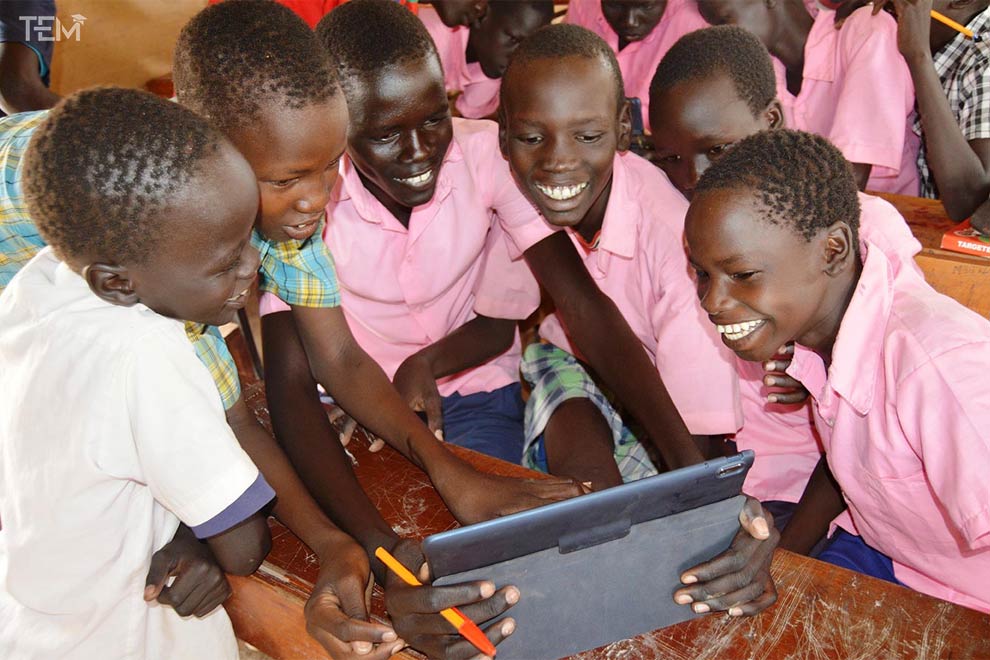
As conflicts continue to disrupt traditional schooling, technology is increasingly helping educators maintain learning in difficult environments. While digital tools cannot fully replace classrooms, they can provide alternative pathways that allow students to continue their education when physical schools are inaccessible.
In many conflict-affected regions, education systems have started using technology to overcome barriers such as displacement, infrastructure damage, and teacher shortages. These solutions are often designed to work in low-resource environments where electricity, internet access, and learning materials may be limited.
Technology, therefore, plays an important role in keeping education systems functioning when conventional methods are no longer possible.
1. Digital Learning in Conflict Zones
Digital learning platforms have become an important tool for maintaining education during crises. Online classes, recorded lessons, and mobile learning applications allow students to continue studying even when schools are temporarily closed.
In several conflict-affected regions, governments and international organizations have supported remote learning programs that deliver educational content through digital platforms. These programs can include:
- Online classrooms
- Digital Notebooks and learning materials
- Educational video lessons
- Mobile learning applications
For displaced students, digital learning can help maintain continuity between different education systems. Students who move across borders may still be able to access familiar curricula through online programs.
Although internet access remains uneven, UNICEF estimates that two-thirds of school-age children in low-income conflict-affected countries lack home internet access. These initiatives demonstrate how digital technology can meaningfully reduce learning disruptions even when coverage is partial.
2. Alternative Classrooms and Temporary Learning Spaces
In areas where traditional schools cannot operate safely, educators often create temporary learning environments to continue instruction.
These alternative classrooms may include:
- Temporary schools in refugee camps
- Community learning centers
- Classrooms in shelters or underground facilities
- Mobile schools that move with displaced communities
Temporary learning spaces allow students to return to structured learning environments even when permanent schools have been damaged or destroyed.
Teachers working in these environments often adapt teaching methods to suit limited resources. Lessons may rely on shared materials, flexible schedules, and community support to keep education accessible.
Despite the challenges, these classrooms play an essential role in ensuring that children do not lose years of learning during prolonged conflicts.
3. Future Innovations Supporting Crisis Education
The growing focus on education in emergencies has also encouraged innovation in educational technology.
Researchers and education organizations are exploring tools designed specifically for crisis environments. These innovations aim to deliver learning content in ways that remain accessible even when infrastructure is limited.
Examples of emerging solutions include:
- Offline digital learning platforms
- Solar-powered learning devices
- Mobile education systems for remote communities
- Digital teacher training programs
These technologies are designed to make education systems more resilient, allowing learning to continue even during periods of instability.
As conflicts become increasingly complex, innovative approaches will play a vital role in ensuring that students continue to receive quality education.
Building Resilient Education Systems for the Future
Protecting education during conflict requires more than short-term emergency programs. It also requires long-term strategies that strengthen education systems and make them more resilient to crises.
Governments, international organizations, and education leaders are increasingly focusing on policies that prepare schools to operate even under difficult conditions.
Resilient education systems are designed to adapt quickly when disruptions occur. This includes strengthening infrastructure, supporting teachers, and ensuring that students can continue learning through flexible methods.
1. Investing in Education Resilience
Investing in education resilience means preparing schools and education systems to respond effectively during emergencies.
This may include:
- Building safer and more durable school infrastructure
- Training teachers to work in crisis environments
- Developing flexible curriculum models that support remote learning
Such investments help reduce the long-term impact of disruptions on students and ensure that learning continues even during instability.
Education resilience also requires stronger coordination between governments and humanitarian organizations so that emergency responses can be implemented quickly when crises arise.
2. The Role of Governments and International Organizations
Governments play a central role in protecting education systems during conflict. National policies determine how education systems respond to emergencies, rebuild infrastructure, and support teachers and students.
International organizations also provide critical support through funding, technical expertise, and humanitarian programs. Their collaboration with national governments helps ensure that education remains a priority even during large-scale crises.
By working together, policymakers and education leaders can create systems that protect students and preserve learning opportunities even in the most challenging environments.
Protecting Education Means Protecting the Future
When global conflicts and education systems collide, the consequences extend far beyond the classroom. Students lose learning opportunities, communities face long-term development challenges, and entire generations risk falling behind.
Yet initiatives from organizations like UNICEF, Education Cannot Wait, and the GCPEA demonstrate that targeted investment and political will can keep learning alive.
From underground classrooms in Ukraine to solar-powered devices in remote displacement camps, and now to the emergency response needed in Iran, educators continue to find ways to ensure children can keep learning despite the most difficult circumstances.
Protecting education during conflict requires sustained commitment from governments, international institutions, and communities. Investments in resilient schools, trained teachers, and innovative learning solutions can help safeguard access to education even in the most unstable environments.
For the 234 million children living in crisis zones, education represents more than academic progress; it represents stability, hope, and the possibility of rebuilding their futures.
This article deepened your understanding of how conflict shapes education systems worldwide. Share it to help raise awareness and advocate for every child’s right to learn regardless of where they were born.
FAQs
1. Why is education considered a priority during humanitarian crises?
Education provides stability, routine, and protection during emergencies. When schools close, children face heightened risks of child labor, exploitation, and armed group recruitment. UNICEF and Save the Children classify it as a core humanitarian pillar alongside food, water, and shelter.
2. What challenges do displaced children face in accessing education?
Displaced children often face language barriers, a lack of documentation, overcrowded schools, and limited access to teachers and learning resources. UNHCR data shows secondary school enrollment among refugees falls to just 40% globally, compared to 92% in non-displaced populations.
3. How do temporary learning spaces support students in conflict zones?
Temporary learning spaces allow students to continue studying when permanent schools are damaged or unsafe. They provide basic classrooms, learning materials, and teacher support in crisis environments. They also restore the daily structure and peer interaction that aid children’s psychological recovery during and after conflict.
4. Why is funding for education often limited in humanitarian responses?
Humanitarian funding typically prioritizes immediate needs such as food, shelter, and healthcare. According to INEE, education consistently receives less than 3% of total global humanitarian aid, a stark underfunding given that schooling underpins both child protection and long-term economic recovery in post-conflict societies.