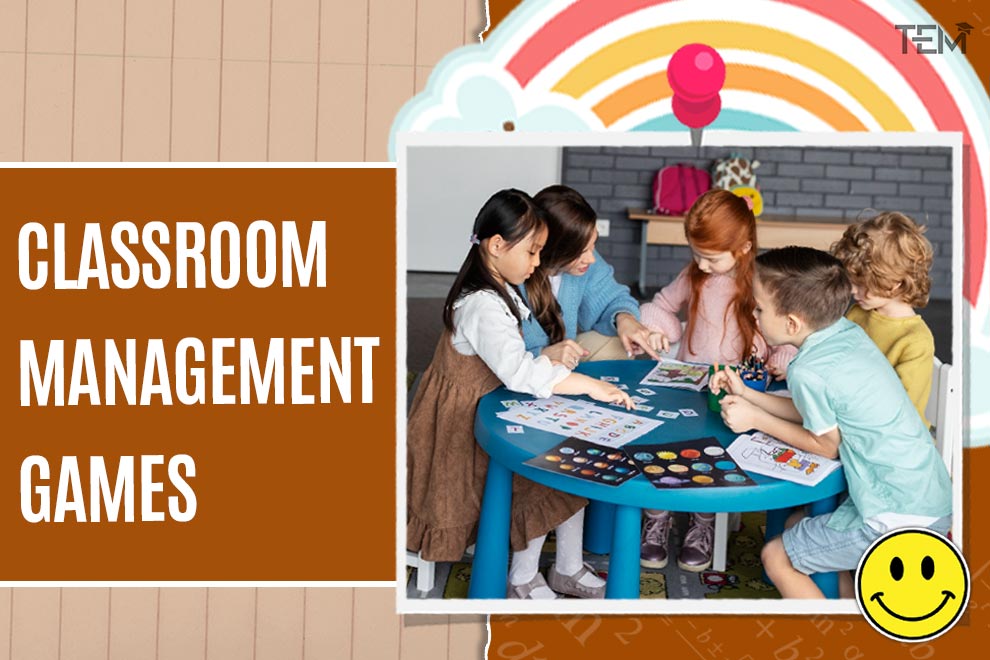
Classroom management doesn’t fail because teachers lack effort. It fails because classrooms have changed faster than the tools designed to manage them.
Students today, especially Gen Alpha, are highly stimulated, socially aware, and quick to disengage when systems feel repetitive or unfair. What once worked, from sticker charts to constant verbal reminders, now often adds friction instead of reducing it. Teachers feel this shift daily: louder rooms, slower transitions, and attention that disappears mid-lesson.
This is where classroom management games become powerful, not as entertainment, but as structure. When thoughtfully designed, games create shared expectations, reduce power struggles, and help students regulate themselves without constant correction.
This guide is built for modern classrooms. Every game here is practical, low-prep, and mapped to a real classroom challenge, whether that’s noise control, transitions, focus, or impulse regulation. It works across grade levels, including middle and high school, and reflects how classrooms actually function in 2026.
If you’re looking for classroom management games that truly work, not just sound good, you’ll find them here.
The Classroom Management Quick-Fix Guide
Use this table to find the right game in seconds, based on the problem you’re facing, not guesswork.
| Classroom Challenge | Best Game | Grade Level | Time Needed | Prep Level | Energy Level |
| Class is too loud | Quiet Critters | K–3 | <5 mins | No prep | Calm |
| Frequent blurting | Blurt Cards | 2–6 | Ongoing | Low | Calm |
| Slow transitions | Red Light, Green Light 2.0 | K–5 | 3–5 mins | No prep | Medium |
| Low participation | Lucky Duck | K–8 | Ongoing | Low | Low |
| High energy, low focus | Classroom Kerplunk | 3–8 | Ongoing | Medium | Medium |
Classroom Management Games vs. Traditional Discipline
Many educators still ask a fair question:
Are classroom management games just a distraction from “real” discipline?
In 2026, the answer is increasingly clear. Games are not replacing discipline; they are modernizing it.
To understand why classroom management games often outperform traditional, compliance-based approaches, it helps to look at the friction they remove inside today’s classrooms.
A Side-by-Side Comparison
| Feature | Traditional Discipline | Classroom Management Games |
| Source of control | Teacher-led (external) | Student-led (internalized) |
| Communication | Verbal corrections and reminders | Visual cues and game systems |
| Student reaction | Defensiveness or disengagement | Self-monitoring and ownership |
| Classroom atmosphere | High-tension, reactive | Low-friction, proactive |
| Long-term outcome | Compliance | Social-emotional regulation |
Why This Shift Matters in 2026
Traditional discipline relies heavily on a top-down power dynamic. For Gen Alpha students, who respond better to clarity, logic, and autonomy, constant verbal redirection can quickly feel like background noise. Over time, this leads to teacher fatigue and student resistance.
Classroom management games change that dynamic.
They act as a neutral third system in the room. When a student loses a Blurt Card or misses a turn in a game, it’s not because the teacher is “being strict.” It’s because the rules were clear, visible, and agreed upon.
The result is a powerful role shift.
The teacher moves from Enforcer to Coach, guiding behavior instead of policing it. And students learn to regulate themselves within a structure that feels fair, predictable, and motivating.
This is exactly why classroom management games are no longer a trend; they are becoming a core classroom strategy.
Why Classroom Management Games Work for Gen Alpha
Today’s students respond better to systems than speeches.
Classroom management games work because they shift behavior from being teacher-controlled to community-driven. Instead of constant reminders, games make expectations visible and shared. Students know the rules, see progress in real time, and understand the consequences without feeling singled out.
From a behavioral perspective, games tap into three core needs:
- Predictability: clear rules and outcomes
- Agency: students influence results through choices
- Feedback: immediate signals instead of delayed correction
They also support social-emotional learning by encouraging impulse control, cooperation, and accountability. When done well, using games to reinforce classroom routines reduces classroom stress, not just noise, and allows teachers to focus on instruction rather than enforcement.
The key is choosing games that solve a specific problem, not games that simply fill time.
No-Prep Classroom Management Games for Elementary Grades
These games require little to no setup and can be introduced immediately, even mid-lesson.
1. Lucky Duck: Fair Participation Without Pressure
Best for: Uneven participation, calling out, and disengaged students
Lucky Duck is a simple random-selection strategy that removes bias and pressure from participation. Each student’s name is placed on a stick, card, or digital spinner. One name is drawn when participation is needed.
How it works
- Students know that anyone can be called
- Participation feels fair, not targeted
- Attention stays high without anxiety
Why it works
Random selection encourages readiness while reducing the social stress of being “picked on.” Over time, students self-regulate their attention because participation feels expected but safe.
Quick variation: Allow students to “phone a friend” once per session to support hesitant speakers.
2. Blurt Cards and Quiet Critters for Self-Regulation
Best for: Blurting, interruptions, impulsive responses
Instead of constant verbal correction, Blurt Cards turn impulse control into a visual system. Students earn or lose cards based on how well they manage interruptions.
How it works
- One reminder replaces repeated warnings
- Students monitor their own behavior
- Corrections feel neutral, not personal
Quiet Critters (or any small classroom mascot) work similarly by “listening” to the room. When the noise rises, the critter is moved. When calm returns, it comes back.
Why it works
These systems externalize behavior. The focus shifts from “teacher vs student” to shared classroom norms.
Classroom Management Games for Middle and High School
Most classroom management games are designed for younger students. By middle school, teachers are often expected to “just manage” behavior through rules and discipline alone. That assumption doesn’t match reality.
Older students still need structure, but they respond best to systems that feel respectful, efficient, and low-drama. The games below are designed to work with bigger personalities, higher energy levels, and a stronger need for autonomy.
The goal is to move beyond simple obedience and toward nurturing students towards success through shared responsibility.
1. The Non-Verbal Scoreboard
Best for: Talking during instruction, repeated reminders, teacher fatigue
The Non-Verbal Scoreboard replaces verbal correction with a simple visual system. A point, symbol, or bar is added to the board when the class meets expectations, and removed when it doesn’t.
How it works
- The board is updated silently
- Students notice changes immediately
- The class adjusts without interruption
Why it works
Middle and high school students are highly aware of peer dynamics. A shared visual cue activates self-correction without embarrassment or confrontation. Over time, the class learns to regulate itself before the teacher intervenes.
2026 update: Use a projected digital scoreboard or smartboard timer so the system feels neutral and consistent.
2. Red Light, Green Light 2.0
Best for: Slow transitions, lining up, moving between activities
This updated version removes the childish feel while keeping the structure.
How it works
- Green means students may move or transition
- Yellow signals “wrap up.”
- Red means pause and reset
The signals are visual, not verbal. Students respond faster because expectations are clear and predictable.
Why it works
Transitions fail when instructions pile up. This system simplifies decision-making and reduces noise without repeated commands.
3. Digital Exit Challenges for Fast Transitions
Best for: End-of-period chaos, early finishers, unfocused exits
Instead of dismissing verbally, students complete a one-question digital challenge before transitioning. The challenge may check understanding, reflection, or readiness.
How it works
- One question appears on the screen
- Completion signals readiness to move
- No one waits aimlessly
Why it works
It creates purposeful closure. Students stay engaged until the final moment, reducing last-minute disruption.
Physical Games for High-Energy Classrooms
High energy is not a problem; it just needs direction.
These games channel movement and excitement into structured systems that improve focus rather than compete with it.
1. Classroom Kerplunk: Turning Goals into Visible Progress
Best for: Long-term behavior goals, class motivation, consistency
Classroom Kerplunk turns behavior goals into a shared visual challenge. Each time the class meets expectations, a stick is removed. When the structure collapses, the class earns a reward.
How it works
- Progress is visible every day
- Success depends on consistency
- Rewards feel earned, not arbitrary
Why it works
Students can see the impact of their choices. Unlike charts, Kerplunk builds anticipation and collective responsibility over time.
Tip: Tie stick removal to specific goals like quiet starts, clean transitions, or respectful discussion.
3. Movement Reset Games
Best for: Restlessness, post-lunch energy, rainy-day overload
Short, structured movement games reset attention without derailing instruction. These can be as simple as:
- Timed stretches
- Balance challenges
- Quick coordination tasks
Why it works
Movement resets the nervous system. When energy is released intentionally, focus returns faster.
Classroom Management in the Digital Age
In 2026, classroom management is no longer purely physical or verbal. Digital tools now support behavior in subtle, effective ways.
Noise meters, visual timers, and class progress trackers act as neutral referees. They reduce emotional tension by removing constant teacher judgment and replacing it with clear feedback.
When used intentionally, technology:
- Reinforces expectations without confrontation
- Supports consistency across days
- Helps students self-monitor behavior
The most effective classrooms blend physical presence with digital clarity, creating environments that feel structured, not controlled. This approach is often mirrored in the 5E lesson plan model, where engagement naturally reduces disruptions.
How to Choose the Right Classroom Management Game
The most effective classroom management games aren’t the most creative ones; they’re the most appropriate ones.
Before introducing any game, start with one clear question: What problem am I trying to solve right now? A game designed to release energy will fail if the real issue is impulse control. Likewise, a quiet focus game won’t help a class that needs movement.
Use this simple decision guide:
- If noise is the issue, choose games with visual cues and shared accountability rather than verbal reminders.
- If transitions are slow, use time-bound or signal-based games that remove uncertainty.
- If attention is low, introduce brief movement or participation systems that reset focus without derailing instruction.
- If blurting or interruptions persist, select games that externalize behavior and promote self-monitoring.
Start with one game. Let students learn the system. Consistency matters more than variety. When students understand expectations, games stop feeling like “activities” and start functioning as routines.
Expert Insight: Why Gamified Management Builds Better Behavior
According to experienced educators and school leaders, gamified management works because it aligns with how students learn self-regulation.
“When expectations are built into systems instead of enforced through constant correction, students feel safer taking responsibility for their behavior. Games reduce emotional friction and increase cooperation, especially in high-energy classrooms.”
This approach supports the fundamentals of SEL by teaching students to pause, reflect, and adjust, skills that extend far beyond the classroom.
From Control to Community: Rethinking Classroom Management
Classroom management in 2026 is no longer about control. It’s about design.
The most successful classrooms don’t rely on louder voices or stricter rules. They use clear systems that guide behavior, reduce friction, and give students a sense of shared responsibility. Classroom management games, when chosen thoughtfully, create structure without stress and engagement without exhaustion.
You don’t need to overhaul everything at once. Start with one challenge your class faces most. Choose one game that addresses it directly. Build consistency, then expand.
If this guide helped you rethink classroom management, share it with a fellow educator who’s navigating the same challenges. The best ideas grow stronger when they’re shared.
FAQs
- What are classroom management games?
Classroom management games are structured activities teachers use to improve behavior, focus, and participation while maintaining a positive learning environment.
- Do classroom management games actually work?
Yes. When used consistently with clear expectations, classroom management games reduce disruptions and encourage students to self-regulate their behavior.
- Are classroom management games suitable for all age groups?
Classroom management games can be adapted for different age groups by adjusting rules, timing, and complexity from primary to high school classrooms.
- How often should teachers use classroom management games?
Most teachers use classroom management games regularly but briefly, often during transitions, warm-ups, or moments when focus needs resetting.