Editing talking-head videos often takes more time than recording them because creators spend hours reviewing footage, choosing takes, removing pauses, and refining audio. Video Editing with AI agents can speed up these steps by handling repetitive editing tasks while keeping creators in control. This guide explains how AI agents support faster talking-head edits and where AI tools fit into the workflow.
Recording a talking-head video is often the easy part. Once the camera stops rolling, the real labor begins. Editors need to review every take, find the strongest moments, remove repeated lines, clean audio, add captions, and prepare versions for different platforms.
This is where AI Video Editing is changing the way creators approach post-production. Instead of only speeding up individual actions, AI agents can take on complete editing tasks based on simple instructions.
For creators making YouTube videos, podcasts, online courses, interviews, and educational content, this can reduce the time spent on repetitive work. A report from Forbes on generative AI adoption highlights how businesses are exploring AI to improve productivity and automate routine processes.
The key is finding the right balance. AI can handle the operational side of editing, but human editors still guide the story, pacing, and creative choices. This article explains how AI agents help edit talking-head videos faster and how modern editing workflows are evolving.
How can AI Video Editing speed up talking-head edits?
AI Video Editing helps creators reduce repetitive editing work by analyzing footage, finding useful moments, selecting better takes, and creating early versions of a timeline. Editors can then review, refine, and make creative decisions without starting from an empty timeline.
Talking-head videos often include repeated sentences, pauses, mistakes, and multiple recordings of the same idea. Manually finding the best version of each section can take hours.
AI agents can support this process by understanding the footage instead of only reading a transcript. They can identify sections of a conversation, locate specific moments, and help organize the edit faster.
For example, an editor working on an interview can ask an AI agent to find the strongest answer to a question, remove long pauses, or create a cleaner first version of the conversation.
This approach is useful because the editor spends more time shaping the message instead of managing every small operation.
Why does footage review take so much editing time?
Footage review is one of the most time-consuming parts of video editing because editors must watch, compare, and organize large amounts of raw material before making creative decisions. AI agents help by scanning footage, identifying useful sections, and creating a starting point for the edit.
A one-hour interview can contain several versions of the same response, unused sections, background noise, and moments that never make it into the final video.
Editors usually need to:
- Watch the entire recording
- Mark important sections
- Compare different takes
- Remove repeated content
- Organize clips into a logical sequence
AI Video Editing tools can help reduce this manual review process. Instead of searching through every minute of footage, creators can describe what they need and let AI help locate relevant sections.
This does not replace editing judgment. It gives editors a clearer starting point so they can focus on storytelling and audience experience.
Building faster first drafts with AI agents
A first draft gives editors a foundation to improve. For talking-head content, this means creating a complete timeline with usable clips arranged in the right order.
Invideo Editor is designed around this idea. It combines AI editing agents with a professional timeline where creators can assign real editing work. The agents review footage, select takes, remove unusable parts, and create an editable base cut that editors can continue refining.
The process is useful for different recording styles:
- Single-camera videos with a prepared script
- Interviews without a script
- Podcast conversations
- Educational videos with long recordings
For example, when working without a script, AI agents can understand the content of the recording and help remove repeated points. When a script is available, they can compare spoken lines against the planned structure.
The result is not a finished video that removes creative control. It is a starting timeline that saves time on the first round of editing.
How does agentic video editing improve control?
An agentic video editing workflow combines AI assistance with a timeline that editors can still manage manually. The AI handles assigned tasks, but every change remains visible and editable.
Invideo Editor uses AI agents that do real editing work based on your direction. They watch the footage, work the timeline, and return a cut that stays yours. You can learn more about this approach through its agentic video editing workflow that focuses on AI agents completing editing tasks inside an editable timeline.
This matters because professional editing requires control. A creator may want to change the pacing of a conversation, replace a selected take, or adjust the structure after seeing the first version.
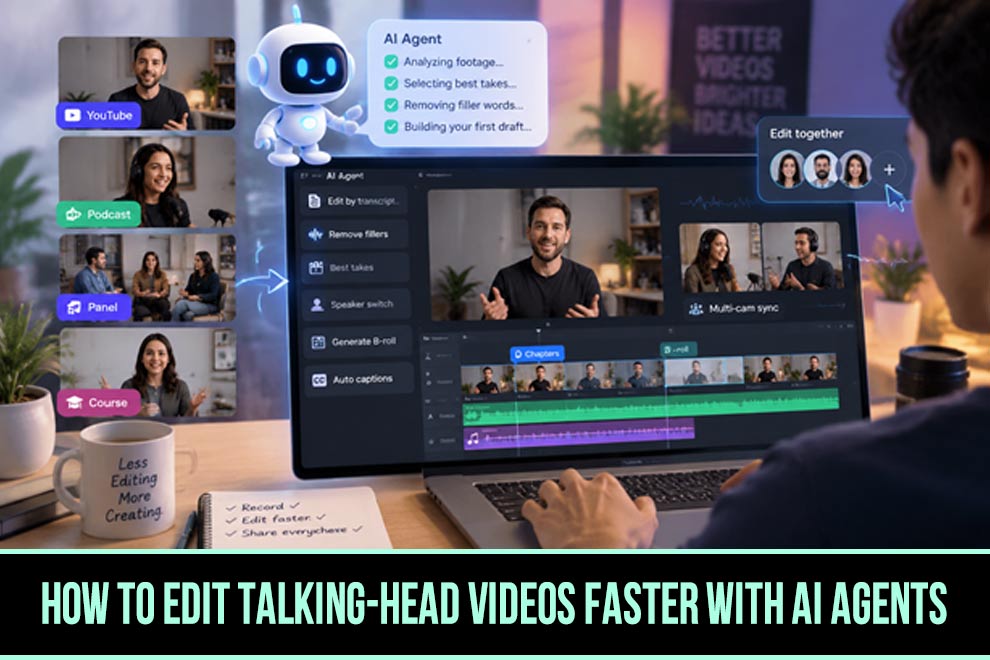
With this approach, editors can ask AI agents to:
- Select cleaner takes
- Remove silence and filler words
- Sync multicamera recordings
- Find moments by people, topics, or actions
- Add chapter markers
- Create shorter versions for different platforms
Invideo Editor supports keeping agentic changes inside the same project timeline. Creators can review every adjustment and continue editing manually when needed.
AI Video Editing for interviews, podcasts, and courses
AI Video Editing is especially useful for content formats where one recording creates multiple pieces of content. A single interview can become a full YouTube episode, short clips, social posts, and educational lessons.
For podcast and interview creators, AI agents can help with multicamera workflows. They can sync camera angles, identify the active speaker, and help create smoother speaker changes.
For online educators, AI Video Editing can help organize long lessons into clearer chapters. It can also support captions, audio cleanup, and different versions for learners.
Invideo Editor works across formats such as talking-head videos, podcasts, panels, YouTube content, and courses. Its agents can help with syncing, speaker switching, take selection, filler removal, and chapter creation.
This type of workflow connects with a broader shift toward building agentic AI applications that can complete multi-step tasks instead of only responding to individual commands.
Improving the final polish after the first cut
Once the first version is ready, editors still need to focus on quality. This includes improving visuals, sound, pacing, and consistency.
AI agents can help with many finishing tasks:
- Cleaning dialogue and improving audio balance
- Adjusting pacing for audience retention
- Creating shorter social versions
- Adding captions and visual elements
- Preparing different platform formats
Invideo Editor also keeps professional controls available after AI assistance. Editors can continue working with timeline edits, color adjustments, audio improvements, and version changes inside the project.
Eliminating the editor from the process is not the aim. The goal is to spend less time performing repeated tasks.
Choosing the right AI editing approach
The best AI Video Editing workflow depends on the type of content being created. Simple videos may only need automatic captions or trimming. Larger projects may benefit from AI agents that can handle multiple editing steps.
Before choosing a tool, creators should consider:
- How much raw footage they handle
- Whether they need a complete timeline workflow
- How much manual control they want
- Whether they create multiple versions of the same video
For professional creators, the biggest advantage comes from tools that combine automation with control. AI needs to assist in eliminating monotonous work without restricting innovative choices.
Conclusion
Editing talking-head videos becomes faster when creators can spend less time on repetitive tasks and more time on creative choices. AI Video Editing helps by supporting footage review, take selection, cleanup, and version creation.
AI agents are becoming useful assistants for editors because they can handle operational work without taking away control of the final story. Tools like invideo editor show how this workflow can work by combining AI assistance with an editable timeline.
If you create interviews, podcasts, courses, or YouTube videos, exploring AI-powered editing workflows can help you build content more efficiently. Try an AI-assisted editing process and see how much time you can save on your next project.
Frequently Asked Questions
What is AI Video Editing for talking-head videos?
AI Video Editing uses artificial intelligence to help with tasks like cutting footage, finding important moments, improving audio, and creating versions of a video. For talking-head content, it can reduce the time spent reviewing recordings and organizing clips.
Can AI agents edit videos without a script?
Yes. AI agents can work with videos that do not have scripts. They can understand raw footage, identify repeated ideas, remove unnecessary sections, and help create a first draft based on the creator’s direction.
Does invideo editor replace human editors?
No. invideo editor is designed to support editors by handling repetitive work. The schedule, modifications, tweaks, and final creative decisions are still in the creators’ hands.
Can AI help edit podcast and interview videos?
Yes. AI agents can help with podcast and interview editing by syncing footage, switching speakers, removing pauses, selecting stronger takes, and preparing shorter clips for different platforms.