Environmental stewardship is no longer limited to non-profit organizations. Today, companies across energy, technology, construction, transportation, manufacturing, agriculture, and finance are hiring professionals who can help reduce emissions while supporting business growth. Whether you’re a student exploring future careers, a professional looking to switch industries, or someone passionate about protecting the environment, green careers offer opportunities to make a real-world impact while building a stable future. Whether you’re installing solar panels, designing energy-efficient buildings, or helping companies reduce waste, climate careers allow you to build a meaningful profession while contributing to a more eco-conscious world.
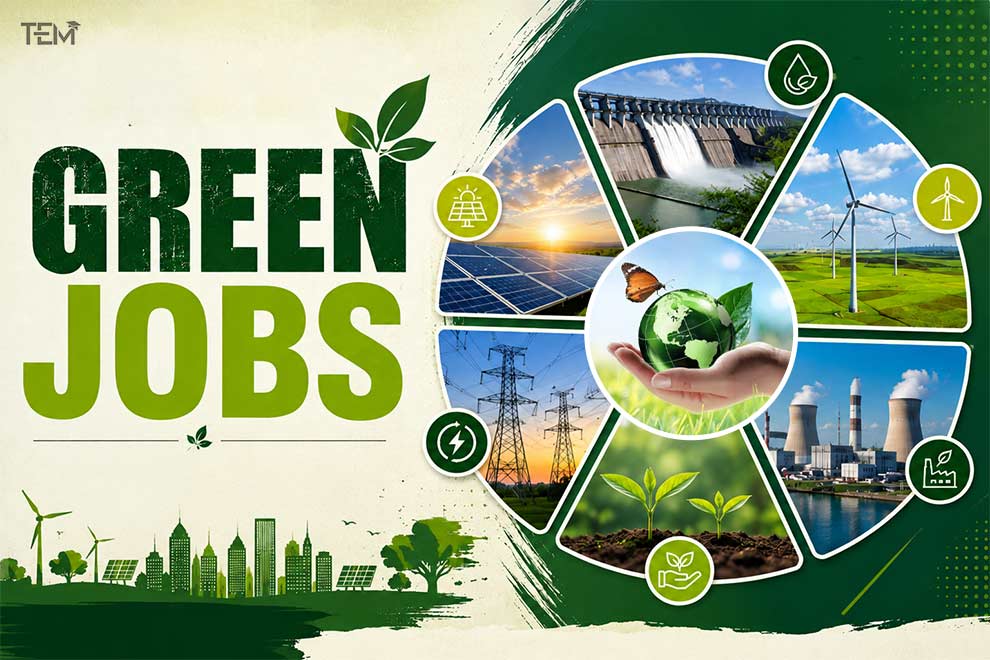
Green jobs are careers that contribute to ecological resilience by reducing carbon emissions, improving energy efficiency, conserving natural resources, or supporting renewable technologies. They span diverse sectors such as clean energy, sustainable construction, environmental science, transportation, agriculture, and green technology.
Key Takeaways
- Expansion beyond renewables: Low-carbon occupations are expanding rapidly beyond just the wind and solar sectors.
- Cross-industry demand: Many traditional industries now actively seek employees with resource-efficient skills to meet regulatory and consumer demands.
- Skills over degrees: Certifications, technical training, and practical experience can be as valuable as traditional four-year degrees for many emerging roles.
- Talent shortage: The demand for green talent continues to exceed supply in many global markets, driving competitive salaries and job security.
What Are Climate-Focused Careers?
When we talk about green occupations, we are looking at roles designed to advance environmental goals and improve resource efficiency. These roles exist because transitioning to a low-carbon economy requires massive infrastructural, technological, and corporate changes.
Instead of just existing in specialized niches or government agencies, modern environmental jobs are embedded in nearly every sector. An eco-conscious career might involve an engineer designing climate technology, a financial analyst evaluating ESG (Environmental, Social, and Governance) investments, or a logistics manager optimizing supply chains to conserve resources. These roles are economically vital, as they help organizations comply with tightening global regulations while unlocking new avenues for resource-efficient innovation.
Why the Clean Energy and Climate Job Market is Growing
The surge in environmental careers isn’t just a fleeting trend; it is a structural shift in the global economy driven by several key factors in 2026:
- Aggressive Climate Goals: Nations worldwide are racing to meet strict net-zero targets by 2030 and 2050, requiring specialized workforces.
- Clean Energy Investment: Trillions of dollars are being injected into low-carbon infrastructure and energy transition projects globally.
- ESG Initiatives: Corporate environmental responsibility is now a boardroom priority, driving the need for in-house experts to manage reporting and compliance.
- Government Policies: Tax incentives, grants, and strict environmental regulations force companies to adapt, creating a massive skills shortage.
Top 25 High-Demand Environmental Professions: Salary & Growth Guide
Below is a comprehensive breakdown of the highest-paying green jobs and entry-level eco-friendly jobs, categorized by industry.
Salary Comparison Table: 25 Climate Careers
| Career | Median Salary (USD) | Degree Needed | Growth Outlook | Primary Industry |
| Renewable Energy | ||||
| Solar Energy Technician | $55,000 | No (Cert/Training) | High | Clean Energy |
| Wind Turbine Technician | $62,000 | No (Cert/Training) | Very High | Clean Energy |
| Renewable Energy Engineer | $95,000 | Yes (Bachelors) | High | Clean Energy |
| Grid Modernization Specialist | $105,000 | Yes (Bachelors) | High | Utilities / Energy |
| Geothermal Plant Operator | $75,000 | Yes (Associates) | Steady | Clean Energy |
| Environmental Science | ||||
| Environmental Scientist | $78,000 | Yes (Bachelors) | High | Science / Govt |
| Hydrologist | $85,000 | Yes (Masters) | Steady | Water Management |
| Climate Change Analyst | $82,000 | Yes (Bachelors) | High | Consulting / Policy |
| Conservation Scientist | $65,000 | Yes (Bachelors) | Steady | Forestry / Govt |
| Ecologist | $70,000 | Yes (Bachelors) | Steady | Research / Science |
| Sustainable Construction | ||||
| LEED Project Manager | $90,000 | Yes (Bachelors) | High | Construction |
| Green Building Architect | $100,000 | Yes (Masters) | High | Architecture |
| Energy Auditor | $65,000 | No (Cert/Training) | High | Real Estate |
| Sustainable Materials Eng. | $92,000 | Yes (Bachelors) | High | Manufacturing |
| Smart HVAC Technician | $60,000 | No (Apprenticeship) | High | Construction |
| Green Technology & AI | ||||
| Climate Tech Product Manager | $130,000 | Yes (Bachelors) | Very High | Technology |
| AI Sustainability Analyst | $115,000 | Yes (Bachelors) | Very High | Technology / Data |
| EV Software Engineer | $125,000 | Yes (Bachelors) | Very High | Automotive |
| Smart Grid Architect | $120,000 | Yes (Masters) | High | Technology / Utilities |
| Carbon Data Scientist | $110,000 | Yes (Bachelors) | High | Tech / Consulting |
| Corporate Eco-Strategy | ||||
| Chief Sustainability Officer | $180,000+ | Yes (Masters) | High | Corporate |
| ESG Reporting Manager | $105,000 | Yes (Bachelors) | High | Finance / Corporate |
| Carbon Accounting Specialist | $85,000 | Yes (Bachelors) | Very High | Finance / Consulting |
| Circular Economy Consultant | $95,000 | Yes (Bachelors) | High | Consulting |
| Supply Chain Green Specialist | $90,000 | Yes (Bachelors) | High | Logistics / Retail |
(Note: Salaries vary based on location, experience, and market conditions.
Detailed Career Profiles: Green Jobs Examples
To give you a better idea of what these roles entail, here is a detailed look at three standout careers across different sectors.
1. Solar Energy Technician (Jobs in Renewable Energy)
- Average Salary: $55,000
- Education: High school diploma + technical training/certification.
- Required Skills: Electrical systems, safety compliance, physical stamina, and troubleshooting.
- Typical Responsibilities: Assembling, installing, and maintaining solar panel systems on roofs or ground mounts.
- Industries Hiring: Residential and commercial solar companies, utility providers.
- Career Growth: Can evolve into site management, system design, or sales.
- Who This Career Is Best For: Those who enjoy hands-on, outdoor work and want to enter the clean energy workforce quickly without a four-year degree.
- Pros: Rapid job growth, easy entry without massive student debt.
- Challenges: Physically demanding, requires working at heights and in extreme weather.
2. ESG Reporting Manager (Corporate Environmental Jobs)
- Average Salary: $105,000
- Education: Bachelor’s degree in business, finance, or environmental management.
- Required Skills: Carbon accounting, regulatory frameworks (GRI, SASB), data analysis, stakeholder communication.
- Typical Responsibilities: Tracking corporate emissions, auditing supply chains, and publishing compliance reports for investors and regulators.
- Industries Hiring: Finance, tech, manufacturing, corporate consulting.
- Career Growth: Direct path to Director of Environmental Strategy or Chief Sustainability Officer (CSO).
- Who This Career Is Best For: Detail-oriented professionals who excel at data analysis and corporate strategy.
- Pros: High earning potential, works safely indoors, and massive corporate demand.
- Challenges: Navigating constantly changing global compliance laws and reporting standards.
3. AI Sustainability Analyst (Green Technology Careers)
- Average Salary: $115,000
- Education: Bachelor’s in computer science, data science, or environmental engineering.
- Required Skills: Machine learning, Python, environmental data analytics, predictive modeling.
- Typical Responsibilities: Using AI to optimize smart grids, monitor carbon emissions, or reduce energy consumption in massive data centers.
- Industries Hiring: Tech giants, climate tech startups, utility companies.
- Career Growth: Lead Data Scientist, Head of Climate Tech.
- Who This Career Is Best For: Tech-savvy individuals who want their coding and analytical skills to directly support ecological resilience.
- Pros: Combines two of the fastest-growing fields (AI and climate tech), with very high compensation.
- Challenges: Requires keeping up with the breakneck pace of both AI development and climate science.
Most In-Demand Green Skills in 2026
You don’t always need a specific job title to work in the green economy; often, possessing the right skills makes you a competitive asset. Green hiring increasingly values these cross-functional skills:
- Carbon Accounting: Measuring and tracking greenhouse gas emissions.
- ESG Reporting: Understanding regulatory disclosures and eco-conscious metrics.
- Renewable Energy Systems: Technical knowledge of solar, wind, and battery storage integration.
- Energy Efficiency & Auditing: Identifying ways to reduce commercial energy consumption.
- Environmental Compliance: Navigating complex local and international environmental laws.
- Sustainable Design: Applying circular economy principles to product development or architecture.
- Data Analysis: Interpreting complex environmental datasets.
- AI for Resource Optimization: Leveraging machine learning for resource efficiency.
Top Certifications for Eco-Conscious Occupations
Readers often ask how to pivot into environmental jobs. Certifications offer highly actionable next steps and are heavily favored by recruiters.
- LEED Green Associate: Essential for green construction and architecture.
- NABCEP Solar Certification: The gold standard for solar energy professionals.
- ISO 14001: Focuses on effective environmental management systems.
- GRI Standards: Critical for anyone entering corporate ESG reporting.
- Certified Energy Manager (CEM): Ideal for facility managers and energy auditors.
- CFA ESG Investing Certificate: Perfect for those looking to blend finance with climate careers.
How AI Is Transforming Green Careers
AI and the green economy are becoming increasingly interconnected. Artificial intelligence is no longer just a tech buzzword; it is an active tool in the fight for climate resilience.
- Smart Grids: AI balances energy loads in real-time, integrating fluctuating renewable sources like wind and solar without crashing the grid.
- Predictive Maintenance: AI models predict when wind turbines or solar arrays will fail, reducing downtime and saving resources.
- Energy Optimization: Machine learning reduces power consumption in commercial real estate and industrial manufacturing by optimizing HVAC and lighting systems automatically.
- Carbon Monitoring: Satellite data combined with AI tracks global emissions and deforestation with unprecedented accuracy.
- Environmental Data Analytics: Complex algorithms process massive climate datasets to predict weather patterns and improve agricultural yields while using less water.
Green Skills vs. Formal Degrees
Research suggests employers increasingly emphasize skills alongside formal qualifications in emerging green roles. While fields like environmental engineering and hydrology absolutely require specific degrees, many fast-growing sectors do not.
The clean energy sector relies heavily on apprenticeships and technical certifications to train wind and solar technicians quickly. In the corporate sector, a traditional business background paired with a specialized ESG reporting certificate often outweighs a purely theoretical environmental studies degree. Emphasizing practical experience and transferable technical skills is the fastest way to pivot into a climate job.
Green Job Market Trends in 2026
The landscape of climate-focused careers continues to shift. Here is what is driving the market today:
- AI-Powered Green Initiatives: As noted, tech and climate are merging, creating highly lucrative hybrid roles.
- Green Construction: Retrofitting older buildings for energy efficiency is a booming industry driven by government tax incentives.
- Electric Vehicles (EVs): The automotive transition requires massive workforce retraining, from battery engineering to charging infrastructure installation.
- Circular Economy: Manufacturing is shifting from “take-make-dispose” to closed-loop systems, requiring supply chain experts to rethink packaging and materials.
- Climate Tech: Venture capital is heavily backing startups focused on carbon capture and advanced battery storage.
“Climate careers continue to evolve rapidly. Professionals who combine technical expertise with digital skills, regulatory knowledge, and practical problem-solving are increasingly well-positioned as organizations integrate eco-conscious practices into everyday operations.”
Common Career Mistakes to Avoid
When trying to secure jobs that reduce emissions, job seekers often make a few critical errors:
- Focusing only on renewable energy: Wind and solar are great, but low-carbon finance, tech, and agriculture are also booming.
- Ignoring certifications: Often, a $500 certification (like LEED or GRI) will open more doors than an entirely new degree.
- Overlooking transferable skills: If you are a supply chain manager or data analyst, you don’t need to start over; you just need to apply those skills to green initiatives.
- Assuming all green jobs require science degrees, Communication, finance, HR, and marketing are all necessary to run eco-conscious businesses.
- Not following industry regulations: The laws dictating environmental compliance change constantly; staying uneducated on local and global compliance will cost you interviews.
Final Thoughts
The rapid growth of the green economy proves that environmental responsibility and professional success are no longer mutually exclusive. Climate-focused careers now span nearly every major industry, creating an inclusive job market for hands-on technicians, data scientists, and corporate strategists alike. Because this field is evolving so quickly alongside technology and global regulation, it rewards continuous learning and adaptability.
Ultimately, stepping into a green career offers a unique trifecta: exceptional long-term stability, competitive earning potential, and the undeniable fulfillment of contributing to a healthier, more resource-efficient planet.
FAQ
- Which green jobs pay the most?
Chief Sustainability Officers, Renewable Energy Engineers, Climate Tech Product Managers, and AI Sustainability Analysts are among the highest-paying green careers.
- Which green skills are in demand?
Carbon accounting, ESG reporting, renewable energy, sustainable design, and AI/data analysis are among the most in-demand green skills.
- How do I start a green career?
Build relevant skills, earn industry certifications, gain practical experience, and apply for entry-level roles in sustainability-focused industries.
- Which green jobs don’t require a degree?
Solar Energy Technicians, Smart HVAC Technicians, Energy Auditors, and many wind energy roles can often be entered through certifications or vocational training instead of a degree.