By the Education Magazine | June 25, 2026
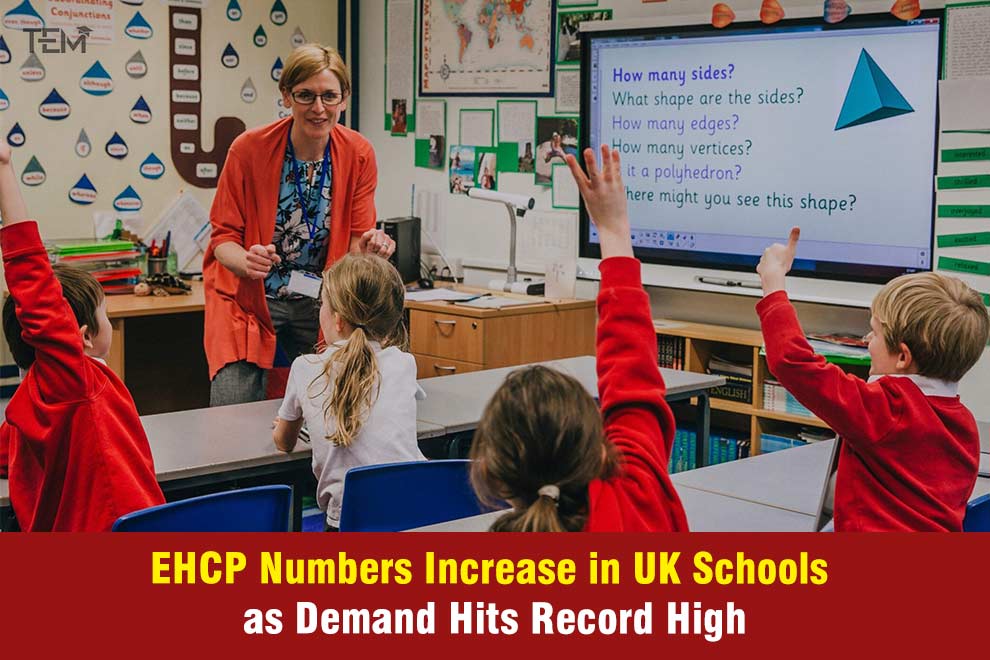
The latest Department for Education (DfE) statistics show that EHCP Numbers Increase in UK Schools has reached a record high, highlighting the growing demand for special educational needs and disabilities (SEND) support across England.
The figures also point to increasing pressure on SEND funding and school resources as more families apply for statutory support.
Key highlights:
- 538,547 pupils in England now have an Education, Health and Care Plan (EHCP).
- That’s an 11.6% increase compared with the previous academic year.
- 6.0% of all school pupils now receive statutory support through an EHCP.
- Across all age groups up to 25, the total number of EHCPs has reached 718,800, up 12.5% year on year.
- This is the largest annual increase since the EHCP system was introduced in 2014.
The latest figures underline the rising demand for SEND support in schools, placing greater pressure on EHCP applications, local authorities, and school resources.
What is an EHCP?
An Education, Health and Care Plan (EHCP) is a legally binding document for children and young people with significant special educational needs and disabilities (SEND). It outlines the education, health, and social care support they are entitled to receive from birth until age 25.
Why EHCP Numbers Continue to Increase in UK Schools
Many readers ask, why are EHCP numbers rising in UK schools? The answer lies in changes introduced more than a decade ago.
In 2014, the UK government replaced Statements of Special Educational Needs with Education, Health and Care Plans (EHCPs). These legally binding plans coordinate a child’s education, health, and social care support from birth to age 25.
The long-term impact of that reform is now becoming clear.
- Before 2016: Around 2.8% of school pupils had a statutory plan.
- Today: That figure has more than doubled to 6.0%.
- Pupils with an EHCP now make up 29.0% of all children with special educational needs, compared with 19.3% in 2016.
The steady rise shows that more families and schools are seeking formal SEND support through legally protected Education, Health and Care Plans, rather than relying only on standard school-based SEN support.
Latest EHCP and SEND Statistics in UK Schools
How many pupils receive SEND support in schools today? More than 1.8 million pupils in England have been identified as having special educational needs, up by 91,400 in one year.
The largest increase was among pupils with an Education, Health and Care Plan (EHCP), while standard SEN support also continued to rise.
The table below compares the latest figures for the 2024/25 and 2025/26 academic years.
| Category of Educational Provision | 2024/25 | 2025/26 | Share of School Population |
| Pupils with an active EHCP | 482,640 | 538,547 | 6.0% |
| Pupils receiving SEN Support | 1,283,700 | 1,319,780 | 14.8% |
| Total pupils with identified SEN | 1,766,340 | 1,858,327 | 20.8% |
What do these figures mean?
- More than 1 in 5 pupils in England now receive some form of SEND support.
- EHCP numbers recorded the fastest growth, rising by 11.6% in a single year.
- Standard SEN support also increased, showing that demand is rising across the entire SEND system, not just for statutory plans.
The figures suggest that schools are supporting more children with special educational needs than ever before, increasing pressure on classrooms, specialist staff, and SEND funding and school resources.
More Pupils with EHCPs Attend Mainstream Schools
The latest data show that more children with special educational needs are attending mainstream schools, reflecting the UK’s focus on inclusive education and the expansion of SEND support in schools.
Today, 57.8% of pupils with an Education, Health and Care Plan (EHCP) attend mainstream state-funded schools, up from 56.2% last year. To meet growing demand, schools are expanding specialist support within mainstream settings.
Key developments include:
- SEN Units: Increased from 449 to 514 schools in one year.
- Resourced Provisions: Grew from 1,217 to 1,309 schools, providing targeted support for pupils with additional needs.
- Inclusion Bases: The government plans to replace existing units with council-commissioned inclusion bases, allowing more pupils to access specialist support while remaining in their local schools.
The shift shows that as EHCP numbers increase in UK schools, more mainstream classrooms are adapting their teaching, facilities, and support services to meet the needs of a growing number of SEND pupils.
Rising EHCP Applications Put Pressure on the System
As EHCP numbers increase in UK schools, local authorities are struggling to keep up with a growing number of EHCP applications. The latest figures show that more families are requesting assessments, but processing times and approval rates remain under pressure.
Key findings from the latest data:
- Local authorities received a record 162,702 EHCP assessment requests in 2025.
- 43,289 applications were not approved to proceed, meaning 26.6% of requests were declined. This is up from 25.2% the previous year.
- Applications submitted by schools had a much higher success rate. Around 75.8% progressed to assessment, compared with 44.0% of requests submitted directly by parents or young people.
- Only 46.1% of Education, Health and Care Plans (EHCPs) were completed within the statutory 20-week deadline, the lowest compliance rate on record.
The figures show growing pressure on local authorities as the rising demand for SEND support continues to slow EHCP assessments and approvals.
Education Leaders Warn of Growing Pressure
Education leaders warn that rising EHCP numbers are placing growing pressure on schools and SEND funding.
Paul Whiteman, General Secretary of NAHT, said rising SEND demand is outpacing school funding and specialist resources, increasing pressure on schools and limiting support for families.
Daniel Kebede, General Secretary of the National Education Union (NEU), also argued that future reforms must be backed by adequate investment.
“Schools are told to deliver more inclusive provision, but the extra funding amounts to about £13,000 for an average primary school, nowhere near the scale of need. The government’s proposals are simply not funded at the level required.”
Both leaders agree that rising EHCP applications and growing demand for SEND funding and school resources require long-term investment alongside policy reform.
The government is also tightening oversight across the education sector. Learn more about the latest UK Ofsted nursery inspections and what the changes mean for schools and early years providers.
What Happens Next?
To address mounting pressure on the system as EHCP Numbers Increase in UK Schools, the government is planning long-term SEND reforms, with major changes expected between 2030 and 2035.
The proposals include:
- Education, Health and Care Plans (EHCPs) would be reserved for children and young people with the most complex needs.
- A new Individual Support Plan (ISP) would provide support for pupils who need additional help but may not require a full EHCP.
- Schools across England would have a legal duty to create an ISP for eligible pupils, strengthening early SEND support in schools.
The reforms would be introduced gradually. Pupils in Year 3 or above would keep their existing EHCPs until at least age 16, while children in Year 2 or below would be reassessed before starting secondary school, ensuring a smooth transition to the new system.
Rising EHCP numbers are only one of the challenges facing schools today. From increasing SEND demand to UK heatwave school closures, education leaders are balancing growing student needs with limited resources and changing classroom conditions.