By the Education Magazine | March 12, 2026
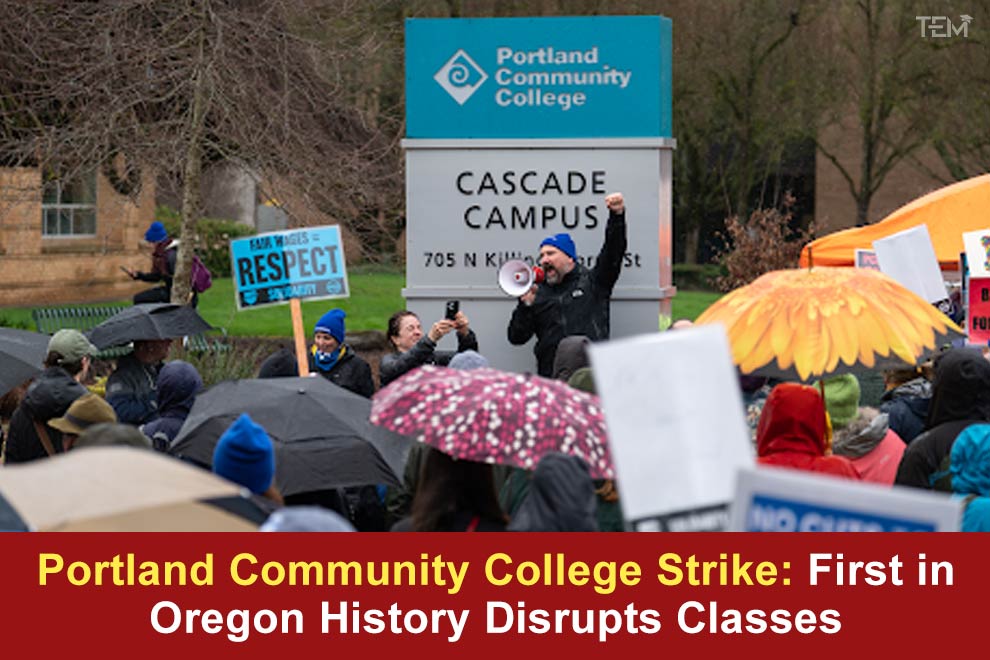
The Portland Community College strike has officially begun, marking the first community college strike in Oregon’s history and bringing classes across multiple campuses to a halt.
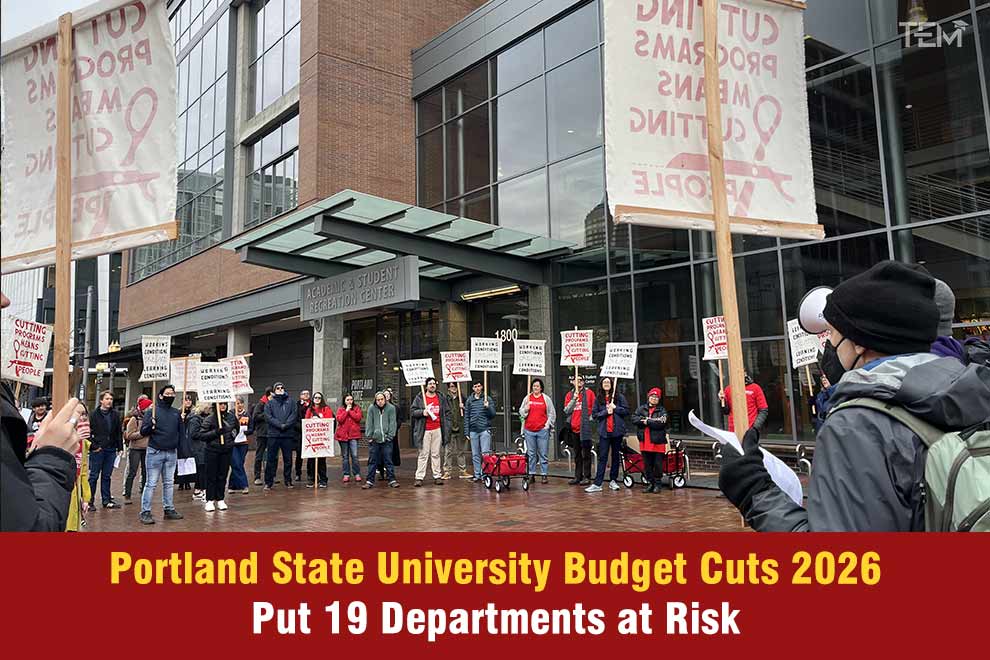
Faculty members and staff from Portland Community College formed picket lines outside campuses this week after contract negotiations with college administrators broke down.
Two unions are involved: the Federation of Faculty and Academic Professionals (PCCFFAP), representing approximately 1,600 teaching faculty and academic staff, and the Federation of Classified Employees (PCCFCE), representing approximately 700 classified support workers, including administrative assistants, IT staff, and custodians.
Both unions have been in negotiations with the administration for nearly 11 months.
Why Are PCC Employees on Strike?
The Oregon higher education labor dispute has intensified as employees demand better pay and improved benefits amid rising living costs.
Key issues driving the PCC faculty union strike include:
- Wages that unions say have not kept pace with inflation. PCCFFAP sought cost-of-living increases of 4.25% and 4.5% over the contract’s final two years; PCCFCE sought 3% and 3.5%.
- PCC’s final offer stood at a combined 4% increase over two years, up from an earlier offer of less than 1%.
- Healthcare benefits and long-term job security
- Working conditions for adjunct and part-time faculty
Classified staff and part-time faculty, particularly those who have reached the top of the 17-step pay scale and can no longer receive step increases, have become a central focus of negotiations, as they receive no additional compensation unless cost-of-living adjustments are applied.
Union representatives argue that improving compensation and stability is essential to maintaining educational quality.
How Is the PCC Strike Affecting Students?
The strike is already affecting thousands of students across the college’s campuses.
Immediate consequences include:
- Classes moved to remote operations, with some courses restructured or impacted depending on instructor participation in the strike.
- Uncertainty around completing coursework for the term. The strike falls at the tail end of the winter quarter, directly threatening final exams and the submission of final grades.
- Delays in academic services and administrative support
Portland Community College enrolls more than 50,000 students each year across four campuses, making the strike one of the most significant disruptions to higher education in the region.
What Is Driving the Community College Funding Crisis?
Education analysts say the community college funding crisis affecting institutions across the United States is fueling similar labor disputes.
At PCC specifically, administrators have cited a projected budget deficit of approximately $37 million over the next two years, alongside declining enrollment forecasts, as the primary constraints limiting what the college can offer in wage increases.
Community colleges often face tighter budgets than four-year universities, relying heavily on:
- State funding allocations
- Tuition revenue
- Workforce training programs
As operational costs rise and enrollment fluctuates, institutions increasingly struggle to balance budgets while maintaining staff salaries and student services.
Why Does the PCC Strike Matter Beyond Oregon?
While the Portland Community College strike is unfolding in Oregon, labor experts say it reflects broader pressures within the higher education workforce.
Across the United States, faculty unions and staff organizations are raising concerns about:
- Increasing reliance on adjunct labor
New worker protections, such as Oregon’s January 2026 law requiring public employers to provide unemployment benefits to striking workers after two weeks, may embolden union action at other institutions.
When Will the PCC Strike End?
Union leaders and college administrators are expected to return to the negotiating table in the coming days. The next formal session is currently scheduled for Monday, though both unions have signaled openness to meeting sooner if PCC presents a new proposal.
Until an agreement is reached, picket lines are expected to continue outside Portland Community College campuses, leaving students and faculty waiting for a resolution.
Portland’s broader education sector has faced mounting institutional pressures in recent months, as seen in the ongoing federal investigation into Portland Public Schools.
Observers say the outcome of the Portland Community College strike could set a precedent for future labor negotiations across Oregon’s higher education system.
FAQs
- What happens to student grades during a college faculty strike?
Students do not lose grades or face academic penalties during a faculty strike. At PCC, the college has confirmed that students will receive additional days to complete missed coursework once classes resume, and instructors are expected to honor all grading commitments after the strike ends.
- Can public employees collect unemployment benefits while on strike?
In Oregon, as of January 2026, public employees who go on strike become eligible for unemployment benefits after two weeks. This is a new state law that gives striking workers greater financial protection during prolonged labor disputes, a significant shift from previous Oregon labor policy.+