Artificial Intelligence is no longer a distant concept discussed only in technology circles. It has entered classrooms, learning platforms, and academic institutions around the world. From automated grading systems to AI-powered tutoring tools, education systems are rapidly adapting to intelligent technologies.
At the same time, this shift has sparked an important debate. While AI promises efficiency, personalization, and wider access to learning, it also raises concerns around data privacy, fairness, academic integrity, and the role of human educators.
As education systems continue to evolve, how AI is adopted today may shape classrooms, assessments, and learning outcomes for decades to come.
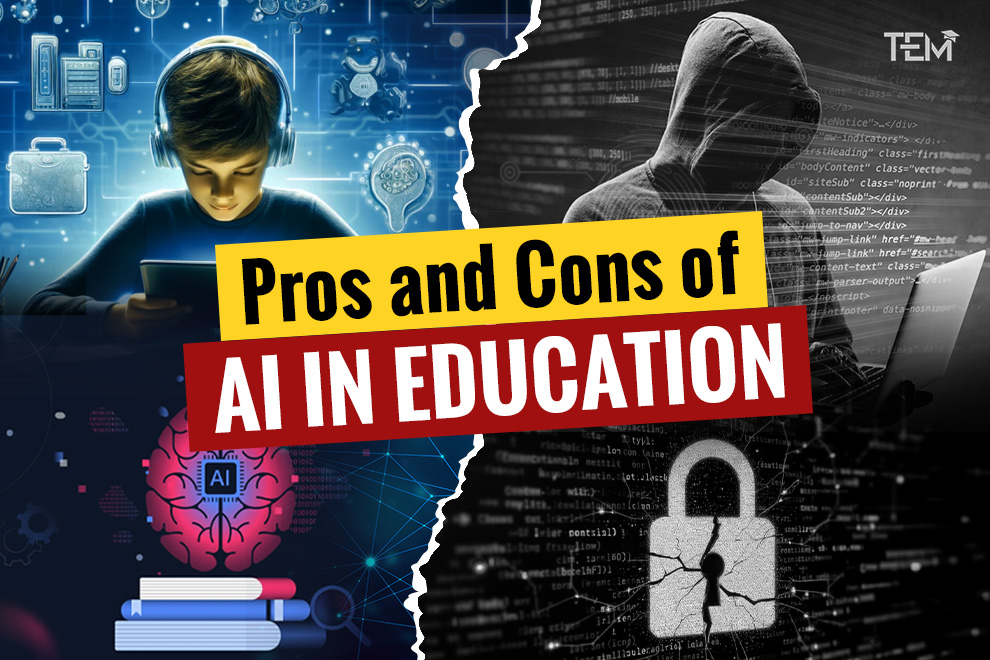
This article examines the pros and cons of AI in education, outlining both the opportunities and the challenges that are influencing how learning is evolving.
What Is Artificial Intelligence in Education?
Artificial Intelligence in education refers to the use of computer systems that can perform tasks normally requiring human intelligence. In learning environments, AI is used to analyze data, recognize patterns, make predictions, and support decision-making.
Common applications of AI in education include:
- Adaptive learning platforms that adjust content based on student performance
- Intelligent tutoring systems that provide personalized feedback
- Learning analytics tools that track progress and engagement
- Generative AI tools that assist with explanations, summaries, or practice exercises
These technologies are being used across K–12 education, higher education, and professional training, making AI a central part of modern education systems.
Why AI Is Gaining Traction in Education Systems
The growing adoption of AI in education is driven by several global factors. Education systems are under pressure to serve diverse learners at scale, support teachers with limited resources, and adapt to digital-first learning environments.
AI offers tools that can help institutions:
- Manage increasing class sizes
- Reduce administrative workloads for educators
- Support personalized and flexible learning paths
- Use data to improve academic outcomes
As a result, governments, universities, and schools worldwide are exploring how AI can strengthen teaching and learning while also grappling with its risks.
Pros of AI in Education
1. Personalized and Adaptive Learning
One of the strongest advantages of AI in education is its ability to personalize learning. AI systems can analyze how students interact with content and adjust lessons based on individual strengths, weaknesses, and learning pace.
This approach helps:
- Students who need extra support
- Learners who progress faster than traditional classroom pacing
- Diverse learning styles and abilities
Personalized learning can make education more inclusive and responsive.
2. Support for Educators and Institutions
AI can reduce the administrative burden on teachers by automating repetitive tasks such as grading objective assessments, tracking attendance, and organizing learning data.
By handling routine work, AI allows educators to:
- Focus more on teaching and mentoring
- Spend time on lesson planning and student engagement
- Use insights from data to improve instruction
Rather than replacing teachers, AI has the potential to act as a supportive tool.
3. Accessibility and Inclusion
AI-powered tools can improve access to education for students who face barriers to learning. Features such as real-time translation, speech-to-text, text-to-speech, and assistive technologies help learners with disabilities or language challenges.
For many students, these tools make learning more accessible, flexible, and inclusive than traditional methods alone.
4. Continuous Feedback and Learning Support
AI systems can provide immediate feedback on assignments, quizzes, and practice exercises. This allows students to identify mistakes quickly and learn at their own pace.
Additionally, AI-powered chatbots and learning assistants can offer academic support outside classroom hours, helping students revise concepts when teachers are not available.
Cons of AI in Education
1. Data Privacy and Security Concerns
AI systems rely heavily on student data, including performance records, behavioral patterns, and personal information. This raises serious concerns about data privacy, consent, and security.
Without strong safeguards, student data can be misused, improperly stored, or exposed to breaches, making data governance a critical challenge.
2. Algorithmic Bias and Fairness
AI systems are only as fair as the data they are trained on. If training data reflects existing inequalities, AI tools may unintentionally reinforce bias in grading, assessment, or recommendations.
This can disadvantage certain groups of students and widen educational gaps rather than reduce them.
3. Academic Integrity and Ethical Challenges
The rise of generative AI has raised concerns about plagiarism, cheating, and authenticity in assessments. Educators face challenges in determining how much AI assistance is acceptable and how to evaluate original student work.
Balancing innovation with academic integrity remains a major issue for institutions.
4. Over-Reliance on Technology
Excessive dependence on AI tools may reduce opportunities for critical thinking, creativity, and independent problem-solving. There is also concern that reduced human interaction could affect social learning and emotional development.
Education is not only about information delivery: it also involves mentorship, discussion, and human connection.
5. Infrastructure and Access Gaps
Not all schools and regions have equal access to AI technologies. High costs, lack of digital infrastructure, and limited technical expertise can prevent equitable implementation.
This digital divide risks creating unequal learning opportunities across socioeconomic and geographic lines.
Pros and Cons of AI in Education at a System Level
AI-based systems go beyond individual tools and involve integrated platforms that influence curriculum design, assessment methods, and institutional decision-making.
While such systems can improve efficiency and insight at scale, they also raise larger questions about governance, accountability, and long-term educational values. Institutions must weigh system-wide benefits against ethical and operational risks.
Pros vs Cons of AI in Education: A Quick Comparison
| Pros of AI in Education | Cons of AI in Education |
| Personalized learning experiences | Data privacy and security risks |
| Reduced administrative workload | Algorithmic bias and fairness issues |
| Improved accessibility and inclusion | Academic integrity concerns |
| Real-time feedback and support | Over-reliance on technology |
| Scalable learning solutions | Digital divide and access gaps |
Ethical, Policy, and Governance Considerations
Global education bodies such as UNESCO and the OECD emphasize that AI in education must be human-centered, ethical, and transparent. Clear policies are needed to define:
- How student data is collected and used
- Who is accountable for AI-driven decisions
- How bias and fairness are addressed
- What role should AI play in teaching and assessment
Responsible governance ensures AI supports education without undermining trust or equity.
Perspectives from Students, Educators, and Institutions
Students often view AI as a helpful learning aid but express concerns about accuracy and dependence. Educators recognize AI’s potential to save time but worry about loss of control and ethical boundaries.
Institutions face the challenge of guiding AI adoption responsibly, balancing innovation with educational values and public trust.
How Education Systems Can Balance the Pros and Cons
Education systems can benefit from AI when it is introduced thoughtfully with clear ethical guidelines and human oversight. This includes:
- Building AI literacy among students and educators
- Providing professional development for teachers
- Establishing clear usage guidelines and policies
- Ensuring transparency and human oversight
AI works best as a support system, not a replacement for educators.
The Future of AI in Education
AI is expected to play an increasing role in education, but its success depends on how it is governed and applied. The future points toward responsible integration, stronger regulations, and a focus on enhancing, not replacing, human teaching.
Education systems that prioritize ethics, inclusion, and learning quality will be best positioned to benefit from AI.
Balancing Innovation and Responsibility in Education
The pros and cons of AI in education reflect a broader question about how technology should shape learning. AI offers meaningful opportunities to personalize education, support teachers, and expand access, but only when implemented responsibly.
As education systems evolve, thoughtful policies, ethical frameworks, and human-centered approaches will determine whether AI strengthens or challenges the future of learning.
Key Takeaways
- Long-Term Impact Matters
AI adoption decisions made today can influence learning culture and educational values for years, not just immediate outcomes.
- Balance Between Capability and Limits
Understanding where AI falls short is as important as recognizing its strengths, especially in assessment and evaluation.
- Educators Remain Central
Teachers play a vital role in guiding how AI is used, ensuring technology supports learning rather than directing it.
- Critical AI Literacy for Students
Students benefit most when they learn how to use AI thoughtfully, without replacing effort, curiosity, or independent thinking.
- Governance Builds Trust
Clear ethical guidelines and accountability frameworks help institutions adopt AI while maintaining public and academic trust.
If you found this article useful, consider sharing it with educators, students, or policymakers who are exploring how AI is shaping education today.
FAQs
1. Is AI good or bad for education?
AI is neither entirely good nor bad. It offers powerful benefits but also presents risks that require clear policies and human judgment.
2. Can AI replace teachers?
AI cannot replace the human role of educators. Teaching involves empathy, judgment, and mentorship that AI cannot replicate.
3. What are the biggest risks of AI in education?
Key risks include data privacy issues, bias, academic integrity concerns, and over-reliance on technology.
4. How can schools use AI responsibly?
By setting clear policies, ensuring transparency, protecting data, and keeping educators central to the learning process.