
You scroll through posts daily. You watch videos, read comments, and stay updated on trends, but rarely click “like” or leave a comment. If this sounds familiar, you are not alone. In fact, silent participation has quietly become the dominant way people interact with social media.
As digital platforms evolve into major learning and information hubs, understanding social media silent scroller traits is becoming more important than ever. While engagement metrics often highlight visible interactions, they rarely capture the influence of those who observe, analyze, and learn without participating publicly.
These users are commonly known as silent scrollers, and their behavior is shaping how knowledge spreads across digital spaces.
Researchers studying online communities have long recognized this pattern. Studies suggest that a large majority of users prefer consuming content quietly rather than creating or interacting with it. This shift is transforming how students, professionals, and lifelong learners absorb information in the digital age.
Understanding the Silent Social Media User
Who are silent social media users?
Silent social media users are individuals who regularly consume online content but rarely interact through likes, comments, or posts. They observe discussions, absorb information, and learn through digital content without publicly engaging, making them one of the largest yet least visible user groups across social platforms.
Behavioral Psychology Behind Silent Scrollers
Human behavior on social media is deeply influenced by psychology. Silent scrolling is not a sign of disinterest or disengagement. Instead, research in digital behavior suggests that it often reflects thoughtful and cautious interaction patterns, highlighting the subtle social media silent scroller traits that govern observation and learning.
Many silent scrollers prefer observation because it reduces social pressure. Posting publicly can invite judgment, disagreement, or unwanted attention. By observing quietly, users gain access to knowledge while maintaining emotional and social comfort.
This shift in behavior is a prime example of how social media affects communication in the modern era, where the traditional back-and-forth dialogue is often replaced by thoughtful, one-way information absorption.
Psychologists also associate silent scrolling with high levels of self-awareness and emotional intelligence. Individuals who prefer observation often process information deeply before forming opinions. This reflective behavior allows them to evaluate content critically rather than reacting impulsively.
Another important factor is privacy preference. As online platforms collect and display user activity, many individuals choose to limit their visible participation. Silent engagement allows them to stay informed without sharing personal opinions or digital footprints unnecessarily.
Research in computer-mediated communication further suggests that passive social media users tend to be selective communicators. They often engage only when they feel their contribution adds meaningful value, rather than participating for visibility or validation.
Why do people scroll social media but don’t post?
People often scroll without posting to avoid social judgment, protect privacy, and process information quietly. Psychological studies show that silent users prefer observation, reflective thinking, and selective communication, allowing them to stay informed without the pressure of public interaction.
Key Personality Traits of Social Media Silent Scrollers
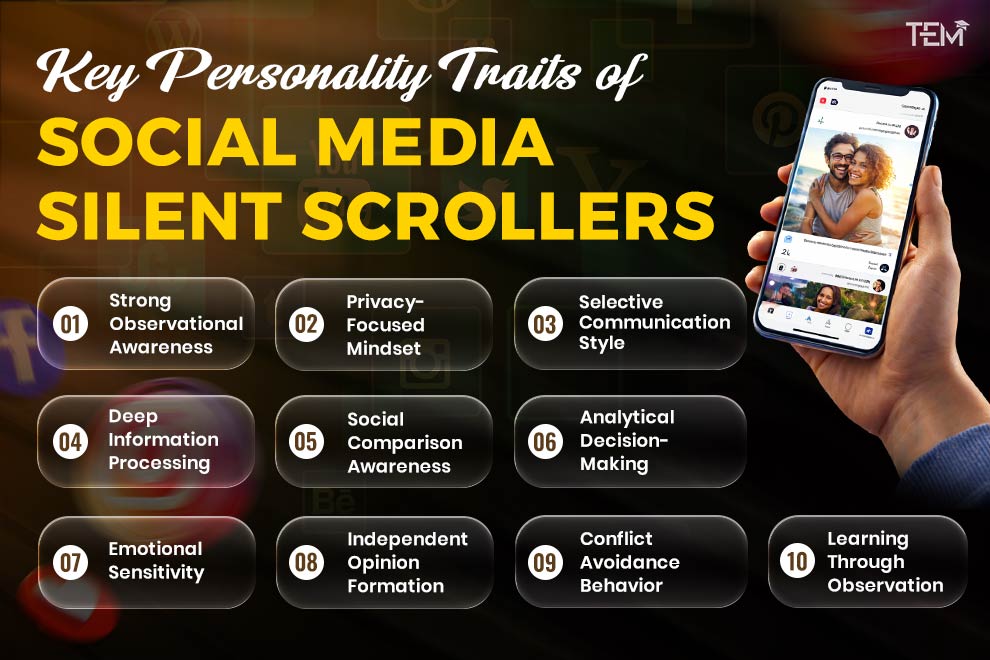
Silent scrollers share several personality and behavioral traits supported by behavioral science research. While not every user displays all characteristics, these patterns frequently appear among individuals who prefer passive engagement.
Understanding these social media silent scroller traits helps educators, brands, and researchers design content that resonates with observation-focused users.
1. Strong Observational Awareness
Silent scrollers often notice details others miss. They follow conversations, trends, and content patterns closely. Their strength lies in absorbing information before forming opinions or responses.
2. Privacy-Focused Mindset
Many silent users value control over personal information. They prefer to keep their thoughts private while still staying connected to digital communities. This mindset is becoming increasingly common as users grow more aware of digital footprints.
3. Selective Communication Style
Rather than interacting frequently, silent scrollers engage only when they feel their input is meaningful. This selective participation reflects confidence in their viewpoints and a preference for quality communication over frequent interaction.
4. Deep Information Processing
Research shows that passive content consumers often analyze information carefully. Instead of reacting immediately, they compare sources, observe audience reactions, and form independent interpretations.
5. Social Comparison Awareness
Silent users tend to observe social behaviors and interactions before participating. While this can help them understand digital culture better, it can also influence how they evaluate their own social presence.
6. Analytical Decision-Making
Many silent scrollers use social media as a research tool. They gather information from multiple sources before making decisions related to education, career, or personal interests.
7. Emotional Sensitivity
Passive observers often display strong emotional awareness. They notice tone, context, and audience reactions more deeply than highly active users, which shapes how they interpret online content.
8. Independent Opinion Formation
Silent scrollers typically avoid group influence. By observing quietly, they form opinions based on research rather than social validation.
9. Conflict Avoidance Behavior
Avoiding public interaction reduces exposure to online arguments or criticism. Many silent users choose observation as a way to maintain positive digital experiences.
10. Learning Through Observation
One of the most powerful silent scroller traits is their ability to learn by watching others.
Educational psychology describes this as observational learning, where individuals gain knowledge without direct participation. This aligns with modern personalized learning models that cater to individual paces and styles.
What are social media silent scroller traits?
Social media silent scroller traits include observational awareness, privacy preference, analytical thinking, selective communication, emotional sensitivity, and learning through observation. These users consume large amounts of content but interact selectively, often using social media as an information and learning resource.
Silent Scrolling as a Modern Learning Mechanism
Silent Scrolling as a Form of Passive Learning
Silent scrolling isn’t just a social habit; it’s also a method of learning. Educational psychology identifies this behavior as observational or passive learning, where individuals gain knowledge by watching others rather than directly participating.
As more individuals recognize the role of social media as a learning tool, the act of “scrolling” is being redefined from a time-wasting habit into a strategic way to synthesize insights and trends.
Silent scrollers absorb information through feeds, videos, and comment threads, synthesizing content internally. They often remember patterns, insights, and lessons more effectively than those who actively post but do not reflect.
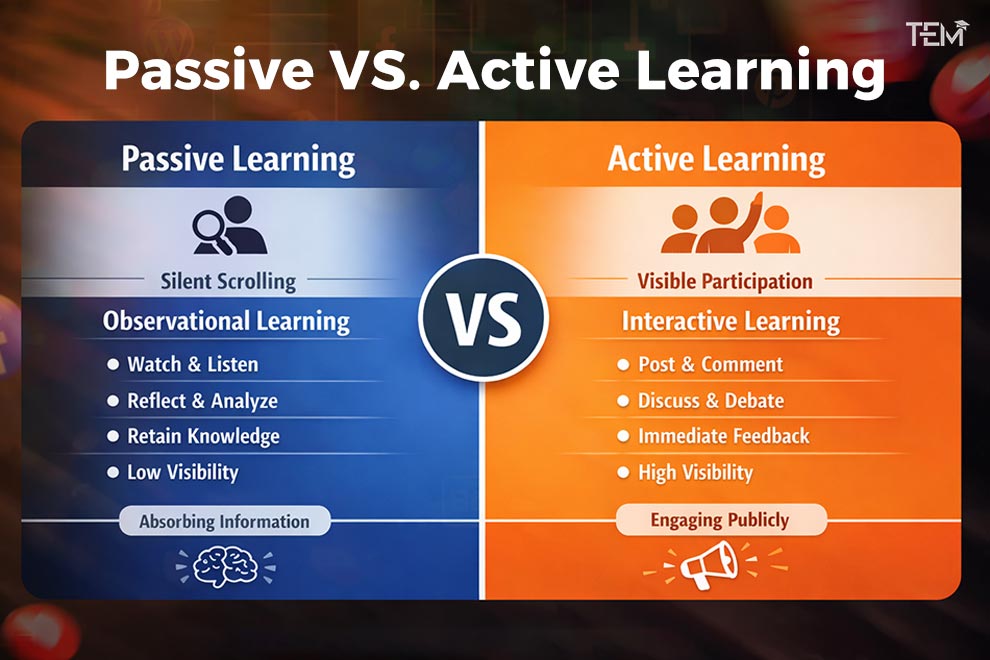
Research from Albert Bandura’s Social Learning Theory highlights that observation alone can significantly shape behavior and knowledge acquisition. In digital environments, social media serves as an informal classroom, and silent scrollers are often the most attentive students.
By studying interactions, trends, and discussions, they understand context and nuances that active participants may overlook. By studying interactions, trends, and discussions, silent scrollers understand context and nuances that active participants may overlook.
This is especially prevalent among younger generations, as Generation Z’s attention span often gravitates toward authentic, high-value visual content that can be consumed quickly and quietly.
Key Insight: Silent scrollers can transform passive observation into actionable learning, whether in professional growth, academic understanding, or skill acquisition.
Can silent scrolling help learning?
Yes. Silent scrolling allows users to observe and process digital content deeply, making it a form of passive learning. Studies show that individuals absorb knowledge, develop critical thinking, and gain insights without actively posting or commenting.
Why Students and Young Professionals Prefer Observational Engagement
Generational behavior plays a key role in silent scrolling. Gen Z and Millennials increasingly prefer observing content instead of engaging publicly. Several factors drive this:
- Identity Protection: Users avoid posting to manage their personal brand and social footprint.
- Fear of Public Judgment: Silent scrolling reduces anxiety related to comments, likes, or criticism.
- Information-Driven Learning: Observers focus on extracting knowledge, career tips, or academic insights rather than social validation.
- Self-Directed Learning Habits: Digital platforms allow learners to follow topics at their own pace without peer pressure.
Supporting Research:
- Deloitte Digital Media Trends notes that younger users are more likely to consume content silently to protect privacy and reduce exposure.
- Pew Research Center confirms that a majority of social media users are passive content consumers, particularly among students and professionals seeking knowledge rather than social recognition.
Silent scrollers often outperform active posters in content retention and reflective thinking because they process information thoughtfully before internalizing or acting on it.
Why do some people prefer scrolling instead of posting?
Many users scroll silently to protect their identity, reduce social anxiety, and focus on learning or research. Observational engagement allows them to absorb content without public scrutiny.
The Impact of Silent Consumption on Digital Ecosystems
AI Algorithms and the Growth of Silent Content Consumption
Modern social media platforms are designed to maximize content consumption, and AI algorithms play a major role in reinforcing silent scrolling behaviors.
- Personalized Feeds: Algorithms curate content based on user behavior, showing highly relevant posts that encourage observation over interaction.
- Infinite Scrolling: Platform design keeps users engaged with minimal effort, reinforcing passive consumption.
- Engagement Signals: AI uses likes, clicks, and dwell time to measure interest, meaning even silent users influence what content is prioritized.
- Attention Economy Effects: Platforms are designed to hold attention; silent scrollers often spend more time consuming content than active posters because they aren’t distracted by posting tasks.
Research Integration:
- MIT Media Lab highlights that algorithmic feeds encourage continuous observational behavior.
- Stanford Human Interaction Lab shows users engage more quietly to manage cognitive load while still influencing digital ecosystems.
Key Insight: Silent scrollers are quietly shaping social media landscapes, learning efficiently while algorithms adapt to their behaviors.
Do silent scrollers influence online communities?
Yes. Silent scrollers influence content visibility and trends through passive engagement. Algorithms track dwell time and viewing patterns, so even without posting, silent users shape what content reaches broader audiences.
How Silent Scrollers Absorb Knowledge Differently
Silent scrolling is not passive ignorance; it’s active observation with cognitive depth. Research shows that these users:
- Process content deeply: They compare multiple sources before forming conclusions.
- Reflect internally: They evaluate discussions and extract lessons privately.
- Retain information effectively: Observational learning allows stronger memory formation than impulsive posting.
- Apply knowledge strategically: From study methods to career insights, silent scrollers leverage observation for decision-making.
Educational Relevance:
- EDUCAUSE Digital Learning Research shows that students who observe online discussions quietly can achieve similar or higher learning outcomes compared to those actively posting.
- Passive engagement encourages self-paced, independent learning, allowing users to focus on comprehension over visibility.
Key Insight: Silent scrollers are often the most attentive learners, absorbing and synthesizing content in ways that active posters may overlook.
How do silent scrollers behave online?
Silent scrollers observe digital content, reflect on discussions, and process information deeply. They rarely post publicly but retain knowledge effectively and often influence trends through passive engagement.
Strategic Engagement: Reaching the Silent Audience
Opportunities and Challenges of Passive Digital Participation
Silent scrolling comes with unique advantages and some hidden challenges. Understanding these can help educators, content creators, and learners maximize benefits.
Opportunities
- Increased Knowledge Exposure: Silent scrollers absorb a wide variety of information without the pressure to respond immediately.
- Reduced Social Pressure: By observing quietly, users can learn without anxiety from public interactions.
- Independent Learning: Users often form well-researched opinions and develop critical thinking through observation.
- Influence Without Visibility: Even without posting, silent scrollers affect trends and algorithms through dwell time and content engagement.
Challenges
- Social Comparison Risk: Watching others without interacting can sometimes lead to negative self-comparison.
- Reduced Networking Visibility: Silent users may miss opportunities for recognition or collaborative growth.
- Limited Skill in Public Engagement: Relying solely on observation may reduce experience in communication or debate.
- Hidden Metrics Influence: Platforms often undervalue silent scrollers in engagement analytics, masking their true influence.
Research Insight: Studies from the Royal Society for Public Health and the Journal of Computer-Mediated Communication highlight that while passive engagement reduces social anxiety, it can subtly impact emotional well-being if users overcompare themselves to peers.
How Educators and Brands Can Engage Silent Scrollers
Silent scrollers are often overlooked, but they represent a highly valuable audience. By designing content for observation-focused users, educators can increase impact using various online resources for learning.
Strategies for Engagement
- Micro-Learning Content: Short, high-value videos or posts encourage information retention without demanding interaction.
- Low-Pressure Interactive Tools: Polls, quizzes, and anonymous discussion boards allow engagement without exposure.
- Visual Learning Formats: Infographics and diagrams support silent comprehension.
- AI-Personalized Learning: Adaptive learning systems can recommend content silently based on observed preferences.
- Anonymous Participation Models: Enable users to ask questions or contribute feedback without revealing identity.
Research Integration:
- EDUCAUSE Digital Learning Research emphasizes designing for different engagement styles to reach passive learners.
- Thoughtful digital pedagogy ensures silent learners remain connected without forcing public participation.
Silent Scrolling and the Future of Digital Education
Silent scrolling is reshaping digital learning landscapes. As platforms evolve, the definition of participation is broadening beyond likes, comments, and shares.
Understanding social media silent scroller traits helps educators and content creators design experiences that account for observation-driven learning.
Key Future Trends
- Shift From Metrics to Learning Impact: Platforms may focus more on knowledge absorption rather than visible engagement.
- Rise of Passive Learning Communities: Forums, video channels, and curated content streams cater to observation-driven learning.
- AI-Enabled Personalized Journeys: Algorithms will continue adapting to silent consumption patterns to provide tailored learning experiences.
- Blended Engagement Models: Students may alternate between silent observation and active participation depending on content and comfort levels.
Thought Leadership Insight: Silent scrollers demonstrate that learning is not always visible. The future of digital education will prioritize understanding how users internalize knowledge, not just how they interact publicly.
A Thoughtful Close: Observing Leads to Understanding
Silent scrollers teach us an important lesson: true engagement isn’t always visible. Whether in learning, professional development, or personal growth, observation can be a powerful tool for insight and self-improvement.
By recognizing and designing for silent users, educators and content creators can unlock hidden learning potential and expand influence to audiences who absorb, reflect, and apply knowledge quietly but effectively. Their social media silent scroller traits, including observational awareness, selective engagement, and reflective learning, show that influence extends beyond visible activity.
If this article helped you understand silent scrolling better, share it with fellow educators, students, or social media enthusiasts. Let’s spread awareness of the power of observation in learning and digital behavior.
FAQs
- What are social media silent scroller traits?
Social media silent scroller traits include observational awareness, privacy preference, analytical thinking, selective communication, emotional sensitivity, and learning through observation. Silent users consume content deeply but rarely engage publicly.
- Can silent scrolling help with learning?
Yes. Silent scrolling allows users to process information deeply, retain knowledge, and apply insights in real life. It is a form of passive or observational learning linked to social media silent scroller traits.
- Why do people scroll without posting?
Many users scroll silently to protect privacy, reduce social anxiety, and focus on learning or research. Silent engagement reflects key social media silent scroller traits such as selective communication and reflective thinking.
- How can educators engage silent scrollers?
Educators can design micro-learning content, visual aids, anonymous discussion platforms, and AI-personalized recommendations to engage silent scrollers effectively, recognizing their unique social media silent scroller traits.
- Do silent scrollers influence social media trends?
Yes. Even without posting, silent scrollers affect content visibility and algorithms through dwell time, engagement patterns, and observational behaviors. Their social media silent scroller traits make them influential despite low public interaction.