Every student learns differently. Yet for decades, classrooms have taught everyone the same way, at the same speed, using the same material. AI in personalized learning is changing that, and fast.
The global AI in education market was valued at $5.88 billion in 2024. It is projected to hit $32.27 billion by 2030, growing at a CAGR of 31.2%. Adaptive learning platforms, intelligent tutoring systems, and smart classrooms are at the center of this shift.
From AI-powered learning tools that adapt in real time to students’ needs, to smart learning environments packed with IoT devices and AR/VR, education technology is entering a new era.
This blog breaks down what all of this means, how it works, who is using it, and what the future holds.
What Is AI in Personalized Learning?
AI in personalized learning refers to the use of artificial intelligence to tailor educational content, pacing, and assessments to each individual student. Instead of following a fixed curriculum, the system analyzes how a student learns, where they struggle, and what keeps them engaged, then adjusts content delivery accordingly.
It is not just about digital lessons. It combines machine learning algorithms, learning analytics, natural language processing, and predictive data to create a truly student-centered learning experience.
Why Traditional Learning Is Failing Today’s Students
Traditional learning is failing today because Its were built for efficiency, not personalization. One teacher. Thirty students. One lesson plan. That model worked when information was scarce and standardized testing was the benchmark for success.
But the world has changed. Students today come with different learning speeds, attention spans, cultural backgrounds, and learning styles. The one-size-fits-all model cannot keep up.
How AI Creates Personalized Learning Experiences
AI creates personalized learning experiences by continuously analyzing student performance data and automatically adjusting content, pace, and difficulty to match each learner’s individual needs in real time.
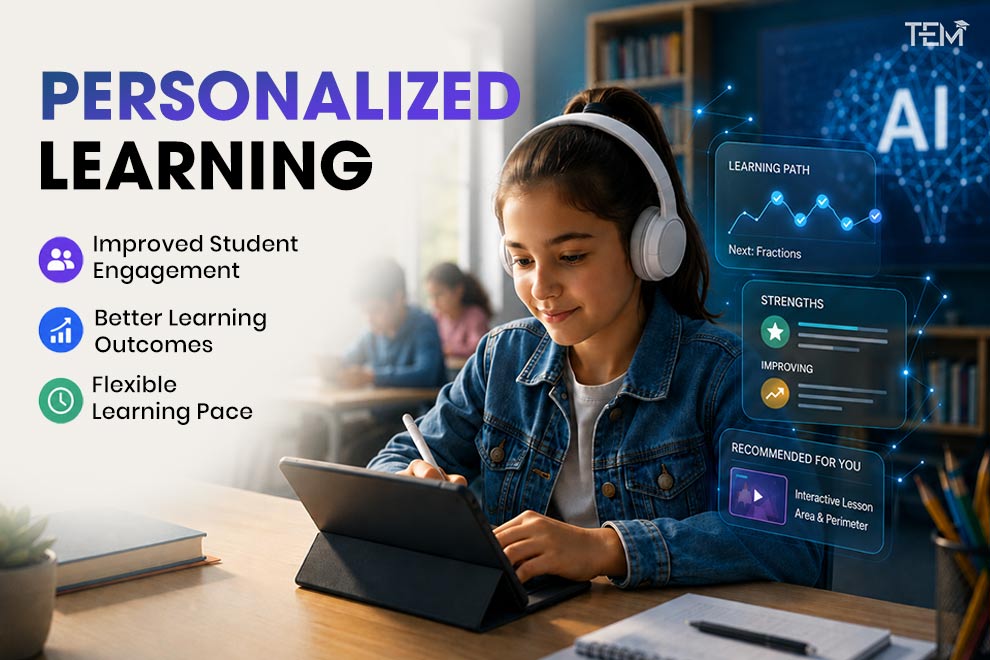
Here is how it works in practice. When a student struggles with a concept, the system identifies the gap immediately and shifts the approach. If a student consistently gets fraction problems wrong, the platform does not move on. It serves targeted exercises, simpler explanations, and different formats like video or interactive quizzes until the student masters it.
This is what separates AI-powered learning from traditional digital courses. The content responds to the learner, not the other way around.
Adaptive learning and smart classrooms are not two separate ideas. Adaptive learning is the intelligence behind the personalization, and smart classrooms are the environment where that intelligence comes to life. Together, they form the complete picture of what modern, student-centered education looks like today.
What Is Adaptive Learning?
Adaptive learning is a technology-driven approach where the learning system adjusts content, difficulty, and pacing based on a student’s real-time performance. It is the engine inside AI-powered personalized learning.
The global adaptive learning market was valued at $4.84 billion in 2024 and is expected to reach $28.36 billion by 2033, growing at a CAGR of 19.7%.
How Adaptive Learning Works: Step by Step
- Step 1: Student completes an initial assessment or diagnostic test
- Step 2: AI analyzes the results to identify strengths, gaps, and learning styles
- Step 3: The system builds or adjusts a personalized learning path for that student
- Step 4: Student works through the customized content with real-time feedback
- Step 5: AI tracks progress continuously and refines the path as the student improves
Smart Classrooms: Where AI Meets Physical Learning Spaces
A smart classroom is a technology-enabled learning environment that integrates AI tools, IoT devices, cloud platforms, and digital teaching systems to create a more interactive and personalized educational experience.
The global smart classroom market is projected to surpass $150 billion by 2026, driven by schools and institutions worldwide upgrading from traditional setups to AI-enabled classrooms.
Technologies Used in Smart Classrooms
Technologies used in Smart Classrooms are being implemented today to enhance student engagement and accessibility:
- Interactive Displays: The University of Wyoming uses Promethean ActivPanels to create a consistent, collaborative environment where students can contribute to lessons in real time from their own devices.
- AI Tutors & Assistants: Google Classroom’s “Gemini in Classroom” now provides students with real-time feedback through “Read Along,” helping them build independent reading skills with AI-guided coaching.
- IoT & Behavior Tracking: Samsung’s WAFX-P interactive displays feature built-in 4K cameras and AI Assistants that automate formative assessments and provide live transcripts to track student engagement.
- AR and VR Tools: Samsung partnered with 19 instructional workshops in 2024 to use VR-based learning for group observation, allowing students to explore immersive simulations that prompt deeper class discussions.
- Cloud-Based LMS Platforms: Microsoft Teams for Education has integrated “Copilot” to help educators automatically generate personalized classwork modules, rubrics, and interactive quizzes for platforms like Canvas.
- Real-Time Collaboration: New updates to Microsoft 365 allow teachers to use AI-generated comprehension questions in “Reading Progress,” providing instant, data-driven insights into a student’s fluency and speed.
Personalized Learning vs. Traditional Learning
Here is a quick side-by-side comparison that makes the difference clear:
| Traditional Learning | AI-Powered Personalized Learning |
| Same pace for all students | Individual learning pace for each student |
| Standard, fixed lessons | Adaptive content that changes in real time |
| Teacher-centered instruction | Student-centered learning pathways |
| One-size-fits-all curriculum | Personalized learning paths based on gaps |
| Limited performance data | Real-time AI insights and analytics dashboards |
| Delayed feedback | Instant AI feedback on assignments and quizzes |
Real-World Examples of AI in Personalized Learning
These real-world examples illustrate how AI in Personalized Learning is moving from theory to large-scale application in both K-12 and higher education:
- Arizona State University (ASU): Launched a massive AI Innovation Challenge in 2024, deploying over 200 AI projects like the “Sam” chatbot to help health students practice patient interactions through realistic, adaptive feedback.
- Lamont Elementary School District (California): Adopted the AI tool Inkwire in 2025 to automate the design of competency-based projects, allowing teachers to pivot from administrative planning to direct student mentorship.
- University of Louisiana System: Introduced a statewide “AI Literacy” micro-credential in 2025 that has reached over 82,000 participants, using self-paced AI modules to personalize digital literacy training.
- Ivy Tech Community College (Indiana): Implemented an AI-driven predictive analytics system that identifies at-risk students within the first two weeks of a semester to provide immediate, personalized academic interventions.
Benefits of AI in Personalized Learning
1. Improved Student Engagement
When content matches a student’s level and interests, they stay focused longer. AI tools use gamification, interactive formats, and adaptive quizzes to keep learners motivated. According to industry data, 67 percent of students already use AI technology regularly in their learning.
2. Better Learning Outcomes
Personalized learning paths lead to higher retention rates, better grades, and stronger skill development. Students get targeted support exactly where they need it, reducing the chance of falling behind without anyone noticing.
3. Flexible Learning Pace
Self-paced learning is one of the biggest advantages. Advanced students are not held back. Struggling students get more time and support. Everyone moves at their own speed without pressure or stigma.
4. Data-Driven Instruction for Teachers
AI learning systems give educators real-time dashboards showing exactly where each student stands. Teachers can make smarter decisions, intervene earlier, and spend less time on administrative tasks. As of 2024, 60 percent of teachers have already integrated AI tools into their daily practice.
5. Better Accessibility and Inclusion
AI-powered personalized learning supports multilingual content, text-to-speech tools, and customized formats for students with special learning needs. Platforms like Microsoft Education and Google Classroom include accessibility features that make quality education more inclusive.
Challenges and Ethical Concerns of AI in Education
AI in education brings real benefits, but it also raises legitimate concerns that need honest discussion.
1. Data Privacy and Security
AI platforms collect large amounts of student data, including performance, behavior, and even emotional states. Schools must ensure this data is protected under frameworks like FERPA (in the U.S.) and GDPR (in the EU), and that students and parents understand how it is used.
2. AI Bias and Fairness
If an AI system is trained on biased data, it can generate unequal recommendations, disadvantaging certain student groups. Regular algorithm audits and diverse training datasets are critical to making AI fair and inclusive.
3. The Digital Divide
Not every student has access to a reliable internet connection or a modern device. AI-powered personalized learning can unintentionally deepen the gap between well-resourced and under-resourced schools if deployment is not carefully planned.
4. Overdependence on Technology
There is a real risk of schools over-relying on AI at the expense of human mentorship and social learning. Technology should support teachers, not replace them. The most effective model blends AI personalization with strong human relationships inside the classroom.
Future Trends in AI-Powered Personalized Learning
1. AI Copilots for Students
AI study assistants will evolve into personal learning copilots, helping students set goals, manage study schedules, identify skill gaps, and access the right resources automatically. Think of it as having a personal academic advisor available 24/7.
2. Emotion-Aware Learning Systems
The next generation of adaptive learning platforms will detect student engagement and emotional states in real time, using camera input and interaction patterns. If a student shows signs of frustration or disengagement, the system adjusts the content format or difficulty immediately.
3. AR and VR Smart Classrooms
The VR in education market was valued at $17 billion in 2024 and is expected to reach $65.55 billion by 2032. Immersive AR and VR tools will let students explore historical events, conduct virtual science experiments, and practice language in simulated real-world scenarios.
4. Predictive Learning Analytics
AI systems will soon predict which students are at risk of falling behind or dropping out, weeks or months before it happens. These insights will let schools intervene early with targeted support and resources.
5. Lifelong AI Learning Ecosystems
Personalized learning will not stop at graduation. AI-driven microlearning platforms will support continuous upskilling throughout careers, making learning a lifelong habit rather than a time-limited event. Corporate adoption of adaptive platforms is already growing at 20.7% CAGR, the fastest of any segment.
Final Thoughts
The rise of AI in Personalized Learning, along with the Rise of Adaptive Learning and Smart Classrooms, is a pivotal shift toward more equitable and efficient education. While technology provides the tools for customization, the future of education relies on a collaborative partnership between AI and human educators.
AI is expected to support educators by improving personalization and learning efficiency rather than replacing the vital role of the teacher. As these systems become more integrated into our digital learning environments, the focus will remain on empowering students to learn in ways that are most effective for them.
FAQ
- How does AI personalized learning help students with different learning styles?
AI personalized learning analyzes how each student responds to different content formats, whether visual, text-based, or interactive, and automatically adjusts delivery to match their strongest learning style, keeping them engaged and reducing frustration.
- What are examples of AI in education?
Examples of AI in education include Google Classroom’s “Gemini” for real-time reading coaching, Microsoft Teams’ “Copilot” for automated classwork generation, and Samsung’s AI-powered interactive displays that provide live transcripts and engagement tracking.
- Can AI replace teachers in personalized learning?
AI can’t replace teachers in personalized learning. It is designed to support educators by automating administrative tasks and improving personalization, while teachers remain essential for mentorship and emotional guidance.