Reported by The Education Magazine | February 17, 2026
The federal nursing student loan limit for 2026 is proposed at $20,500 per year. The proposed nursing student loan limit 2026 rule is drawing national attention after the U.S.
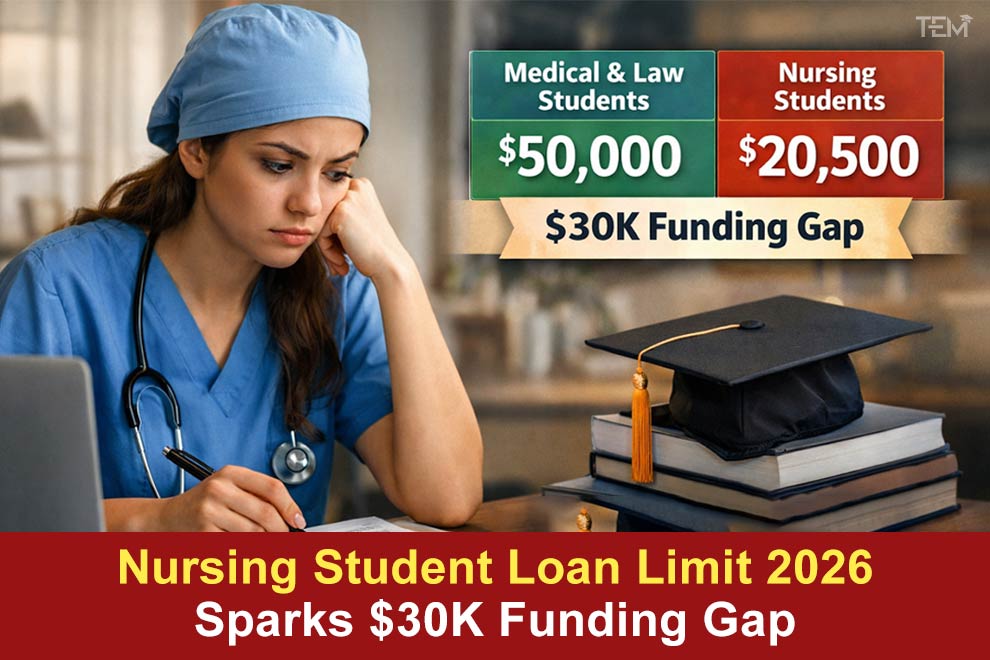
Department of Education outlined new federal borrowing caps that would allow up to $50,000 annually for certain professional degrees while limiting nursing programs to $20,500 per year.
The draft regulation, introduced under broader student loan reforms within the One Big Beautiful Bill Act (OBBBA), is part of wider 2026 federal student loan reforms that could reshape borrowing caps across multiple graduate programs.
The proposal is currently open for public comment until March 2, 2026.
Advocacy groups argue the proposal creates both an annual and lifetime borrowing disparity for graduate nursing students at a time when healthcare workforce shortages remain a national concern.
What the Nursing Student Loan Limit 2026 Proposal Changes
Under the draft rule:
- Select graduate professional programs would qualify for up to $50,000 annually in federal loans.
- Nursing and teacher preparation programs would remain capped at $20,500 per year.
- Professional degrees may qualify for a lifetime borrowing limit of up to $224,000.
- Other graduate programs would remain subject to a significantly lower aggregate cap, often around $138,500.
- Grad PLUS borrowing pathways could be restructured under the broader reform package.
The classification depends on how the Department defines a “professional degree,” a definition nursing groups say excludes advanced clinical programs such as MSN and DNP pathways.
The Annual and Lifetime Loan Gap
The proposed loan limit framework creates not only a $30,000 annual borrowing gap but potentially a much larger lifetime gap.
Loan Comparison Snapshot
| Degree Category | Annual Loan Cap | Lifetime Cap | Result |
| Doctors & Lawyers | $50,000 | $224,000 | Full Federal Coverage |
| Nurses & Teachers | $20,500 | ~$138,500 | Significant Funding Gap |
For MSN and DNP students, tuition and required clinical placements may exceed both the annual and aggregate limits under the proposed structure.
The lifetime cap difference, potentially exceeding $85,000, is becoming a central point in the debate.
Limiting federal loan access for graduate nursing students could undermine efforts to address the healthcare workforce shortage, the American Association of Colleges of Nursing said in a statement urging members to submit public comments before the March 2 deadline.
Why Nursing Organizations Are Responding
On February 11, the American Association of Colleges of Nursing (AACN) and other healthcare stakeholders urged members to submit formal comments before the March 2 deadline.
They argue the nursing student loan cap proposal could:
- Increase reliance on private graduate loans
- Discourage advanced nursing specialization
- Worsen the national nursing shortage
- Create disparities in professional degree funding
Healthcare systems across multiple states continue to report staffing gaps, adding urgency to the policy discussion.
The proposal arrives amid broader federal education funding changes, including the recent Pell Grant expansion, adding 1.7 million recipients, signaling continued policy shifts in how higher education is financed.
March 2 Public Comment Deadline
The Department of Education’s public comment period closes on March 2, 2026. The full proposed regulation outlining the revised borrowing caps is available in the Federal Register proposed rule on federal student loan limits.
Following review of submitted comments, the Department may:
- Retain the proposed borrowing caps
- Expand the professional degree definition
- Modify annual or aggregate limits
A final rule is expected later in 2026.
What the Nursing Student Loan Limit 2026 Means for Students
If finalized without revision:
- Graduate nursing students would remain capped at $20,500 annually.
- Lifetime federal borrowing could remain near $138,500.
- MSN and DNP candidates may require private loan supplements.
- Financial planning for Fall 2026 enrollment may shift.
For prospective students comparing program costs, both the annual and aggregate limits could influence long-term debt calculations.
FAQs
- Will private lenders fill the gap created by the nursing student loan limit of 2026?
If federal borrowing remains capped, some graduate nursing students may turn to private lenders to cover tuition and living costs. However, private loans often require credit checks, may carry variable interest rates, and typically lack federal protections like income-driven repayment or Public Service Loan Forgiveness eligibility.
- How could the nursing student loan limit of 2026 affect DNP and MSN program enrollment?
Advanced practice programs such as Doctor of Nursing Practice (DNP) and Master of Science in Nursing (MSN) tracks often require higher tuition and extended clinical hours. If federal caps remain unchanged, some institutions could see shifts in enrollment patterns, delayed admissions, or increased reliance on employer tuition assistance programs.