By The Education Magazine | February 20, 2026
Major U.S. universities are beginning to scale back partnerships with external diversity nonprofits that support doctoral pathways, marking a significant shift across higher education.
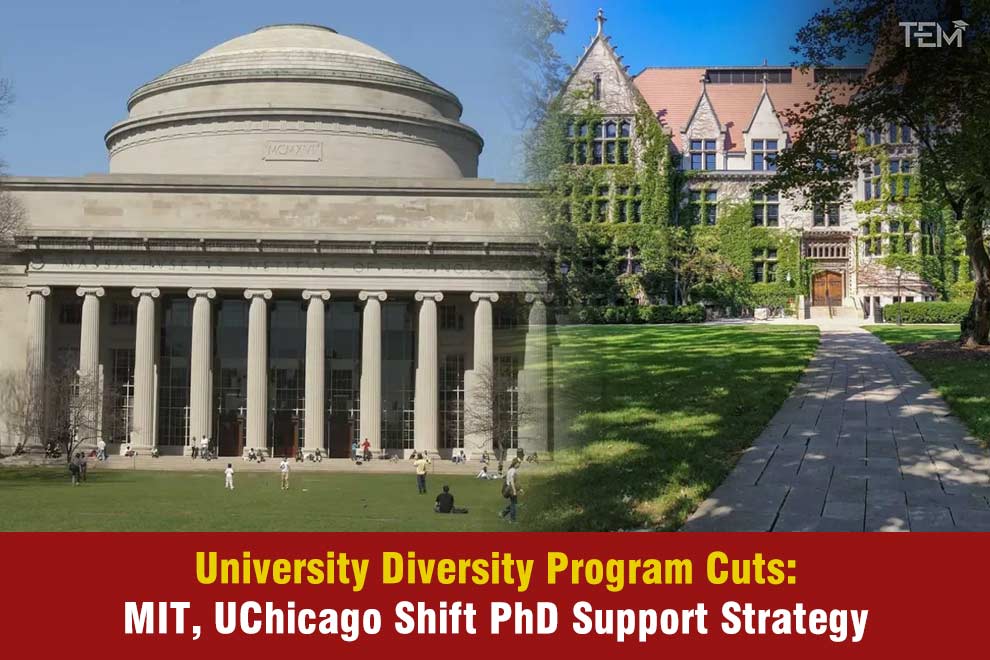
The University diversity program cuts trend is gaining attention after the Massachusetts Institute of Technology and the University of Chicago moved to end or reconsider collaborations with programs designed to help students of color pursue PhDs.
These decisions follow increasing federal scrutiny over whether race-conscious student support initiatives comply with civil rights law.
What Changed at Major Universities
Universities are reassessing relationships with nonprofit organizations that provide:
- PhD mentoring
- Application preparation support
- Research exposure opportunities
- Networking for underrepresented students
Institutional leaders say the changes are part of broader compliance reviews tied to evolving federal guidance around Diversity, Equity, and Inclusion (DEI) initiatives.
While internal support programs are not necessarily being eliminated, the move away from external partnerships signals a more cautious institutional strategy.
Why Universities Are Acting Now
The moves are widely viewed as a response to pressure and policy signals from the federal government regarding how student programs define eligibility.
These regulatory shifts mirror other recent administrative changes, such as the U.S. student loan rule 2026, which have forced institutions to tighten financial and compliance frameworks. Policy discussions referenced in the Sanders Report have further intensified these internal audits.
Civil rights reviews typically examine:
- Eligibility criteria
- Access and participation rules
- Resource allocation
- Program messaging
At the center of the issue is a key legal question: whether targeted academic support programs represent permissible equity initiatives or unlawful exclusion.
The shift follows a broader legal timeline that includes the 2023 U.S. Supreme Court affirmative action decision, which reshaped how universities evaluate race-conscious admissions and support programs. Since then, institutions have increasingly reviewed programs connected to eligibility definitions and funding structures.
Reviews are often conducted in consultation with guidance from the U.S. Department of Education as institutions interpret evolving civil rights expectations.
Policy observers also point to measures such as Executive Order 14173, which targeted DEI-related grants and intensified institutional compliance reviews across higher education.
“Institutions are not necessarily abandoning diversity goals; they are reassessing delivery models to reduce legal exposure,” said higher-education policy researcher Sara Goldrick-Rab, commenting publicly on compliance-driven program reviews.
Institutions are increasingly conducting internal reviews to avoid potential investigations.
Impact on PhD Diversity Pipelines
The nonprofits affected often play a major role in preparing students for doctoral study, especially first-generation and underrepresented applicants. These students are also navigating a broader shift in federal aid, including the recent Pell Grant expansion, which added 1.7 million eligible students.
Typical program benefits include:
- Faculty mentorship
- Graduate application guidance
- Research exposure
- Community support that improves retention
Programs similar to those run by organizations such as the Leadership Alliance, which prepares underrepresented students for doctoral study through research placements and mentoring, illustrate the type of external partnerships now under review.
Research consistently shows that mentoring and structured research exposure significantly increase doctoral enrollment among first-generation and underrepresented students, which is why these partnerships have historically been central to PhD pipeline strategies.
Experts warn that reducing these partnerships could create uncertainty in doctoral preparation pathways, particularly for students navigating competitive PhD admissions.
Some universities say they plan to replace external partnerships with internally managed initiatives designed to meet updated compliance standards.
University Diversity Program Cuts, Federal DEI Scrutiny, and PhD Diversity Pipeline Policy
These cuts reflect a broader national shift as colleges respond to:
- Court decisions affecting race-conscious policies
- Updated federal guidance on DEI implementation
- Growing political scrutiny of higher education initiatives
Across the sector, universities are attempting to balance expanding student opportunity with ensuring programs align with federal civil rights requirements.
This tension is expected to shape institutional policy decisions in the coming years.
What Happens Next
Key questions remain:
- Whether more universities will follow similar actions
- How federal guidance will evolve
- What alternative student support models will institutions adopt?
For current and prospective PhD applicants, the immediate impact of University diversity program cuts is uncertainty, particularly around mentorship pathways historically provided through nonprofit partnerships.
Universities are expected to continue reviewing programs as regulatory expectations become clearer.
This remains a developing story as universities continue policy reviews and federal guidance evolves.
FAQs
- How could university diversity program cuts affect PhD application competitiveness?
If external mentoring and research preparation programs decline, applicants, especially first-generation students, may have fewer structured opportunities to build research experience, strong recommendations, and graduate-ready portfolios, potentially widening preparation gaps.
- Are universities eliminating diversity support?
In most cases, institutions are not removing support but shifting from external nonprofit partnerships to internally managed programs designed to meet evolving federal compliance requirements while continuing student support initiatives.