For decades, classrooms treated games as distractions. Teachers asked students to close apps, silence devices, and focus on textbooks and lectures.
The assumption was simple: learning required discipline, not play. Today, that belief is being challenged by a growing body of educational research and classroom experience. Learning by gaming is an approach that uses the structure of game challenges, progress, exploration, and feedback to support learning outcomes.
Instead of passively absorbing information, students interact with problems, test ideas, and adapt their strategies as they play. The process turns learning into an active experience rather than a one-way transfer of information.
Across schools and universities, educators are beginning to recognize that well-designed educational games can strengthen engagement, deepen understanding, and build skills such as critical thinking and collaboration. The shift reflects a broader change in education: moving from memorization toward meaningful participation in the learning process.
What Is Learning by Gaming?
Learning by gaming refers to an educational approach where games are used as tools to help students understand concepts, practice skills, and develop problem-solving abilities. The idea is not to replace lessons with entertainment. Instead, it is to use game structures to create meaningful learning experiences.
Games naturally encourage curiosity. Players explore environments, make decisions, and learn through consequences. When these elements are applied to education, they allow students to engage with knowledge in a more active way. Rather than memorizing facts, learners interact with challenges and discover solutions through experimentation.
Educational games also provide immediate feedback, allowing learners to adjust their thinking and improve with each attempt, something that traditional classrooms, where results may take days to arrive, rarely offer.
As digital technologies evolve, learning by gaming is becoming an important part of modern educational practice. It combines the motivation of play with the structure of academic learning, creating environments where progress and understanding develop together.
Game-Based Learning vs Gamification in Education
Two concepts often appear in discussions about learning through games: game-based learning and gamification. While they are related, they serve different purposes in education.
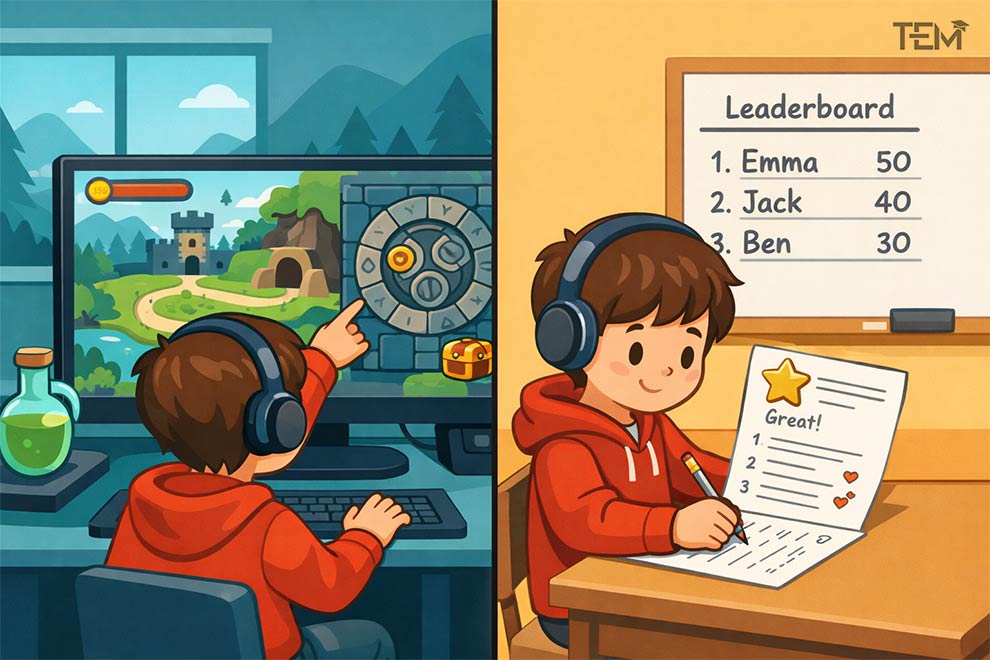
Game-based learning uses actual games as the primary teaching tool. In this model, the game itself delivers the lesson. Students learn concepts by playing, experimenting, and solving challenges within the game environment.
Gamification, on the other hand, introduces game elements into traditional learning activities. Teachers might add points, badges, levels, or leaderboards to motivate participation. The lesson remains the same, but the experience becomes more interactive and rewarding.
Both approaches can increase engagement, but they work in different ways. Game-based learning immerses students directly in a learning experience, while gamification enhances existing teaching methods by making them more dynamic.
Understanding this distinction helps educators choose the right strategy for their classrooms. In many cases, combining both approaches can create a balanced learning environment that keeps students motivated while maintaining clear educational goals.
How Educational Games Have Evolved
Educational games have changed dramatically over the past few decades. Early learning games on computers were simple programs designed to help students practice basic skills such as spelling or arithmetic. While useful, they often felt repetitive and limited in scope.
As technology advanced, educational games began to include richer graphics, interactive storytelling, and complex problem-solving scenarios. These improvements allowed games to simulate real-world situations, giving students opportunities to apply knowledge in practical contexts.
Today, digital learning games are part of a larger educational ecosystem. Interactive simulations allow students to explore scientific experiments, historical events, or engineering challenges in ways that traditional textbooks cannot replicate. Online platforms also enable collaborative gameplay, where students work together to solve problems and complete missions.
This evolution reflects a broader transformation in education. Instead of focusing only on memorization, modern learning environments emphasize exploration, creativity, and critical thinking. Educational games fit naturally into this approach, offering experiences that combine curiosity with structured learning.
The Cognitive Science Behind Learning Through Games
At its core, learning by gaming works because it mirrors how people naturally learn. Students engage in tasks that require decision-making, exploration, and adaptation processes that activate deeper cognitive functions than passive instruction alone.
Research in educational psychology shows that active learning improves knowledge retention and understanding. When learners interact with challenges rather than simply reading about them, the brain processes information more effectively.
Games create this environment by encouraging players to experiment, test strategies, and refine their thinking.
Another important factor is feedback. In a traditional classroom, feedback may arrive after assignments are graded. Games provide immediate responses to a player’s actions. If a strategy fails, the player sees the result instantly and can try again. This rapid feedback cycle strengthens learning by helping students connect actions with outcomes.
Game environments also encourage persistence. The visibility of forward movement keeps students motivated to continue solving problems, with each small success reinforcing confidence and building momentum in the learning process. This is why well-chosen classroom games can make such a measurable difference to how students experience a lesson.
1. Strengthening Problem-Solving and Critical Thinking
One of the most valuable outcomes of learning by gaming is the development of strong problem-solving skills. Games rarely present information straightforwardly. Instead, they place players in situations that require analysis, planning, and decision-making.
For example, strategy-based educational games often ask students to evaluate multiple options before choosing a solution. Players must consider available resources, predict consequences, and adjust their approach when circumstances change. These steps closely resemble the critical thinking processes used in real-world problem solving.
Students are not simply recalling facts; they are applying knowledge in dynamic situations. As they encounter obstacles and revise their strategies, they develop stronger cognitive skills and the ability to think both logically and creatively.
Over time, repeated exposure to these challenges strengthens analytical thinking. Students learn to break down complex problems into manageable steps, a skill that supports learning across many subjects.
2. Experiential Learning in Action
Learning by gaming also reflects the principles of experiential learning. This theory suggests that people understand ideas more deeply when they experience them directly rather than only reading or hearing about them.
Games create safe environments where students can explore ideas without fear of real-world consequences. A player may attempt a solution, discover that it does not work, and try again with a different strategy. Each attempt provides new information that helps refine understanding.
This process encourages a spirit of inquiry and experimentation. Instead of avoiding mistakes, students begin to see them as part of learning. Games normalize trial and error, which allows learners to develop resilience and persistence.
Simulation-based games are particularly effective in this context. They allow students to practice real-world skills such as scientific experimentation, resource management, or historical decision-making within controlled digital environments. Through these simulations, abstract ideas become practical experiences.
3. The Cognitive Learning Loop
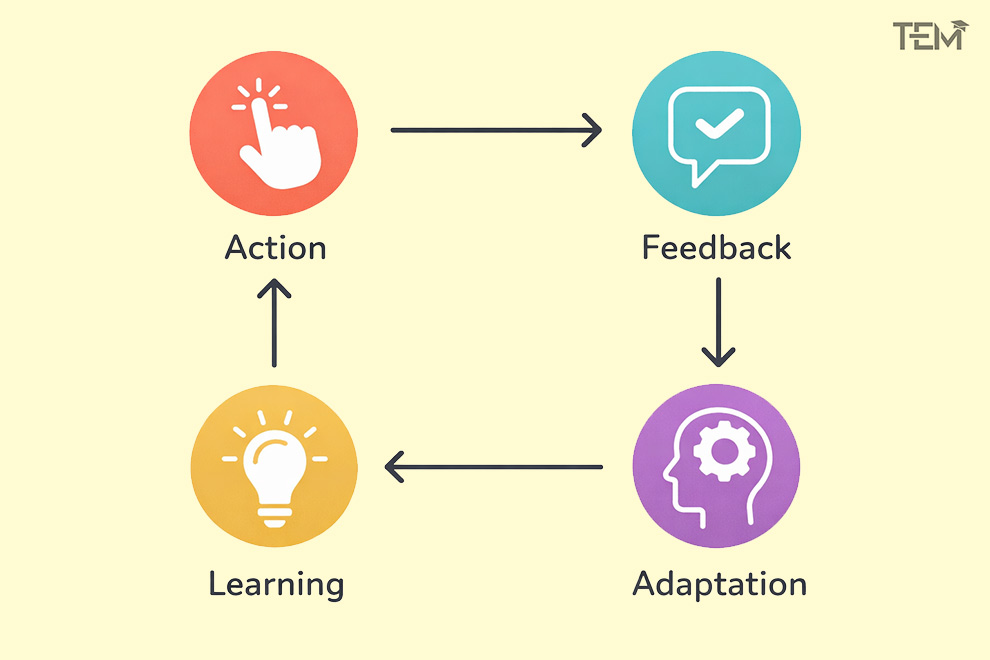
One reason games are powerful learning tools is the continuous cycle of action and feedback they create. Every step a player takes leads to a response from the game environment. This interaction forms a loop that reinforces understanding.
The process typically follows four stages:
- Action: The player attempts a solution or makes a decision.
- Feedback: The game responds immediately, showing the outcome of that choice.
- Adaptation: The player analyzes the feedback and adjusts the strategy.
- Learning: Over time, these adjustments lead to deeper understanding and mastery.
This cycle repeats throughout the game, allowing students to refine their thinking with each attempt. Unlike traditional instruction, where progress may feel slow or uncertain, the gaming environment makes improvement visible and immediate.
The result is a learning process that feels engaging while quietly building important cognitive skills. Students remain focused because they are not just completing tasks; they are discovering solutions through interaction and reflection.
Why Learning by Gaming Improves Student Engagement
One of the most noticeable effects of learning by gaming is the level of attention it creates in the classroom. Students who may struggle to remain focused during long lectures often become deeply involved when lessons include interactive challenges. The reason is simple: games are designed to keep participants engaged.
Games introduce a sense of progress. Players see their advancement through levels, scores, or completed missions. This visible movement toward a goal encourages students to stay involved because every step forward feels meaningful.
Another important element is challenge. Well-designed games balance difficulty and progress so that tasks feel achievable but not easy. When students overcome these challenges, they experience a sense of accomplishment that strengthens their motivation to continue learning.
The structure of games also promotes active participation. Instead of listening to information, students must respond to situations, make choices, and adapt to outcomes.
This level of involvement transforms learning from a passive activity into a dynamic process where motivation and effort drive progress. Student engagement deepens further when this approach is combined with strong classroom teaching habits.
1. Building Collaboration Through Multiplayer Learning
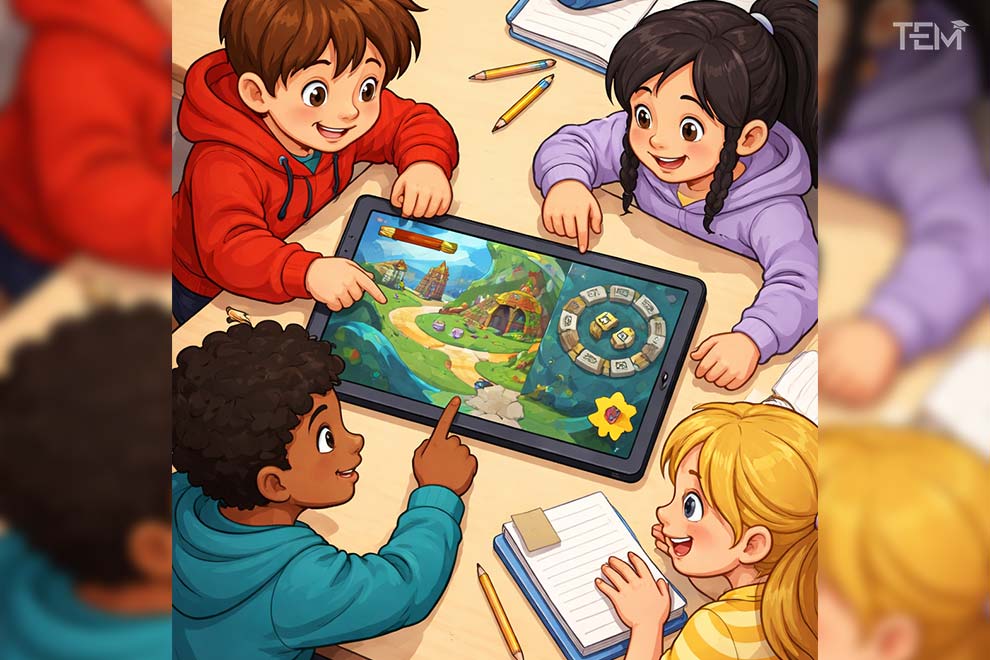
Many educational games include collaborative elements that encourage students to work together. In these environments, players often share responsibilities, exchange ideas, and develop strategies as a team.
This collaborative aspect introduces an important dimension to learning. Students learn how to communicate clearly, listen to different perspectives, and coordinate actions with others. These skills are valuable not only in academic settings but also in professional environments.
Group-based gameplay also strengthens social interaction in the classroom. Students who might hesitate to speak during traditional lessons often become more comfortable contributing when they are solving challenges together. The shared objective helps create a supportive atmosphere where ideas can be explored openly.
As teams work toward a common goal, they practice negotiation, planning, and collective problem-solving.
2. Supporting Different Learning Styles
Every classroom contains students who absorb information in different ways. Some respond more readily to visual explanations, others to listening or discussion, and still others to direct, hands-on engagement. Traditional teaching methods often struggle to address all of these preferences within a single lesson.
Game-based learning naturally supports multiple learning styles. Visual learners benefit from graphics, animations, and simulated environments that help illustrate complex ideas. Auditory learners engage with narration, dialogue, and sound cues that reinforce important concepts.
Students who prefer physical interaction also find value in game environments. Even though the activity takes place digitally, the act of making decisions, navigating spaces, and responding to challenges creates a sense of movement and participation.
Because games combine visuals, sound, and interaction, they provide a richer multimodal learning experience that can reach a wider range of students. This inclusivity allows more learners to connect with the subject matter in ways that feel intuitive and meaningful.
3. EdTech Tools That Support Game-Based Learning
The growth of educational technology has made learning by gaming more accessible than ever before. Teachers no longer need specialized programming skills to introduce interactive learning experiences in their classrooms. Many platforms now offer ready-to-use tools that combine curriculum content with engaging gameplay.
Interactive quiz platforms are among the most widely used tools. These systems turn traditional quizzes into fast-paced competitions where students answer questions in real time. The format encourages participation and creates an energetic learning atmosphere.
Simulation platforms represent another powerful category. In science and engineering courses, simulations allow students to experiment with complex systems that would be difficult to replicate in a physical classroom. Learners can observe outcomes, adjust variables, and explore scenarios that deepen their understanding.
Collaborative digital learning games are also gaining popularity. These environments enable students to work together on shared challenges, combining problem-solving with teamwork. As participants exchange ideas and coordinate strategies, they strengthen both academic and communication skills.
By integrating these tools into their teaching strategies, educators can create learning environments that feel both structured and engaging. The goal is not to replace traditional instruction, but to expand it with interactive experiences that bring knowledge to life.
How Educators Can Introduce Learning by Gaming
Adopting learning by gaming does not require a complete redesign of the curriculum. In most cases, it begins with small adjustments that integrate interactive elements into existing lessons. The goal is to ensure that games support educational objectives rather than distract from them.
When implemented thoughtfully, game-based learning can enhance traditional teaching methods by encouraging participation, exploration, and problem-solving. Educators who approach this method strategically often find that students respond with greater curiosity and commitment.
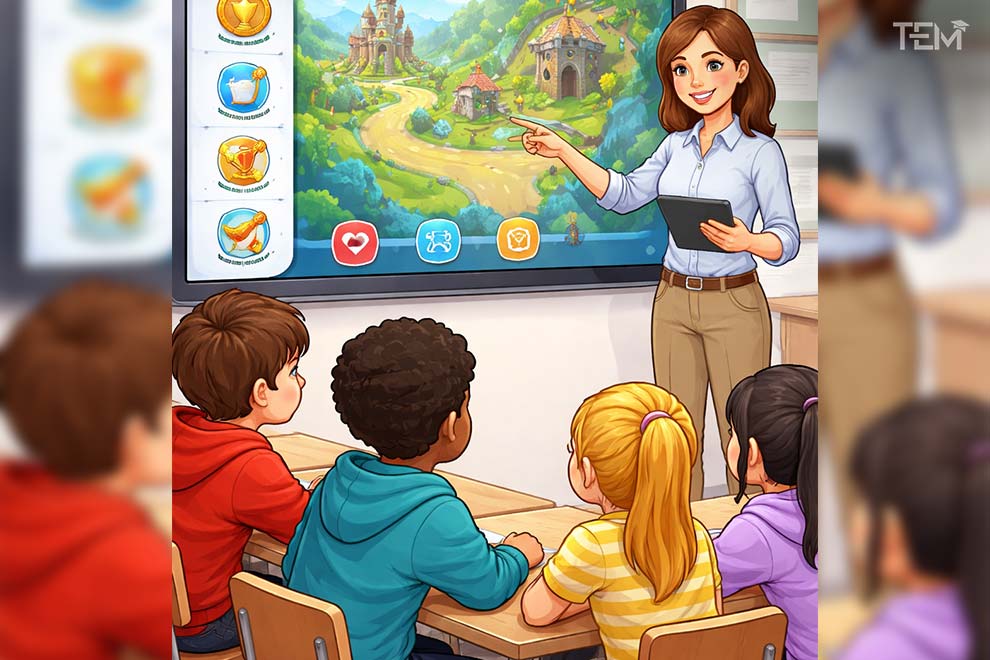
The following framework offers a practical starting point for teachers who want to incorporate games into their classrooms.
Step 1: Define the Learning Objective
Every educational activity should begin with a clear objective. Before selecting a game, teachers must identify what students should understand or achieve by the end of the lesson.
For example, a history lesson might aim to help students analyze historical decisions, while a science class might focus on understanding cause-and-effect relationships in experiments. Once the objective is clear, it becomes easier to choose a game that reinforces the desired learning outcome.
This step ensures that gameplay remains connected to meaningful academic goals. When students understand the purpose behind an activity, they become more actively engaged learners, a finding consistently supported by education research.
Step 2: Choose the Right Game or Platform
Not every game is suitable for educational purposes. The most effective learning games are those that align closely with the subject being taught.
Educators should look for platforms that encourage exploration, decision-making, and problem-solving rather than simple repetition. Games that simulate real-world scenarios or present strategic challenges often provide the greatest educational value.
When the gameplay reflects the structure of the lesson, students are more likely to connect the experience with the knowledge they are expected to develop. Many teachers begin with classroom management games as a low-pressure way to introduce structured play before moving to more subject-specific tools.
Step 3: Measure the Learning Outcomes
Like any teaching method, learning by gaming should include clear evaluation. Teachers can measure outcomes by observing how students apply concepts during gameplay or by assessing their understanding after the activity.
Participation levels, problem-solving approaches, and collaborative interactions can all provide insights into how effectively students are learning through the experience.
Reflection activities are also useful. Encouraging students to discuss what they learned from the game helps connect the experience to broader academic concepts.
Through thoughtful assessment, educators can ensure that game-based learning strengthens both engagement and understanding.
When Learning Feels Like Discovery
The conversation around games in education has changed dramatically. What was once dismissed as entertainment is now recognized as a powerful tool for exploration and understanding. Learning by gaming demonstrates that curiosity and structure can coexist within the same educational environment.
When students interact with ideas rather than simply receiving them, learning becomes more meaningful. Challenges encourage persistence, feedback supports improvement, and collaboration builds communication skills that extend beyond the classroom.
For educators, the opportunity lies in using these experiences to complement traditional instruction. Thoughtfully designed game-based activities can transform lessons into environments where students experiment, analyze, and discover knowledge for themselves.
As education continues to evolve, approaches that combine technology with active learning will play an increasingly important role in shaping modern classrooms.
If you found this perspective valuable, share it with fellow educators and continue the conversation about the future of learning.
FAQs
1. Can learning by gaming improve long-term knowledge retention?
Yes, learning by gaming can improve long-term knowledge retention because it combines interaction, repetition, and immediate feedback. When students actively solve problems during gameplay, they process information more deeply than through passive reading or lectures, which helps the brain store and recall knowledge more effectively.
2. What subjects benefit the most from game-based learning?
Game-based learning is especially effective in subjects that involve problem-solving and simulation, such as science, mathematics, engineering, and history. Educational games allow students to experiment with concepts, visualize complex systems, and apply theoretical knowledge in practical scenarios.
3. Are video games in education suitable for all age groups?
Yes, educational games can be designed for learners of all ages, from primary school students to university learners. The key difference lies in the complexity of the game mechanics and the learning objectives. Age-appropriate design ensures that games remain engaging while supporting meaningful educational outcomes.
4. How do teachers ensure that gaming remains educational and not just entertainment?
Teachers maintain educational value by aligning the game with clear learning objectives and integrating reflection activities after gameplay. When students discuss strategies, analyze outcomes, and connect the experience to academic concepts, the game becomes a structured learning tool rather than pure entertainment.