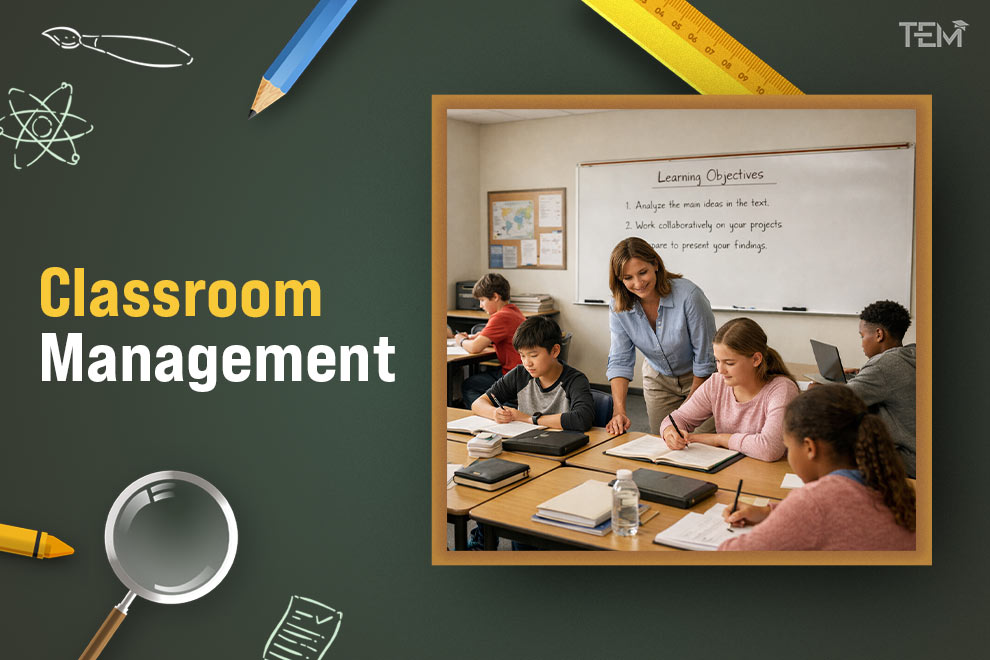
Walk into a well-managed classroom, and you immediately feel the difference. Students are focused, transitions happen smoothly, and the teacher rarely raises their voice.
What looks effortless is actually the result of carefully designed classroom management strategies.
Teachers who have spent time in both well-managed and poorly-managed classrooms will tell you the same thing: the difference is never about the students. It is always about the system.
For decades, education researchers have studied what makes classrooms productive and respectful learning environments.
From the procedural systems developed by Harry K. Wong to the behavioral research of Robert J. Marzano and the “withitness” concept introduced by Jacob Kounin, one message is consistent: effective behavior systems in the classroom are proactive, not reactive.
Today’s classrooms also bring new realities. AI tools, digital devices, and diverse student needs require teachers to manage both physical and digital learning environments.
Organizations like ISTE and NEA emphasize that modern learning management now includes digital citizenship, trauma-informed practices, and social-emotional learning.
This guide covers the strategies that truly work in 2026, backed by research and practical enough to apply immediately.
Why Classroom Management Matters More Than Ever in 2026
1. The Link Between Classroom Climate and Student Achievement
A productive classroom is not defined by silence or strict discipline. It is defined by clarity, trust, and consistent expectations.
Education researcher Robert J. Marzano analyzed over 100 studies and found that a well-run classroom produces an effect size of approximately 0.52, meaning it can move the average student from the 50th to the 70th percentile in academic achievement.
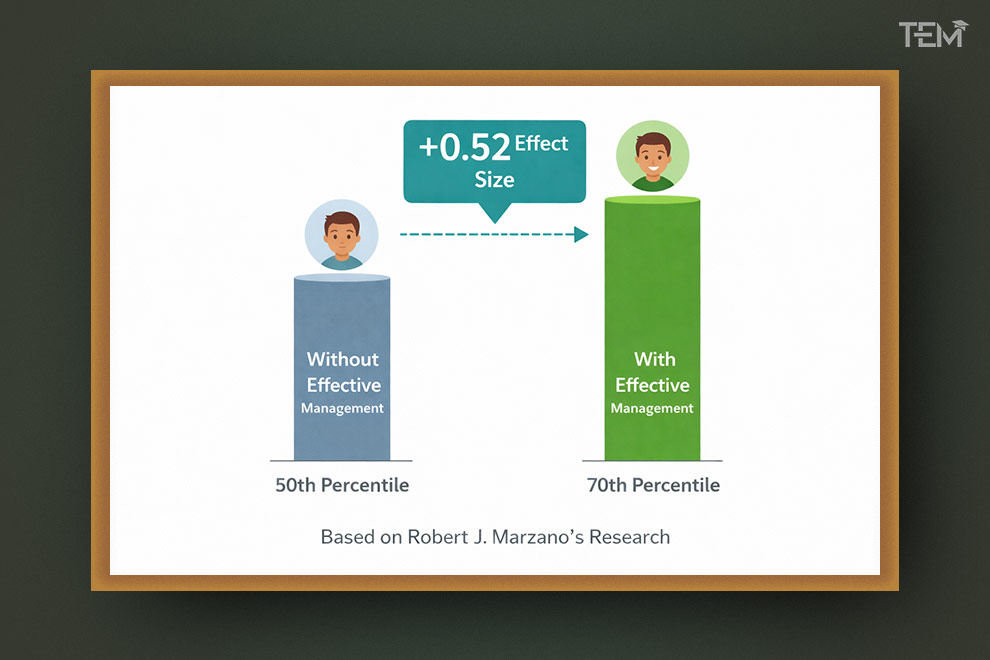
ASCD also emphasizes that classroom climate directly influences motivation, participation, and long-term student confidence. Students are more willing to ask questions, collaborate, and take academic risks when they feel psychologically safe.
In other words, this work is not about control. It is about creating the conditions for consistent learning.
2. Modern Classroom Challenges: Technology, Attention, and Behavior
Teaching today looks very different from what it did ten years ago. Teachers now navigate a learning environment shaped by technology, information overload, and evolving student needs.
According to ISTE’s digital citizenship standards, modern teachers must establish clear expectations for device use, including responsible use of AI tools and protection of student privacy.
At the same time, the NEA highlights that trauma-informed practices and social-emotional learning (SEL) are now central components of effective classroom management.
This means effective teachers today balance three environments at once:
- The physical classroom space
- The digital learning environment
- The emotional climate of the classroom community
What Research Says About Effective Classroom Environments
Despite new challenges, the core research has remained consistent. Studies across decades show the most effective classrooms share several characteristics.
First, expectations are taught clearly and practiced regularly. Teachers who explicitly teach routines prevent confusion before it becomes disruption, a cornerstone of Harry K. Wong’s procedural approach.
Second, effective teachers maintain awareness of the entire classroom. Educational psychologist Jacob Kounin described this ability as “withitness,” the teacher’s capacity to sense what is happening and intervene early before behavior escalates.
Third, successful classrooms rely more on prevention than punishment. Research supported by Edutopia shows that small teacher actions, such as proximity, tone, and consistent routines, often prevent behavioral issues long before discipline becomes necessary.
The Foundational Classroom Management Frameworks
| Researcher | Core Idea | What Teachers Do | Key Benefit |
| Harry K. Wong | Procedures over rules | Teach routines like academic content | Students operate independently |
| Robert J. Marzano | Dominance + Cooperation | Balance authority with approachability | Fewer disruptions, higher engagement |
| Jacob Kounin | Withitness + Overlapping | Scan the room, manage multiple events | Problems caught before they escalate |
All three frameworks point to the same conclusion: prevention beats reaction, every time.
1. Procedures Over Rules: Lessons from Harry Wong
One of the most influential ideas in classroom management comes from educator Harry K. Wong, author of The First Days of School. His central argument: effective classrooms run on procedures, not rules.
Rules describe what students should not do. Procedures show students exactly what they should do.
For example, a rule might say, “Be respectful.” A procedure explains how to demonstrate respect:
- How to enter the classroom
- How to ask a question
- How to transition between activities
- How to submit assignments
When students understand clear routines, they don’t need constant reminders. The classroom runs smoothly because expectations are predictable.
2. Dominance and Cooperation in Marzano’s Research
Effective teachers balance authority with approachability. This balance is central to Robert J. Marzano’s research on classroom management.
Marzano describes this balance using two key principles:
- Teacher Dominance: Not strict control, but the ability to communicate clear expectations and maintain calm leadership in the classroom.
- Teacher Cooperation: Students must feel respected and supported. Teachers build cooperation by listening, encouraging participation, and acknowledging student perspectives.
According to ASCD, classrooms that balance dominance and cooperation tend to have stronger relationships, fewer disruptions, and higher engagement. Students respond best when they see the teacher as both a leader and an ally.
3. Jacob Kounin’s “Withitness” and Overlapping
Another cornerstone of classroom management research comes from educational psychologist Jacob Kounin, whose landmark 1970 work Discipline and Group Management in Classrooms introduced two key ideas.
Withitness: the teacher’s ability to sense and address issues before they escalate. It involves:
- Scanning the classroom regularly
- Moving strategically through the room
- Noticing early signs of distraction
- Addressing issues before they spread
Overlapping: the ability to manage multiple classroom events simultaneously. For example, assisting one student while maintaining awareness of the rest of the class.
Even in modern classrooms filled with technology, these observational skills remain essential.
Building Strong Classroom Procedures from Day One
The first days of school quietly shape the entire academic year. Experienced educators often say: classroom management is not something you fix later, it is something you build deliberately from the beginning.
1. The First 14 Days Strategy
| Week | Focus Areas |
| Days 1–5 | Entering/exiting, organizing materials, transitioning between activities, and technology use |
| Days 6–10 | Collaboration routines, group work expectations, and independent learning habits |
| Days 11–14 | Refine, feedback, and reinforce routines until they become automatic |
The key principle is consistency. Students should experience the same expectations every day, so routines become habits they don’t have to think about.
2. Teaching Procedures Like Academic Skills
One common mistake is explaining procedures once and assuming students will remember them.
Effective teaching treats routines the same way teachers treat academic content, modeled, practiced, and reinforced.
| Step | What It Looks Like |
| Explain | Describe exactly what students should do, step by step |
| Model | Demonstrate the routine in front of the class |
| Practice | Have students perform it together |
| Correct & Refine | Give feedback until the routine flows without prompting |
Classroom Layouts That Reduce Behavioral Issues
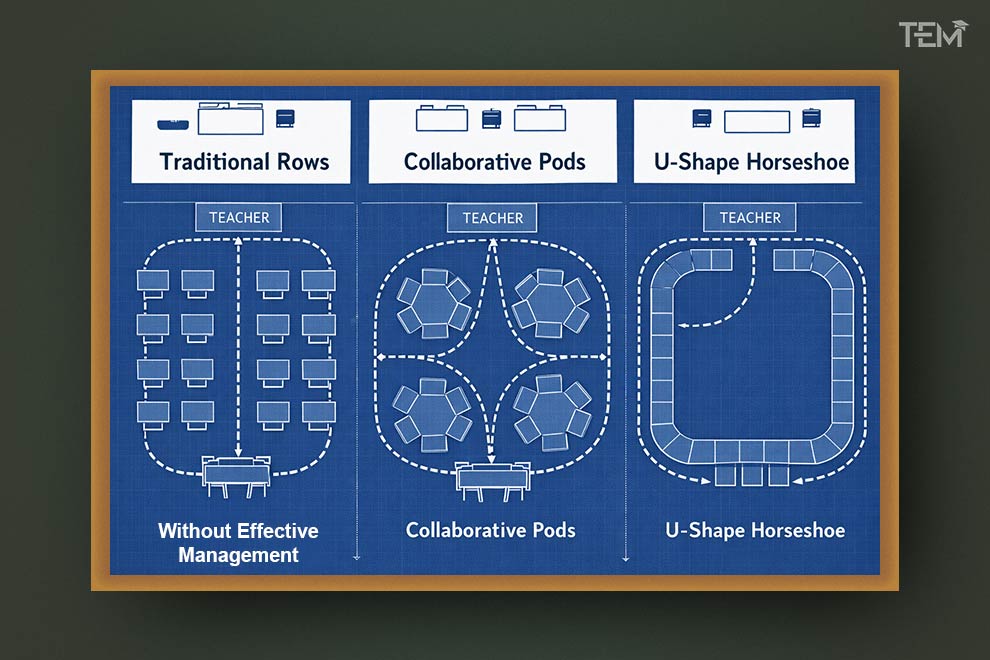
Student behavior and engagement are influenced not only by teacher strategies but also by the physical environment. How desks are arranged and how easily a teacher can move through the room both affect behavior.
1. Traditional Rows vs Collaborative Pods
Rows are effective when teachers need clear sightlines during instruction. This layout reduces side conversations and is useful for:
- Lectures or direct instruction
- Assessments and exams
- Independent work sessions
Collaborative Pods place desks in small groups to encourage discussion and teamwork. They work well for project-based learning but require stronger management because they naturally increase conversation.
Many teachers rotate between layouts depending on the learning activity.
2. The U-Shape Layout for Engagement
Another widely used arrangement is the U-shape (horseshoe) layout. In this format, desks form an open rectangle that allows every student to face the center of the room.
This design supports discussion-based learning because all students can see each other, teachers can move easily through the open space, and classroom dialogue becomes more natural. Many educators find that it improves participation while maintaining full classroom visibility.
3. Strategic Teacher Movement and Proximity
One of the simplest yet most effective teaching techniques is teacher proximity, physically moving around the room during instruction.
Studies referenced by Edutopia show that students are more likely to stay focused when teachers circulate regularly. Movement allows teachers to monitor student work, identify confusion early, and prevent off-task behavior before it spreads.
Effective Classroom Management Strategies That Actually Work
Successful learning environments rarely depend on one technique. Effective teachers combine proactive systems, positive reinforcement, and clear expectations to create an environment where learning thrives.
1. Positive Reinforcement Over Punishment
Students respond better when teachers recognize positive behavior instead of focusing only on mistakes.
Research shared by the National Education Association highlights that positive reinforcement increases motivation and encourages long-term behavioral change. Teachers can apply this through management games and other proven strategies:
- Acknowledging students who follow classroom expectations
- Highlighting examples of strong collaboration
- Rewarding consistent participation
2. Clear Expectations and Consistent Rules
One of the most common causes of classroom disruptions is unclear expectations. Students perform better when they know exactly what is required.
ASCD research emphasizes that consistency builds trust. When teachers apply rules fairly and predictably, students perceive the classroom as structured and safe. Limiting rules to three to five core expectations makes them easier to remember.
3. Social-Emotional Learning and Relationship Building
Modern behavior support approaches place increasing emphasis on relationships and SEL.
Programs focused on social-emotional learning help students develop emotional awareness, self-control, and empathy, all of which reduce conflicts and improve cooperation.
Teachers strengthen relationships by:
- Learning about students’ interests and backgrounds
- Encouraging open communication
- Creating opportunities for student voice in classroom decisions
4. Culturally Responsive Teaching Practices
Culturally responsive teaching recognizes that students from different backgrounds may respond differently to authority, structure, and communication styles.
Incorporating students’ cultural contexts into classroom norms rather than defaulting to a single behavioral standard reduces misunderstandings and builds stronger trust. The NEA recommends that teachers reflect on their own cultural assumptions when designing classroom expectations.
5. PBIS: A Schoolwide Behavior Framework
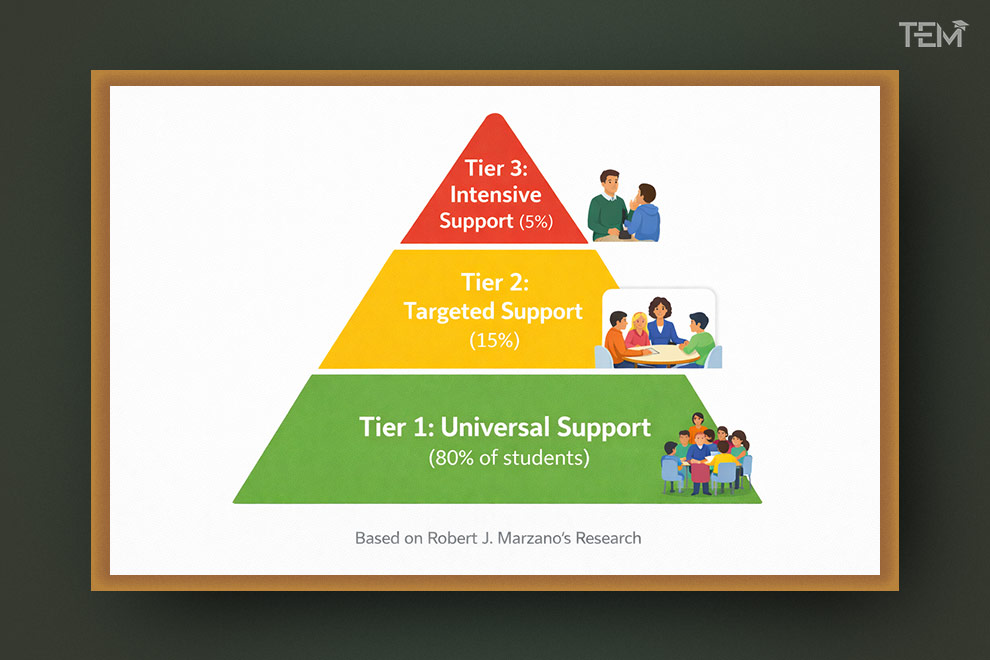
Many schools use Positive Behavioral Interventions and Supports (PBIS), a research-backed, tiered framework for preventing and addressing behavior at the school, classroom, and individual level.
At the classroom level, PBIS encourages explicitly teaching behavioral expectations rather than assuming students already know them. Learn more at the PBIS.org resource center.
6. De-escalation Instead of Confrontation
Not every challenge can be prevented. When conflicts occur, the teacher’s response can determine whether the situation improves or worsens.
Trauma-informed teaching practices from the NEA suggest focusing on de-escalation rather than confrontation. Effective techniques include:
- Speaking calmly and privately with the student
- Acknowledging emotions without judgment
- Offering clear choices to help the student regain control
How Technology Is Changing Classroom Management in 2026
Managing modern classrooms today extends beyond physical behavior. With laptops, tablets, and digital platforms central to learning, teachers must also manage online behavior and digital workflows.
1. Managing Digital Distractions
Devices can support learning, but they can also create distractions. ISTE’s digital citizenship framework recommends clear digital usage policies.
Teachers often implement routines such as:
- “Screens down” during direct instruction
- Structured technology breaks
- Device monitoring software in computer-based classrooms
2. Teaching Digital Citizenship
Students also need guidance on how to behave responsibly in digital spaces. Digital citizenship includes:
- Respectful online communication
- Protecting personal data
- Responsible use of AI tools
By establishing clear digital expectations, teachers prevent many technology-related disruptions and prepare students for life beyond the classroom.
3. Integrating AI Tools Responsibly
Artificial intelligence is rapidly becoming part of modern education. AI tutors, writing assistants, and research tools are increasingly available to students.
Teachers maintain balance by explaining when AI tools are appropriate, encouraging students to verify AI-generated information, and designing assignments that require critical thinking and personal reflection.
4. Using Learning Platforms to Improve Organization
Learning management systems such as Google Classroom allow teachers to structure assignments, communication, and feedback in one place.
When used effectively, these platforms reduce confusion and improve accountability by sharing clear instructions, providing real-time feedback, and organizing digital resources for students.
Getting Started: A Guide for New Teachers
For many educators, the first year of teaching is when staying in control feels most challenging. New teachers often focus heavily on lesson planning but underestimate how much daily structure and clear routines shape student behavior.
Harry K. Wong stresses that a strong classroom is built through procedures, not punishments. When students know exactly how routines work, behavioral disruptions drop significantly.
1. Treat the First Week as a Training Week, Not a Teaching Week
New teachers often feel pressure to dive into content immediately. Resist it. The first week is best spent practicing how the classroom operates, how students move, ask questions, and transition between tasks.
Students who spend week one learning routines spend the rest of the year using them. That investment pays off every single day.
2. Build Structure Into Every Lesson
Unstructured time is often when behavioral issues appear. Teachers reduce disruptions by structuring lessons with clear phases:
- Opening activity or warm-up
- Direct instruction
- Guided practice
- Independent work
- Reflection or review
3. Use Proximity and Awareness
Simple practices that demonstrate withitness include walking around the classroom during activities, maintaining eye contact, and quickly addressing small disruptions before they grow. Students stay on task when they know the teacher is attentive and present.
A Simple Behavior Plan Template
A classroom management plan helps define expectations before problems appear. A basic plan includes four elements.
| Element | What to Include | Example |
| Expectations | 3–5 clear, positive rules | Respect others. Be prepared. Follow instructions the first time. |
| Daily Procedures | How routines operate | Entry routine, materials distribution, group work protocol, help signal |
| Positive Reinforcement | How do you recognize good behavior | Verbal praise, participation points, recognition board, and classroom privileges |
| Response to Misbehavior | Calm, stepped approach | Verbal reminder → Redirection → Private conversation → Restorative discussion |
Restorative practices supported by the NEA emphasize repairing relationships rather than relying solely on punishment. The goal is not just to stop the behavior, but to preserve the relationship.
A Thought to Take With You
Strong classroom management is not about control. It is about creating an environment where students feel safe, respected, and ready to learn.
When expectations are clear, relationships are strong, and routines are consistent, classrooms naturally become more focused and productive.
The most effective teachers understand that an effective teaching environment is a combination of structure, empathy, and thoughtful leadership that evolves throughout the school year.
If this guide helped you rethink your classroom approach, share it with fellow educators who are building stronger learning environments.
FAQs
1. What are the most effective classroom management strategies?
The most effective strategies include clear expectations, structured routines, positive reinforcement, relationship-building, and proactive monitoring of student behavior as supported by research from Marzano, Wong, and Kounin.
2. Why is classroom management important?
A well-organized learning environment creates a structured, predictable environment where students can focus on learning, collaborate respectfully, and develop positive behavioral habits. Marzano’s research found that it produces an effect size of 0.52 on academic achievement.
3. What is the difference between classroom management and discipline?
Proactive systems focus on preventing problems through structure and routines. Discipline refers to responding to misbehavior when it occurs. Strong management significantly reduces the need for discipline.
4. What is PBIS in classroom management?
Positive Behavioral Interventions and Supports (PBIS) is a tiered, school-wide framework that emphasizes explicitly teaching behavioral expectations and using positive reinforcement to prevent and address student behavior at every level.