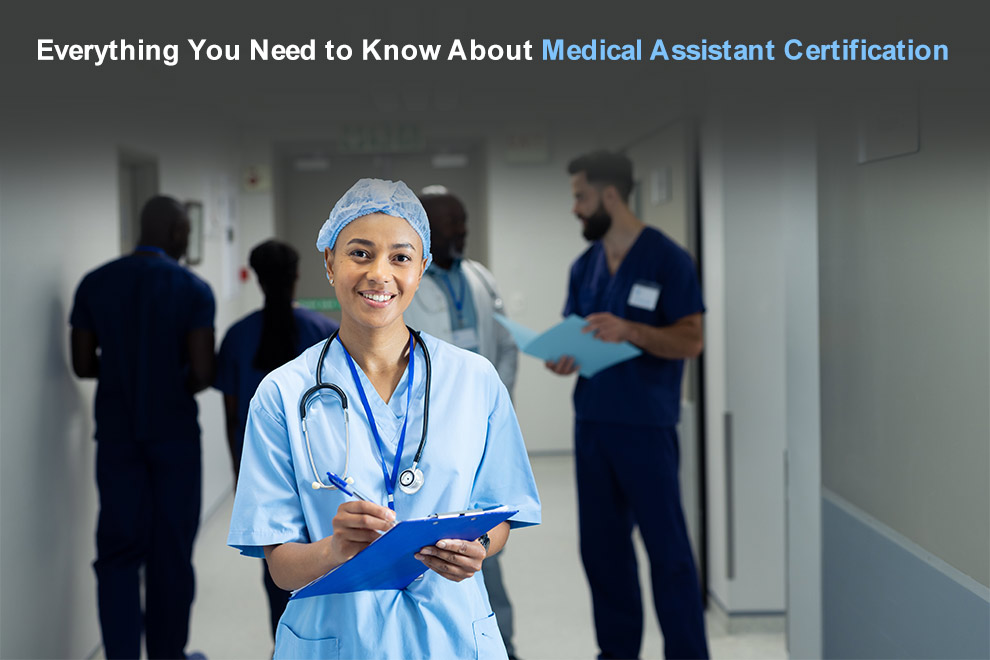
Working as a medical assistant is a rewarding way to support doctors and other healthcare providers with everyday clinical and administrative tasks. If you’re wondering how to get a medical assistant certification, it helps to understand what certification means, how programs are structured, and what to look for before enrolling.
What Medical Assistant Certification Means
A medical assistant certification is a credential that demonstrates that you’ve achieved a level of proficiency in both the clinical and administrative aspects of the position. It also shows potential employers that you’ve been tested on the knowledge and skills involved in the role.
Medical assistants often work in doctors’ offices, clinics, outpatient centers, and other healthcare environments. Certification can help show that you have studied the key responsibilities connected to the job, both clinical and administrative.
Not every employer requires certification, but many do or at least prefer it. If you want to stand out when you’re applying for medical assistant positions, completing a certificate program can be a useful way to do it.
How Long Do Certification Programs Usually Take?
Medical assistant programs typically run about nine to 12 months. However, the actual length of time varies based on factors such as the type of program and the school offering it. Some programs take longer if they include additional coursework, flexible scheduling, or an externship component.
Most certification programs require applicants to have a high school diploma or GED. A college degree is typically not required to pursue a medical assistant career.
What You Can Learn in a Medical Assistant Program
The most important skill you’ll develop is how to professionally interact with patients. This ranges from scheduling appointments over the phone to helping patients feel prepared for their visit. You may also learn how to ask about symptoms, record health histories, and communicate clearly with both patients and providers.
Medical assistant programs usually cover a mix of administrative and clinical skills. The administrative portion may teach you how to update medical records, manage office bookkeeping, schedule appointments, and help with insurance forms. These tasks are important because they help the healthcare office run smoothly and keep patient information organized.
The clinical portion focuses on tasks that may happen before, during, or after a patient visit. Some of the many duties you may learn include drawing blood, removing stitches, administering injections, and taking vital signs. Depending on the program and state rules, you may also learn how to assist with medications as allowed by law and employer protocols.
Online, In-Person and Hybrid Program Options
Many people wonder, “Are there medical assistant schools near me?” The good news is that there does not necessarily have to be a nearby school, depending on the program format.
Why Accreditation Matters
Not all medical assisting programs are part of an accredited institution. Accreditation matters because it helps show that a school or program has gone through a review process and meets certain educational standards.
Many employers prefer that their medical assistants attend accredited institutions. Accreditation also matters if you plan to pursue certain certification exams, transfer credits, or continue your education later. Before enrolling, it is worth checking the school’s accreditation status.
What to Expect During the Externship
You’ll spend your externship in a healthcare facility to gain firsthand experience in how it operates on a daily basis. This includes working alongside healthcare professionals and interacting with patients.
You’ll usually start with fairly straightforward tasks, such as updating files and getting patients ready for their exams. As the externship progresses, you’ll take on more responsibilities and get a clearer sense of what it’s like to be a medical assistant.
Medical assistant externships are usually unpaid, but not always. Even when an externship is unpaid, it can be valuable because it enables you to build practical experience in a healthcare setting before applying for jobs.
Balancing Certification With Work, School, and Life
You can enroll in a medical assistant program if you’re also taking college classes or working full-time. Many students pursue certification while managing other responsibilities.
If you’re currently working as a medical assistant, you can pursue certification while staying in your role. Your experience will likely make parts of the program easier to understand, especially medical terminology and daily office workflows.
Choosing the Right Medical Assistant Certification Program
Before enrolling in a program, make sure the institution is accredited and offers the training you need. It should also fit your schedule, include hands-on experience, and offer your preferred level of preparation for externships, certification exams, or career planning. Finally, think about how you learn best: in person, online, or through a hybrid program.
These details can make a big difference, especially if you are new to healthcare or balancing school with work or family responsibilities. A strong program should help you understand both the classroom expectations and the real-world training process.
Start Your Medical Assisting Journey Today
Starting a new career can be both exciting and overwhelming. Medical assisting can give you the chance to support healthcare teams, interact with patients, and build skills that are useful in many clinical settings. Enrolling in a medical assisting certificate program that offers what you’re looking for is a great place to begin.