Over 73.8 million people now use online learning platforms worldwide, and the global e-learning market is on track to hit $400 billion by 2026. Virtual classrooms are at the center of this shift, but not every digital learning space actually works. Some deliver real learning outcomes. Many don’t.
The difference almost always comes down to design and features. A good virtual classroom is not just a video call with a shared screen. It is a structured, interactive, and personalized environment built for learning.
This blog breaks down exactly what makes a good virtual classroom, the features that matter most, real examples across different settings, and the trends shaping the future of online education in 2026.
What is a Virtual Classroom?
A virtual classroom is a specialized online learning environment designed to facilitate real-time, synchronous interaction between instructors and students, regardless of their physical location. While it utilizes video conferencing technology, it is fundamentally different from a standard video call because it is built specifically for education.
It serves as a digital hub where the psychological and social aspects of a physical school are replicated through technology.
What Makes a Good Virtual Classroom?
A 2025 survey by Training magazine and Microsoft found that 72% of L&D professionals cited learner engagement as their top challenge in virtual training. The same report found that platforms purpose-built for learning produced active participation rates of 62.7%, compared to just 5% for standard video conferencing tools repurposed as classrooms.
That stat alone tells you a good virtual classroom is not just about having the tools. It is about how those tools are designed to drive participation, retention, and results.
Here is what separates high-performing virtual classrooms from average ones.
1. Interactive Learning Experience
Engagement is the biggest factor behind learning outcomes in a virtual setting. Students retain 25% to 60% of material learned online, compared to just 8% to 10% in traditional lecture-based classrooms. That improvement comes from interactivity.
A good virtual classroom includes:
- Live polls and quizzes to keep learners active during sessions
- Real-time discussions with structured participation
- Collaborative activities like group problem-solving or peer reviews
- Gamification elements such as points, badges, and leaderboards
Game-based learning platforms and gamification in education have shown consistent results.
2. Easy-to-Use Interface
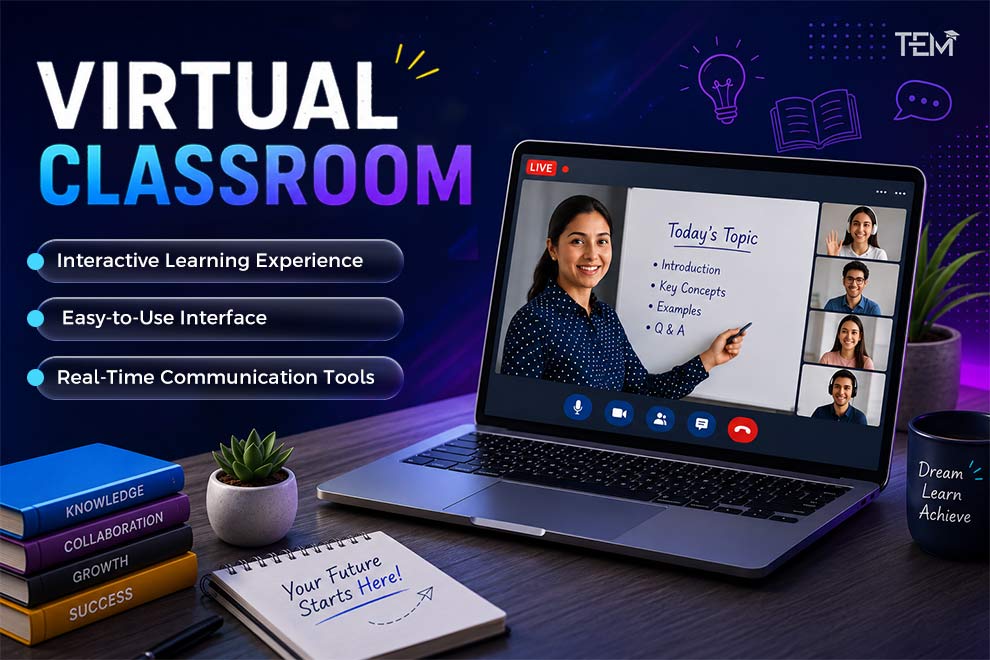
If students struggle with the platform, they stop focusing on the content. A clean, intuitive interface removes friction and keeps attention on learning. The best platforms offer:
- Simple navigation that requires zero technical training
- Mobile-friendly access so learners can join from any device
- Accessibility features, including captions, screen reader support, and adjustable text sizes
3. Real-Time Communication Tools
Live interaction is what separates a virtual classroom from pre-recorded video content. Good online virtual classroom tools make communication fast and natural.
- Live chat with the ability to ask questions without interrupting the session
- Video and audio interaction between teachers and students
- Instant feedback through polls, emoji reactions, or quick-response features
- Breakout rooms for small-group discussions that mirror in-person collaboration
4. Personalized Learning and Adaptive Learning Platforms
One-size-fits-all instruction does not work well in virtual settings where students arrive with different skill levels and learning speeds. Adaptive learning platforms solve this by adjusting content based on individual performance. Research shows adaptive learning platforms can increase learning efficiency by 30% to 50%.
Key elements include:
- AI-driven content recommendations based on quiz results or activity patterns
- Personalized Learning learning paths that adjust difficulty as students progress
- Progress tracking dashboards visible to both students and teachers
AI in the classroom is no longer a future concept. As of 2025, 86% of students globally report using AI tools as part of their learning experience.
5. Strong Collaboration Features
Learning does not happen in isolation. A good virtual classroom creates opportunities for students to work together even when they are miles apart.
- Shared digital whiteboards for brainstorming and visual problem-solving
- Group project tools with shared document editing
- Breakout rooms that divide larger classes into smaller, focused groups
- Peer feedback options within assignment workflows
6. Reliable Performance and Security
Technical failures kill learning momentum fast. A platform that buffers, crashes, or lacks proper security will lose both students and teachers quickly.
- Stable video and audio with minimal lag, even on lower bandwidth connections
- Data privacy compliance with standards like GDPR or FERPA
- Secure login systems with options for multi-factor authentication
- Automatic session recording and cloud backup
Key Features of a Good Virtual Classroom at a Glance
For a quick reference, here are the must-have virtual classroom features that drive strong learning outcomes:
- Live video and audio conferencing
- Screen sharing and digital whiteboard tools
- Session recording and playback
- Attendance tracking and participation analytics
- Assignment management and digital submission
- AI learning analytics for personalized feedback
- Breakout rooms for group work
- Mobile compatibility across iOS and Android
- Gamification elements: points, badges, leaderboards
- Adaptive learning pathways
- Integration with LMS platforms
Note: 93% of L&D professionals say they want to bring live virtual classrooms into their learning management systems, and 82% consider reporting and analytics a critical feature when choosing a platform.
Real Examples of Virtual Classrooms
Virtual classrooms look different depending on the audience. Here are real-world examples across four key categories.
- K-12 Education: Districts like Alabama’s Montgomery Public Schools are rolling out VR/AR-equipped STEM labs to transform abstract science concepts into immersive 3D experiences for thousands of students.
- Higher Education: Case Western Reserve University utilizes HoloAnatomy on Microsoft HoloLens, allowing medical students to collaborate globally while dissecting high-resolution 3D cadavers from their own homes.
- Corporate Learning: Global firms like MAPFRE use specialized platforms like “Aul@ MAPFRE” to provide synchronized leadership coaching and compliance certification to thousands of brokers across different continents simultaneously
- AI-Powered Platforms: Modern Learning Management Systems like Absorb LMS and Docebo use “Deep Search” and “Intelligent Assist” to automatically map employee skills and curate personalized learning paths in real-time.
Popular Virtual Classroom Platforms in 2026
- Google Classroom: A widely used K-12 and higher education platform for assignment management, live sessions, and grading workflows.
- Zoom: A video conferencing tool extended into learning through breakout rooms, polls, and screen sharing. Now integrated with LMS platforms.
- Microsoft Teams: Built for enterprise and education, Teams combines video, chat, file collaboration, and LMS integration in one workspace.
- Moodle: An open-source LMS that supports virtual classrooms, quizzes, discussion forums, and adaptive learning modules.
- Constructor: An AI-powered virtual learning platform that personalizes content delivery based on learner performance data.
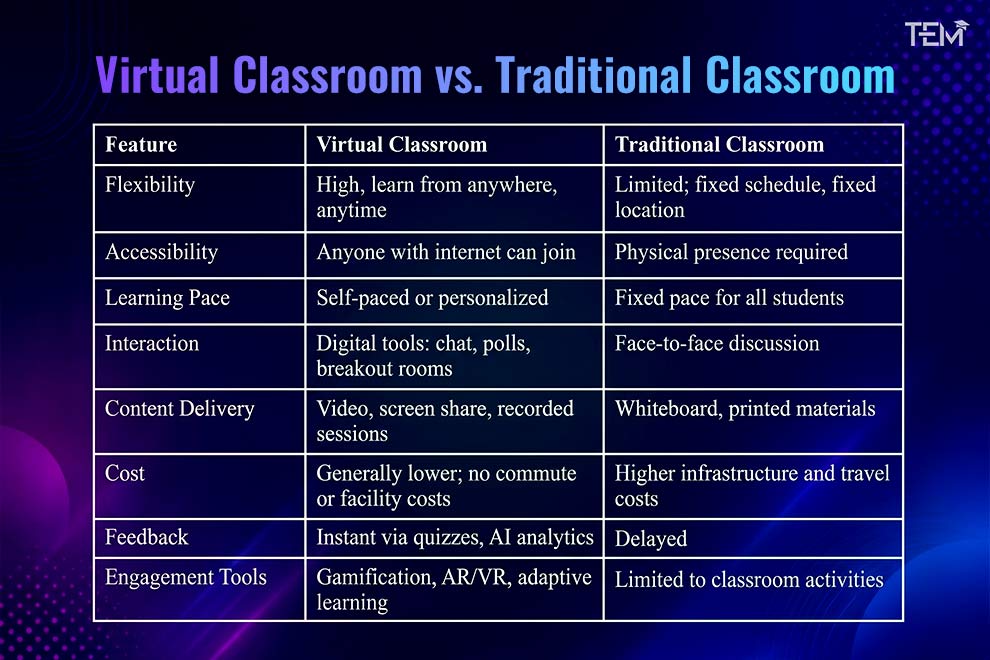
Virtual Classroom vs. Traditional Classroom
Here is a direct comparison of how virtual and traditional classrooms stack up across key learning dimensions:
Challenges of Virtual Classrooms
Virtual classrooms are not perfect. A balanced view matters for educators and institutions making decisions.
- Internet connectivity: Unstable connections remain a barrier in many regions, limiting access to live sessions.
- Student distractions: Home and remote environments make it easier for learners to disengage.
- Screen fatigue: Long video sessions reduce focus. Research suggests sessions under 10 minutes perform significantly better for retention.
- Technical issues: Platform crashes, audio problems, and login failures interrupt the flow of learning.
- Reduced social interaction: The absence of physical presence can limit peer bonding and collaborative culture over time.
Roughly 18% to 24% of online learners express concerns about academic quality and lack of interaction. Addressing these gaps is what separates truly good virtual classrooms from mediocre ones.
How Teachers Can Improve Virtual Classroom Engagement
The platform is only part of the equation. How teachers use it determines outcomes.
- Use interactive tools every session: Polls, quizzes, and live Q&A should be built into every lesson, not used occasionally.
- Keep lessons under 20 minutes: Shorter, focused segments perform better than long lectures. Studies confirm that videos under 10 minutes see 88% higher preparation and engagement rates.
In 2023, PwC replaced long-form training with 10-minute video and quiz modules, cutting training time by 50% and saving over $1 million annually in training costs.
- Add gamification in education: Points, leaderboards, and completion badges motivate learners to stay active and return.
- Encourage participation actively: Cold-calling in breakout rooms, assigning discussion roles, and using reaction tools prompt students who might otherwise go silent.
- Provide instant feedback: Use live quiz results to address misconceptions in the moment, not after the session ends.
- Vary content formats: Mix slides, video clips, whiteboard exercises, and peer activities to maintain attention.
Future of Virtual Classrooms: 2026 Trends
The virtual classroom of 2026 looks very different from what most people used in 2020. Here are the trends shaping the next generation of online learning.
- AI-powered classrooms: AI assistants or “co-pilots” help teachers design lessons and track student well-being.
- VR/AR learning environments: Immersive learning allows students to explore ancient cities or perform virtual science experiments.
- Metaverse classrooms: These spaces offer a high degree of merging between the real and virtual worlds for a more tactile experience.
As Megha Verma, an education expert, notes, “AI handles routine work and amplifies personalization, while educators reclaim time for feedback, relationships, and deeper learning”.
Conclusion
A good virtual classroom is defined by its ability to foster engagement, accessibility, and personalization. By integrating the latest virtual classroom features, from AI-powered analytics to immersive AR experiences, educators can create a space that rivals any traditional setting. Schools and educators should focus on creating interactive and student-centered virtual classrooms to ensure they are ready for the future of education.
FAQs
- What features make a good virtual classroom?
The most important virtual classroom features include live interaction tools, adaptive learning support, real-time feedback, breakout rooms for group work, mobile access, session recording, and AI-powered analytics. Engagement and personalization are the biggest differentiators between platforms that work and those that don’t.
- What are examples of virtual classrooms?
Examples of virtual classrooms include Google Classroom for K-12 education, Moodle for universities, Microsoft Teams for corporate training, and AI-powered platforms like Constructor for personalized adaptive learning. Each is optimized for a different learner audience and context.
- How do virtual classrooms improve learning?
Good virtual classrooms improve learning by increasing retention through interactivity (up to 60% vs. 8% to 10% in traditional classrooms), personalizing content through AI, enabling flexible access, and providing instant feedback that helps students course-correct quickly.